

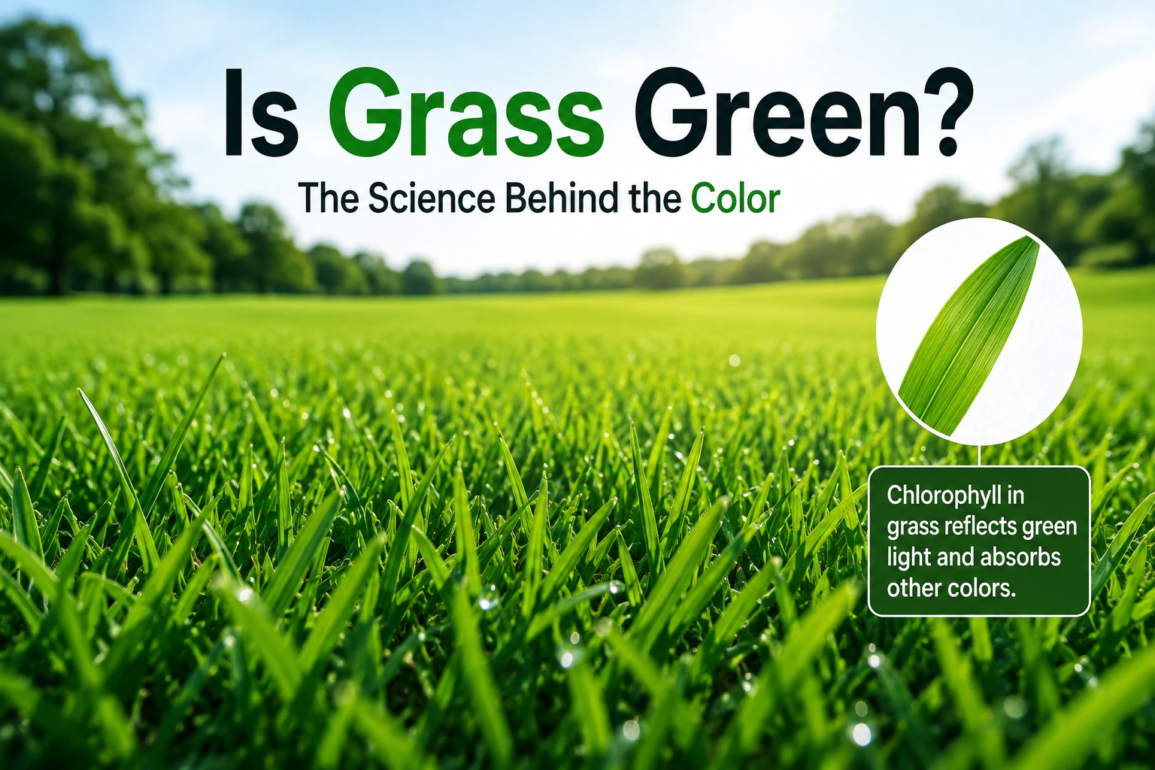
Have you ever stopped and asked, is grass green? The question may sound simple, but the answer involves light, plant pigments, biology, weather, and even human perception. Most people describe a healthy lawn or field as green without giving it much thought. However, grass does not create the color green in the same way that paint or fabric does. Instead, its appearance depends on how plant pigments interact with sunlight and how our eyes interpret reflected light.
Understanding is grass green can also help you learn why lawns change color during different seasons. A bright green field may become yellow during stress, brown during drought, or darker after receiving nutrients and water. These changes provide useful clues about the condition of the plant.
This article explains the science behind the question is grass green, explores the role of chlorophyll, and looks at the many factors that influence the color of grass.
Is Grass Green? The Simple Answer
Yes, grass is generally green when it is healthy and actively growing. The main reason is a natural pigment called chlorophyll. This pigment absorbs certain wavelengths of light and reflects more green light, which makes grass appear green to the human eye.
However, the answer to is grass green is not always exactly the same. Different grass species can have different shades. Some varieties appear light green, while others look deep green or slightly blue-green. Environmental conditions can also change the appearance of a lawn.
A healthy plant usually contains enough chlorophyll to support photosynthesis. When chlorophyll levels fall because of stress, aging, drought, disease, or seasonal changes, the familiar green color may begin to disappear.
Why Does Grass Look Green?
To understand is grass green, it helps to understand sunlight. White sunlight contains different wavelengths that humans see as different colors. When light reaches a grass blade, some wavelengths are absorbed while others are reflected.
Chlorophyll strongly absorbs much of the red and blue light used in photosynthesis. Green wavelengths are reflected more effectively, and that reflected light reaches our eyes. As a result, we see the grass as green.
The color is therefore connected to both the grass and the observer. Without light, grass would not appear green in the same visible way because color depends on light reaching an object and then reaching our eyes.
The Role of Chlorophyll
Chlorophyll is one of the most important substances in green plants. It allows plants to capture energy from sunlight and use that energy during photosynthesis.
Photosynthesis helps plants produce the energy-rich compounds they need for growth and survival. Grass relies on this process just like many other plants.
The presence of chlorophyll explains much of the answer to is grass green. When a grass plant contains healthy amounts of chlorophyll, its leaves usually display a green appearance.
Does Every Type of Grass Have the Same Green Color?
No, grass does not always have one identical shade of green. There are many species and varieties of grass, and each can have its own natural color.
Some grasses have a bright, fresh appearance. Others have darker blades that create a richer lawn color. Certain grasses may also have a blue-green or gray-green tone because of their structure and surface characteristics.
So, when someone asks is grass green, the most accurate answer is that grass is commonly green, but the exact shade can vary.
Several factors influence the final appearance, including:
- Grass species and variety
- Chlorophyll concentration
- Soil quality
- Water availability
- Sunlight exposure
- Temperature
- Nutrient levels
- Seasonal conditions
These factors can work together to make one lawn look very different from another.
How Does Sunlight Affect Grass Color?
Sunlight plays a major role in plant growth and color. Grass needs suitable light conditions to maintain active growth and support photosynthesis.
Too little sunlight can weaken some grass varieties. When grass grows in deep shade, it may become thin, pale, or less vigorous. On the other hand, excessive heat and intense sunlight can contribute to stress if the plant does not receive enough water.
This makes the question is grass green more interesting because the answer can change depending on where the grass grows. A lawn in balanced growing conditions may appear lush and green, while grass in a difficult environment may lose some of its color.
Can Grass Be Green Without Direct Sunlight?
Grass can remain green for some time without direct sunlight because it already contains chlorophyll. However, most grass varieties need enough light over time to grow well and maintain their health.
Indoor or heavily shaded conditions may reduce growth and eventually affect the plant’s appearance. The exact response depends on the grass species and the amount of available light.
Why Does Grass Turn Yellow?
If is grass green has a positive answer under normal conditions, why does grass sometimes turn yellow?
Yellowing often occurs when chlorophyll levels decrease or when the plant experiences stress. Nutrient problems, poor drainage, excessive water, compacted soil, disease, and unsuitable growing conditions can all affect color.
Nitrogen is one nutrient commonly associated with green plant growth. When grass lacks essential nutrients, it may appear pale or yellow. However, adding fertilizer without understanding the actual problem can create additional issues.
A careful approach is better. Check watering practices, soil conditions, mowing habits, and possible pest or disease problems before deciding on treatment.
Why Does Grass Turn Brown?
Brown grass is common during dry periods, extreme temperatures, dormancy, or severe stress. In some cases, grass is not dead even though it looks brown. Certain varieties enter a dormant state to survive difficult conditions.
Drought can reduce water availability and limit normal plant activity. The grass may lose its bright appearance and become dry or brown.
When favorable conditions return, some dormant grass can recover and resume growth. However, prolonged damage from disease, heat, pests, or extreme dehydration may permanently harm the plant.
Therefore, is grass green does not mean grass stays green throughout every season and condition.
Can Grass Be Blue-Green or Dark Green?
Yes. Some grass varieties naturally have a blue-green appearance. The structure of the leaf surface and the way light interacts with it can influence the shade that people observe.
Dark green grass may indicate healthy growth, but color alone does not always prove that a lawn is healthy. Extremely dark growth can sometimes result from excessive fertilizer use, while other problems may remain hidden.
The goal should not simply be to make every lawn as dark green as possible. Healthy grass depends on balanced conditions that suit the particular species.
How Soil Affects the Color of Grass
Soil provides physical support, water, air, and nutrients for grass roots. Poor soil conditions can affect growth and appearance.
Compacted soil may make it difficult for roots to access enough oxygen and water. Poor drainage can create overly wet conditions, while sandy soil may lose moisture quickly. Nutrient imbalances can also influence leaf color and plant strength.
If you want a healthy lawn, it is useful to understand the soil rather than focusing only on surface color. Proper soil management can support stronger roots, better growth, and a more consistent green appearance.
The Importance of Water
Water is essential for healthy grass. Too little water can cause drought stress, while too much can create root problems and encourage certain diseases.
Deep and appropriate watering practices often support stronger root development better than frequent, shallow watering. However, the ideal approach depends on climate, soil type, season, and grass species.
A balanced water supply helps explain why a well-maintained lawn often provides a clear answer to is grass green.
Does Grass Stay Green All Year?
Not always. Some grasses remain green during cooler seasons, while others thrive in warmer temperatures and may become dormant when conditions change.
Seasonal color changes are normal. Temperature, rainfall, sunlight, and plant growth cycles all influence the appearance of grass.
In colder regions, frost and winter conditions may slow or stop growth. In hot and dry climates, grass may struggle during periods of extreme heat. A lawn can therefore change color even when it receives reasonable care.
The question is grass green depends partly on time as well as biology.
Can Artificial Grass Be Green Too?
Artificial grass can also be manufactured in different shades of green. Unlike natural grass, its color does not come from chlorophyll or photosynthesis.
Manufacturers often combine several shades to create a more natural appearance. Some artificial lawns include brown or tan fibers near the base to imitate dried plant material.
This creates an interesting distinction. Natural grass appears green because of pigments and reflected light, while artificial grass receives its color from manufactured materials.
Is Green Grass Always Healthy?
Green grass often suggests active growth, but color alone cannot reveal everything about plant health. A lawn may look green while still having shallow roots, compacted soil, pest activity, or other hidden problems.
Similarly, temporary yellowing or browning does not always mean the entire lawn has died.
A better assessment includes several signs, such as growth pattern, root condition, soil moisture, blade texture, and the presence of damaged areas. Looking beyond color provides a more reliable understanding of lawn health.
How to Help Grass Maintain a Healthy Green Color
Maintaining healthy grass usually requires consistent care rather than a single quick solution. Start by selecting a grass type suited to your climate and growing conditions.
Water according to the needs of your lawn, avoid unnecessary overwatering, and mow at an appropriate height. Healthy mowing practices can help grass maintain enough leaf area for growth.
Soil testing can also identify nutrient problems. Apply fertilizers carefully and only when appropriate for your lawn’s needs. Aeration may help in compacted areas, while proper drainage can reduce problems caused by excess water.
When you understand the science behind is grass green, lawn care becomes less about chasing a particular shade and more about supporting healthy plant growth.
Interesting Facts About Why Grass Is Green
The color of grass connects everyday observations with basic plant science. Chlorophyll not only helps create the familiar appearance of lawns but also plays a central role in capturing light energy.
Grass can also respond visibly to environmental changes. A shift in color may signal drought, nutrient issues, seasonal dormancy, or other changes in growing conditions.
Different species can create dramatically different landscapes, even when all of them are described simply as green. This is why the question is grass green has a more detailed scientific answer than it first appears.
Conclusion
So, is grass green? In most healthy growing conditions, yes. Grass appears green mainly because chlorophyll absorbs certain wavelengths of light and reflects more green light toward our eyes. Still, the exact shade can change with species, sunlight, water, soil, nutrients, weather, and seasonal growth. Grass may also become yellow, brown, dark green, or blue-green. Understanding these changes helps you appreciate both the science and beauty behind an ordinary lawn.
Frequently Asked Questions
Is grass naturally green?
Yes, most healthy grass naturally appears green because it contains chlorophyll, a pigment essential for photosynthesis.
Why is grass green and not red?
Chlorophyll absorbs much of the red and blue light from sunlight while reflecting more green wavelengths, causing grass to appear green.
Can grass change from green to brown?
Yes. Drought, heat, dormancy, disease, pests, or severe stress can cause grass to lose its green appearance and turn brown.
Does all grass have the same shade of green?
No. Different grass species and varieties can appear light green, dark green, blue-green, or gray-green.
Is brown grass always dead?
No. Some grass becomes dormant during dry or extreme weather and may recover when growing conditions improve.