

When you come across the word gaitor, you may wonder what it means, where it comes from, and how people use it. The term can be confusing because it may refer to different things depending on context. In many cases, people use it when searching for information about protective outdoor clothing, while others may use it as an alternative spelling connected with an alligator. Understanding the intended meaning is important for finding accurate information.
This guide explains the common interpretations, practical uses, spelling differences, and related terms. It also helps you understand how context changes the meaning of a word. Whether you encountered it in outdoor equipment, wildlife discussions, casual writing, or an online search, this article gives you a clear starting point.
What Does Gaitor Mean?
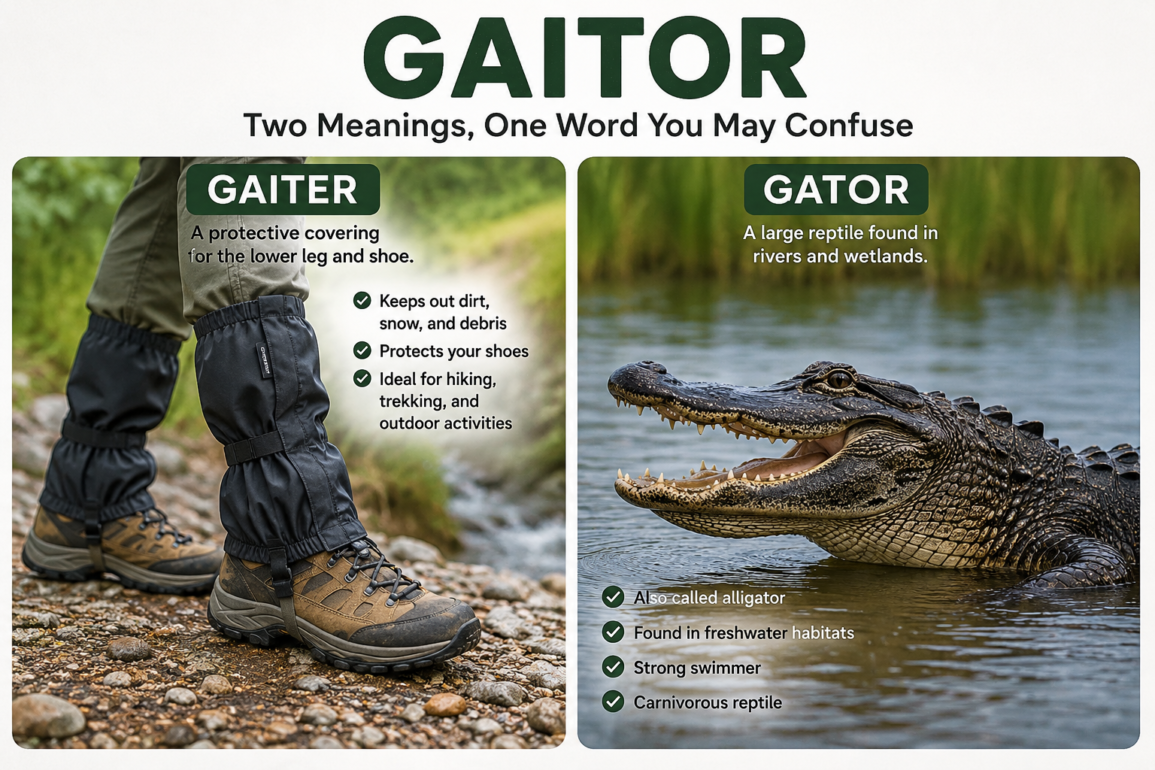
The word gaitor is not usually the standard spelling for the two most common words people may intend. It is often confused with gaiter, a protective covering worn around the lower leg, ankle, or footwear. It can also resemble a phonetic or informal spelling of “gator,” which is commonly used as a shortened form of alligator.
Because of these similarities, context matters greatly. If someone discusses hiking, snow, mud, or boots, they probably mean a gaiter. If the conversation involves reptiles, swamps, wildlife, or American culture, “gator” may be the intended word.
Gaitor vs. Gaiter
One of the most important distinctions involves the word “gaiter.” A gaiter is an item of clothing designed to protect the lower legs and the tops of shoes. Hikers, runners, hunters, and outdoor workers commonly use gaiters in challenging environments.
A gaiter can prevent dirt, stones, snow, water, and insects from entering footwear. Different designs suit different activities. Lightweight versions may work well for trail running, while heavy-duty models provide better protection during hiking or mountaineering.
If you see gaitor used in an outdoor equipment discussion, checking whether the writer actually means “gaiter” can prevent confusion.
Why Gaiters Are Useful
Gaiters offer several practical benefits. They create a barrier between your footwear and the surrounding environment. This can make outdoor activities more comfortable, particularly when trails become wet, muddy, snowy, or covered with loose debris.
They can also reduce the amount of cleaning required after an outdoor trip. Instead of allowing mud and small stones to enter your boots, a properly fitted gaiter keeps many unwanted materials outside.
Gaitor and the Meaning of Gator
Another possible interpretation is “gator.” In American English, “gator” is an informal term for an alligator. Alligators are large reptiles associated mainly with freshwater environments in the southeastern United States and parts of China.
The shortened term “gator” appears frequently in everyday speech, sports names, entertainment, business names, and popular culture. Therefore, someone searching for gaitor may actually be looking for information about alligators.
Understanding this distinction is particularly important when searching online. A small spelling difference can produce completely different results.
How Alligators Differ From Crocodiles
If the intended word is “gator,” it helps to understand the animal behind the nickname. Alligators and crocodiles belong to the same broader reptile group, but they have noticeable differences.
Alligators generally have broader, more rounded snouts than crocodiles. Their upper jaws also tend to hide most of their lower teeth when their mouths are closed. Crocodiles usually have narrower snouts and a more visible tooth arrangement.
Habitat provides another useful clue. American alligators are strongly associated with freshwater environments such as marshes, swamps, lakes, and slow-moving rivers.
These distinctions make wildlife terminology easier to understand and reduce confusion when reading educational material.
Common Uses of Gaiters
If the intended term is gaitor in an outdoor context, the product is most likely a gaiter. Gaiters have several applications across outdoor activities.
Hiking and Backpacking
Hikers use gaiters to protect their lower legs and footwear from mud, rain, snow, and vegetation. Long-distance backpackers can especially benefit from them when walking through rough or unpredictable terrain.
A good pair should fit securely without restricting normal movement. The material should also match the conditions in which you plan to hike.
Trail Running
Trail runners often choose lightweight gaiters. These models help keep small stones, sand, and trail debris out of shoes without adding substantial weight.
Breathable fabrics can also improve comfort during warmer conditions. The right choice depends on trail conditions and personal preference.
Snow Activities
Snow gaiters are generally more protective than lightweight trail models. They help stop snow from entering boots and provide additional coverage around the lower legs.
For winter activities, waterproof materials and secure closures are particularly useful. A good design can improve comfort during long periods outdoors.
How to Choose the Right Gaiter
Choosing the correct product requires considering the environment, activity, and level of protection you need. Before buying one, think about the conditions you are likely to encounter.
For dry trails, a lightweight and breathable option may be sufficient. Wet or muddy environments usually require water-resistant materials. Snowy terrain calls for a more protective design with reliable closures.
Fit is equally important. A loose product can allow debris and water to enter, while an excessively tight one can restrict movement. Always check the manufacturer’s sizing guidance before purchasing.
Materials Used in Outdoor Gaiters
Outdoor gaiters are produced from several different materials. Lightweight synthetic fabrics are popular because they provide flexibility and relatively low weight. Waterproof materials are useful for rain and snow.
Some heavy-duty designs include reinforced sections around areas that experience greater abrasion. These features can extend product life when the equipment is regularly exposed to rocks, branches, or rough terrain.
When comparing options, consider durability alongside weight. The lightest product is not necessarily the best choice for demanding environments.
Common Spelling Mistakes and Search Intent
Search engines frequently encounter variations of words. People may type gaitor when they actually mean “gaiter” or “gator.” This can happen because the words sound similar when spoken.
Search intent is therefore important. A person searching for hiking equipment probably needs information about gaiters. Someone searching for wildlife may be looking for alligators. Identifying the surrounding topic makes the intended meaning much clearer.
This is also why spelling alone should not determine the interpretation of unfamiliar words.
When Should You Use the Word?
In formal writing, it is generally better to use the standard term that matches your intended meaning. Use “gaiter” when discussing protective outdoor clothing. Use “gator” when referring informally to an alligator.
The spelling gaitor may appear in searches, informal content, usernames, names, or other contexts, but it should not automatically be treated as the standard form of either word.
If you are writing an article, product description, school assignment, or professional document, choosing the correct standard spelling improves clarity and credibility.
Why Context Matters
Language often contains words that sound alike or look similar. Their meanings can still differ significantly. The confusion surrounding gaitor is a useful example of how context helps readers understand intended meaning.
Consider the surrounding words. References to boots, hiking, mud, snow, and trails suggest outdoor equipment. References to reptiles, rivers, wetlands, or wildlife suggest an alligator.
This simple approach can help you interpret unfamiliar terms without relying only on spelling.
Tips for Better Online Searches
If your first search produces confusing results, try using a more specific phrase. For outdoor equipment, searches involving hiking gaiters, waterproof gaiters, or trail gaiters can narrow the results.
For wildlife-related searches, phrases involving alligators, habitats, behavior, or reptiles will produce more relevant information. Adding a specific activity or subject usually helps search engines understand your intent.
You can also check dictionary definitions or reputable educational sources when a spelling seems unusual.
Final Thoughts
The term gaitor can create confusion because it resembles two more familiar words with very different meanings. In outdoor contexts, the intended word is often “gaiter,” referring to protective clothing worn over the lower leg and footwear. In wildlife contexts, the intended term may be “gator,” an informal name for an alligator.
Recognizing the difference makes searches, conversations, and written content much clearer. If you encounter gaitor, always consider the surrounding context before deciding what the writer means. Correct terminology improves communication and helps you find more relevant information.
Frequently Asked Questions
Is gaitor a correct English word?
Gaitor is generally not the standard spelling for either “gaiter” or “gator.” The intended meaning depends on context.
What is a gaiter used for?
A gaiter protects the lower leg and footwear from mud, water, snow, dirt, stones, and other outdoor debris.
Is gaitor another word for alligator?
Usually, “gator” is the informal term for alligator. Gaitor is generally a spelling variation or mistake rather than the standard form.
Are gaiters useful for hiking?
Yes. Hiking gaiters can help prevent dirt, stones, mud, snow, and water from entering footwear, especially on difficult trails.
Why do people spell words like gaitor differently?
Similar-sounding words can lead to spelling mistakes, especially when people learn them through conversation rather than reading. Online searches also commonly contain informal spelling variations.