


Gardening involves more than planting flowers, watering vegetables, and maintaining attractive outdoor spaces. Healthy soil plays an equally important role in helping plants grow, and one simple gardening practice can make a significant difference. Mulching protects the soil, conserves moisture, controls unwanted weeds, and improves the overall appearance of gardens. Understanding the mulch meaning can help beginners and experienced gardeners make better decisions about soil care and plant maintenance.
Mulch is a material that gardeners spread over the surface of the soil around plants, trees, shrubs, and vegetables. It creates a protective covering that supports healthier growing conditions. Gardeners use different materials for this purpose, including wood chips, dry leaves, straw, grass clippings, and compost. Each material offers specific advantages depending on the garden’s needs.
Whether you maintain a small backyard garden, grow vegetables, or manage a large landscape, learning the mulch meaning can help you understand why this technique remains popular in gardening and agriculture.
What Is the Meaning of Mulch?
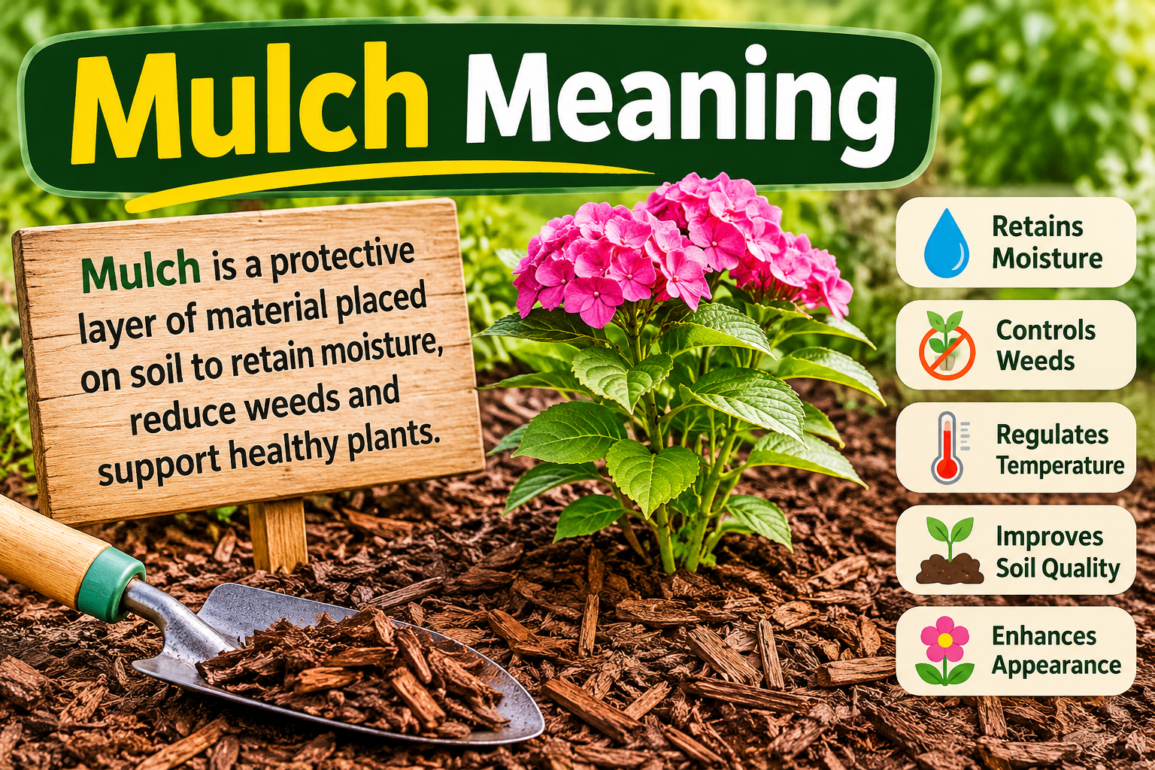
The mulch meaning refers to a protective layer of organic or inorganic material placed on top of soil to improve growing conditions. This covering protects the ground from direct sunlight, reduces moisture loss, limits weed growth, and helps regulate soil temperature.
Gardeners generally apply mulch around the base of plants while leaving some space around stems and tree trunks. This arrangement protects the roots without creating unnecessary moisture around the plant’s central structure.
The word mulch describes both the material itself and the gardening practice of covering soil. For example, someone might say they added mulch to a flower bed or purchased a bag of mulch for their vegetable garden.
Understanding the mulch meaning also involves recognizing that this material does more than improve appearance. It performs several practical functions that support plant health and make garden maintenance easier.
Why Is Mulch Important in Gardening?
Mulching offers several benefits that make it an essential part of many gardening routines. It creates a healthier environment for plant roots and reduces some of the daily work required to maintain outdoor spaces.
1. Helps Retain Soil Moisture
Water evaporates quickly when sunlight and warm temperatures reach exposed soil. Mulch creates a protective barrier that slows evaporation and helps the ground retain moisture for longer periods.
This benefit becomes particularly valuable during summer when plants require regular watering. Gardeners who understand the mulch meaning can use suitable materials to reduce unnecessary water loss and maintain more consistent soil conditions.
2. Controls Unwanted Weed Growth
Weeds compete with garden plants for water, sunlight, nutrients, and growing space. A sufficiently thick layer of mulch blocks sunlight from reaching many weed seeds, making germination more difficult.
Although mulch cannot eliminate every weed, it can significantly reduce their growth. Gardeners should remove existing weeds before applying a fresh covering for better results.
3. Regulates Soil Temperature
Soil temperature affects root development and plant growth. During hot weather, mulch helps keep the ground cooler by reducing direct exposure to sunlight. During colder months, it provides insulation that can reduce sudden temperature changes.
This protective function explains another important aspect of the mulch meaning: mulch helps create more stable conditions for plant roots throughout changing seasons.
4. Improves Soil Quality
Organic mulch gradually decomposes and adds organic matter to the soil. Materials such as compost, shredded leaves, and bark can support beneficial soil organisms and improve soil structure.
Over time, this process can improve the soil’s ability to hold moisture and support healthy root development.
5. Makes Gardens Look Attractive
Mulch also improves the visual appearance of outdoor spaces. A consistent layer of bark, wood chips, or decorative stones gives flower beds and landscape areas a clean, organized appearance.
Homeowners often choose mulch colors and textures that complement their plants, pathways, and outdoor decorations.
Different Types of Mulch
Understanding the mulch meaning becomes easier when you learn about the different materials gardeners use. Mulch generally falls into two main categories: organic and inorganic.
Organic Mulch
Organic mulch comes from natural materials that decompose over time. It mulch meaning is particularly useful for gardeners who want to improve soil quality while protecting their plants.
Wood Chips and Bark: Wood chips and shredded bark are popular choices for flower beds, trees, and landscape areas. They break down slowly and provide long-lasting soil coverage.
Straw: Straw works well in vegetable gardens because it protects the soil, reduces evaporation, and helps keep certain vegetables clean.
Dry Leaves: Fallen leaves provide an inexpensive and environmentally friendly mulch option. Gardeners can shred them before spreading them around plants to encourage faster decomposition.
Grass Clippings: Dry grass clippings can provide nutrients as they break down. However, gardeners should apply them in thin layers to prevent unpleasant odors and excessive moisture buildup.
Compost: Finished compost provides organic matter and nutrients while protecting the soil surface. It mulch meaning is especially useful for vegetable gardens and flower beds.
Inorganic Mulch
Inorganic mulch consists of materials that do not decompose easily. These mulch meaning options generally provide long-lasting coverage but do not add significant organic matter to the soil.
Gravel and Stones: Decorative stones and gravel work well in pathways, rock gardens, and areas containing drought-tolerant plants.
Rubber Mulch: Manufactured from recycled rubber, this mulch meaning material is sometimes used in landscaping and playground areas. It does not improve soil fertility and may not suit every gardening situation.
Landscape Fabric: Gardeners use landscape fabric beneath decorative coverings to reduce weed growth. However, it requires proper installation and maintenance to avoid interfering with soil health.
The best choice depends on your plants, climate, budget, and gardening objectives.
How to Apply Mulch Correctly
Knowing the mulch meaning is only the first step. Proper application determines whether mulch provides its intended benefits.
Step 1: Prepare the Soil
Remove existing weeds, dead leaves, and unwanted debris from the gardening area. Water the soil if it feels dry before applying the covering.
Step 2: Select Suitable Material
Choose organic or inorganic mulch according to your garden’s requirements. Vegetable gardens generally benefit from organic materials, while decorative stone may suit certain landscape designs.
Step 3: Apply an Appropriate Layer
Spread mulch evenly across the soil surface. Most garden beds benefit from approximately 2 to 4 inches of mulch, depending on the material and growing conditions.
Avoid creating excessively thick layers because they can restrict airflow and retain too much moisture.
Step 4: Keep Space Around Plant Stems
Never pile mulch directly against plant stems or tree trunks. Leave a small gap around the base to reduce the risk of rot, pests, and moisture-related problems.
Step 5: Inspect and Maintain the Covering
Check your mulch meaning regularly to ensure it remains evenly distributed. Replace decomposed organic material when necessary and remove any weeds that grow through the covering.
Common Mistakes to Avoid When Using Mulch
Although mulching is relatively simple, beginners sometimes make mistakes that reduce its effectiveness.
Applying Too Much Mulch: Excessive covering can prevent sufficient air and water movement through the soil. It mulch meaning may also encourage shallow root development.
Covering Plant Stems: Placing mulch directly against stems or tree trunks can create damp conditions that encourage disease and decay.
Using Contaminated Materials: Grass clippings treated with unsuitable herbicides or diseased plant materials may introduce unwanted substances or problems into the garden.
Ignoring Soil Conditions: Different plants have different moisture and drainage requirements. Choosing the wrong material can create unsuitable growing conditions.
Forgetting Regular Maintenance: Organic mulch decomposes naturally. Gardeners should inspect it periodically and replenish it when necessary.
Understanding these mistakes alongside the mulch meaning helps gardeners use this technique more effectively.
Mulch Meaning in Agriculture and Landscaping
Mulching is not limited to residential gardens. Farmers, landscapers, and horticultural professionals also use this method to manage soil conditions and support plant development.
In agriculture, mulch can help conserve water, reduce soil erosion, suppress weeds, and protect crops from certain environmental stresses. Farmers may use straw, crop residues, plastic films, or other suitable materials depending on their farming systems.
In landscaping, mulch helps maintain attractive outdoor environments while reducing maintenance requirements. Professionals often use bark, wood chips, decorative stones, and other materials around trees, shrubs, and flower beds.
The mulch meaning in these settings remains closely connected to soil protection, although the materials and application methods may differ according to the purpose.
Is Mulch Good for Every Plant?
Mulch benefits many plants, but gardeners should consider individual plant requirements before choosing a material.
Vegetables, flowering plants, shrubs, and trees generally benefit from suitable organic mulch. However, plants that prefer dry soil or excellent drainage may require lighter applications.
For example, many Mediterranean herbs and drought-tolerant plants grow better when gardeners avoid excessive moisture around their roots. Decorative gravel may be more appropriate for certain plants than moisture-retaining organic materials.
Gardeners should also consider local weather conditions. Areas with heavy rainfall may require materials that allow effective drainage, while hot and dry environments may benefit from moisture-retaining coverings.
Learning the mulch meaning helps people understand the general purpose of mulching, but selecting the right material requires attention to specific plant needs.
Frequently Asked Questions (FAQs)
1. What does mulch mean in simple words?
Mulch means a protective covering placed over soil around plants. It helps retain moisture, control weeds, regulate soil temperature, and improve garden appearance.
2. What is the main purpose of mulch?
The main purpose of mulch is to protect the soil and create better growing conditions. It reduces water evaporation, limits weed growth, and helps maintain stable soil temperatures.
3. Is mulch the same as compost?
No, mulch and compost are different. Mulch primarily covers the soil surface, while compost is decomposed organic material used to improve soil structure and fertility. Compost can also serve as mulch.
4. How often should you replace mulch?
The replacement schedule depends on the material. Organic mulch may need replenishment once or twice a year, depending on decomposition and weather conditions. Inorganic materials generally last longer.
5. Can mulch attract insects?
Some organic mulch materials can provide shelter for insects and other small organisms. Most are harmless or beneficial, but excessive moisture and poorly maintained mulch can sometimes encourage unwanted pests.
Conclusion
Understanding the mulch meaning is an important step toward developing better gardening habits and maintaining healthier outdoor spaces. Mulch provides a protective soil covering that conserves moisture, reduces weed growth, regulates temperature, and supports soil improvement when gardeners use suitable organic materials.
From wood chips and straw to dry leaves and decorative stones, different mulch options serve different purposes. Selecting the right material, applying an appropriate layer, and maintaining proper spacing around plant stems can make a noticeable difference in garden health.
Whether you are growing vegetables, maintaining flower beds, or improving a landscape, mulching offers a practical way to protect your soil and support healthy plant growth. With the right approach, this simple gardening technique can make outdoor maintenance easier and more effective.