




Introduction
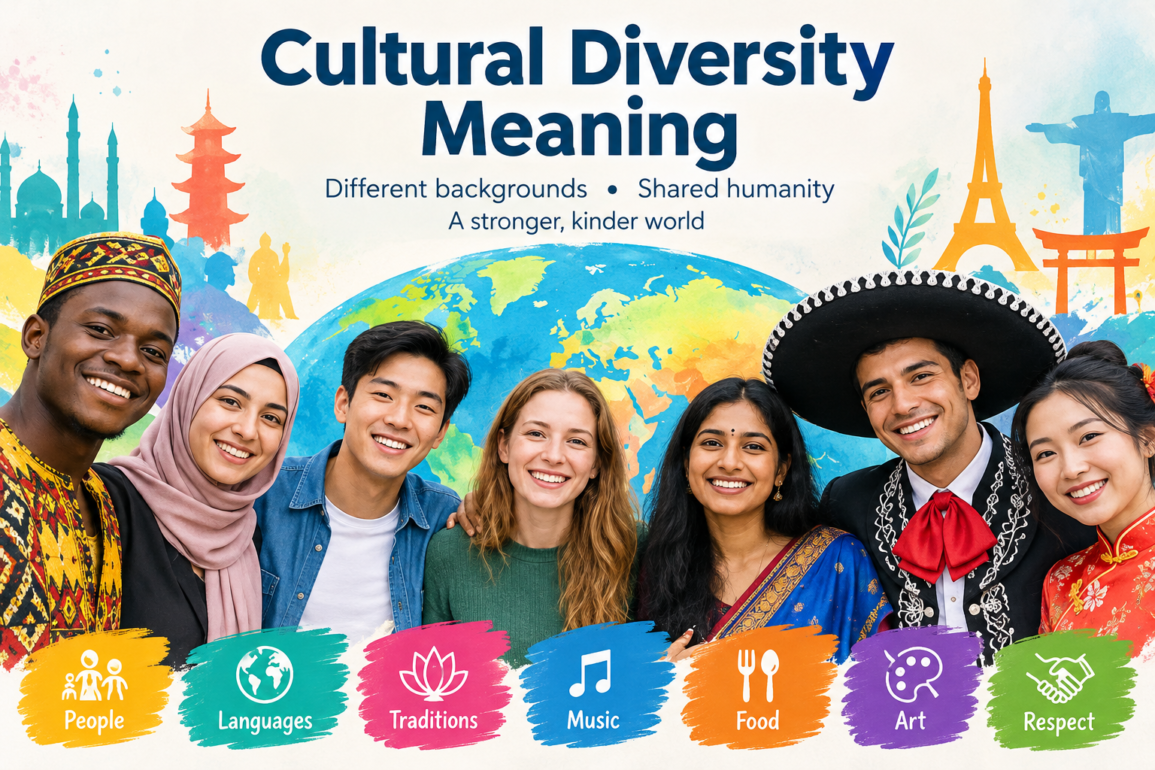
People around the world have different languages, traditions, beliefs, lifestyles, and ways of understanding life. These differences make societies unique and create opportunities for people to learn from one another. Understanding cultural diversity meaning helps us recognise why people from different backgrounds may celebrate different festivals, follow different customs, prepare different foods, and express their values in different ways. Rather than separating people, these differences can bring communities together when people approach them with respect and an open mind.
In today’s interconnected world, cultural diversity meaning plays an important role in education, workplaces, families, and public life. People frequently interact with individuals whose experiences and traditions differ from their own. Learning about these differences encourages mutual understanding, reduces prejudice, and supports peaceful relationships. By exploring the definition, examples, importance, benefits, and challenges of cultural diversity, we can better understand how it shapes modern society.
What Is the Cultural Diversity Meaning?
The cultural diversity meaning refers to the presence of different cultural groups within a society, community, organisation, or country. These groups may differ in language, religion, ethnicity, nationality, traditional practices, food, clothing, art, music, and social values. Cultural diversity recognises that people can have different ways of living while sharing the same communities and respecting one another’s rights.
For example, a school may include students who speak different languages at home, celebrate different holidays, and follow different family traditions. These cultural diversity meaning students contribute unique experiences and perspectives to the classroom. Their differences represent cultural diversity because several cultural backgrounds exist within the same learning environment.
The cultural diversity meaning also involves more than simply acknowledging differences. It encourages people to appreciate other cultures, challenge unfair assumptions, and create environments where everyone can participate equally. A culturally diverse community recognises that no single cultural background represents every person’s experience.
Main Elements of Cultural Diversity
Cultural diversity includes several elements that influence how people communicate, form relationships, and understand the world.
Language and Communication
Language is one of the most visible aspects of culture. People may speak different languages or use distinct expressions, gestures, and communication styles. For instance, a multilingual workplace can bring together employees who speak English, Urdu, Arabic, Spanish, or other languages.
Understanding these differences helps people communicate more effectively. It also encourages organisations and schools to provide appropriate language support when necessary.
Religion and Beliefs
Religious beliefs and spiritual traditions influence the lives of many individuals and communities. People may observe different religious holidays, follow particular dietary practices, or participate in specific ceremonies.
Respecting religious diversity means allowing individuals to practise their beliefs without discrimination, provided everyone follows applicable laws and respects the rights of others.
Traditions and Customs
Traditions connect people with their families, communities, and histories. Wedding ceremonies, seasonal celebrations, traditional clothing, and family gatherings often reflect cultural diversity meaning.
For example, Eid, Christmas, Diwali, Lunar New Year, and Nowruz have different cultural or religious significance for the people who celebrate them. Learning about these occasions can help people understand experiences beyond their own communities.
Food, Music, and Art
Food, music, dance, literature, and visual art communicate cultural stories across generations. Traditional dishes may reflect a region’s climate, agriculture, history, and trade connections. Music and dance can preserve historical memories and express shared emotions.
These creative traditions help communities maintain their identities while giving others opportunities to explore different forms of artistic expression.
Examples of Cultural Diversity in Everyday Life
The cultural diversity meaning becomes easier to understand when we look at ordinary situations. Cultural differences appear in schools, offices, neighbourhoods, public events, and international relationships.
In a classroom, students may share different family traditions, speak several languages, and have varied perspectives on historical events. Teachers can use these differences to encourage discussion, broaden students’ understanding, and make lessons more inclusive.
In a workplace, employees may come from different countries or communities. They cultural diversity meaning might approach teamwork, communication, leadership, or problem-solving differently. When managers recognise these perspectives, employees can contribute their knowledge and skills more effectively.
Neighbourhoods also demonstrate cultural diversity through restaurants, community centres, festivals, places of worship, and local businesses. People can experience different traditions simply by participating in community activities and speaking with their neighbours.
International travel provides another example. Visitors encounter unfamiliar customs, social expectations, foods, and languages. Travelling respectfully allows people to learn about local traditions rather than judging them according to their own cultural assumptions.
Why Is Cultural Diversity Important?
Cultural diversity is important because it supports understanding, cooperation, creativity, and social inclusion. When people recognise the value of different backgrounds, they can develop stronger relationships and make more informed decisions.
It Encourages Mutual Understanding
Learning about different cultures helps people understand why others may behave or communicate differently. This cultural diversity meaning understanding can prevent misunderstandings and reduce negative stereotypes. Instead of making assumptions, people become more willing to ask respectful questions and listen to different experiences.
It Promotes Equality and Inclusion
A diverse society should provide fair opportunities for people regardless of their cultural background. Schools, workplaces, and public institutions can support inclusion by preventing discrimination and ensuring that individuals receive equal respect.
The cultural diversity meaning is closely connected with inclusion because recognising differences is only one step. Communities must also ensure that people can participate in education, employment, and social activities without unfair barriers.
It Supports Creativity and Innovation
People with different experiences often approach problems from different perspectives. When they exchange ideas, they may discover solutions that a more uniform group might overlook.
Businesses can benefit from cultural diversity meaning diverse teams when they encourage open communication and evaluate ideas fairly. Different cultural insights can also help organisations understand customers in international markets.
It Strengthens Communities
Communities become stronger when residents cooperate despite their differences. Shared projects, educational activities, cultural events, and volunteer programmes help people build trust.
Cultural diversity does not require everyone to agree on every issue. Instead, it cultural diversity meaning encourages people to work together while respecting different identities and viewpoints.
Benefits of Cultural Diversity in Education
Schools and universities provide important opportunities to develop cultural awareness. Students who learn alongside classmates from different backgrounds can gain a broader understanding of society and human experience.
Teachers can introduce international literature, historical perspectives, cultural celebrations, and examples from different regions. These cultural diversity meaning activities help students recognise that knowledge and creativity exist across many societies.
The cultural diversity meaning in education also includes creating a welcoming classroom where students feel comfortable sharing their experiences. Teachers should avoid treating one student as a representative of an entire culture. Every individual has personal interests, beliefs, and experiences that may differ from those of other people in the same cultural group.
Group projects can also encourage cooperation. When students listen carefully, explain their ideas, and consider alternative viewpoints, they develop communication and critical-thinking skills that can benefit them throughout life.
Cultural Diversity in the Workplace
Modern workplaces often bring together people with different nationalities, languages, educational experiences, and cultural traditions. This cultural diversity meaning diversity can strengthen organisations when employers establish fair policies and encourage respectful collaboration.
Managers can support cultural inclusion by providing equal opportunities for recruitment, training, promotion, and professional development. They can also establish clear procedures for addressing discrimination and harassment.
The cultural diversity meaning in a professional setting includes understanding that employees may have different communication preferences or expectations about teamwork. However, managers should avoid assuming that every person from a particular background behaves in the same way.
Flexible approaches to communication, clear workplace expectations, and opportunities for employees to share ideas can help teams work effectively. When organisations value both individual abilities and cultural perspectives, they can build a more supportive working environment.
Challenges Associated With Cultural Diversity
Although cultural diversity meaning offers many benefits, it can also create challenges when people lack understanding or respect for differences.
Language Barriers
People who speak different first languages may find it difficult to communicate complex ideas. Misunderstandings can occur when someone uses unfamiliar expressions or interprets a message differently.
Providing translation services, using clear language, and encouraging patient communication can reduce these difficulties.
Stereotypes and Prejudice
Stereotypes involve making general assumptions about people because they belong to a particular cultural group. Such assumptions can lead to unfair treatment, exclusion, and discrimination.
Education and meaningful interaction can help challenge these beliefs. People should evaluate individuals according to their actions and qualities rather than relying on generalisations about their backgrounds.
Differences in Social Expectations
Cultures may differ in their expectations concerning punctuality, personal space, eye contact, family responsibilities, or formal communication. These differences can sometimes lead to confusion.
The best response involves respectful conversation and a willingness to understand the situation. Cultural awareness should encourage curiosity without requiring people to abandon their identities.
Risk of Exclusion
A community may describe itself as diverse while still giving some groups fewer opportunities to participate. For example, an organisation might celebrate cultural festivals but fail to address discriminatory recruitment practices.
Genuine inclusion requires practical action, fair treatment, and opportunities for everyone to contribute.
How to Promote Cultural Diversity and Inclusion
People can encourage cultural understanding through simple, consistent actions. Learning about different traditions, reading literature from various countries, attending community events, and listening to other people’s experiences can expand awareness.
Schools can include diverse historical perspectives in their lessons and establish clear rules against bullying. Employers can review their policies, provide cultural awareness training, and ensure that staff members have fair opportunities.
The cultural diversity meaning becomes more practical when people apply it to everyday decisions. For instance, someone can ask respectful questions instead of making assumptions about another person’s religion or language. A teacher can select learning materials that reflect several cultural perspectives. A manager can make sure that all employees have opportunities to speak during meetings.
People should also recognise that cultural identity is personal. Two individuals from the same country may have different beliefs, traditions, and lifestyles. Respecting diversity therefore requires listening to individuals rather than expecting them to fit a cultural stereotype.
Cultural Diversity and Globalisation
Globalisation has increased interaction between people from different parts of the world. International travel, migration, digital communication, education, and business allow cultural ideas to cross national boundaries more easily than before.
People can now learn foreign languages online, watch films from other countries, explore international cuisines, and communicate with distant communities. These experiences can increase cultural awareness and create opportunities for collaboration.
However, globalisation can also place pressure on smaller cultural traditions. Local languages, traditional crafts, and community practices may become less common when younger generations adopt different lifestyles or move away from their home regions.
Preserving cultural heritage does not mean rejecting change. Communities can maintain their traditions while adapting to new circumstances. Museums, cultural organisations, schools, families, and local artists all have roles in keeping cultural knowledge alive.
Conclusion
The cultural diversity meaning extends beyond the existence of different traditions, languages, religions, and lifestyles. It represents an opportunity to understand people more deeply, challenge prejudice, and build communities in which individuals can participate with dignity and respect.
Cultural diversity strengthens education, encourages workplace innovation, supports creativity, and helps people develop broader perspectives. Although language barriers, stereotypes, and social misunderstandings can create difficulties, open communication and fair treatment can help overcome these challenges.
Every person can contribute to a more inclusive society by listening carefully, learning about unfamiliar traditions, questioning stereotypes, and treating others fairly. When communities appreciate their differences while recognising their shared humanity, cultural diversity becomes a valuable foundation for cooperation, understanding, and a more peaceful future.