




Introduction
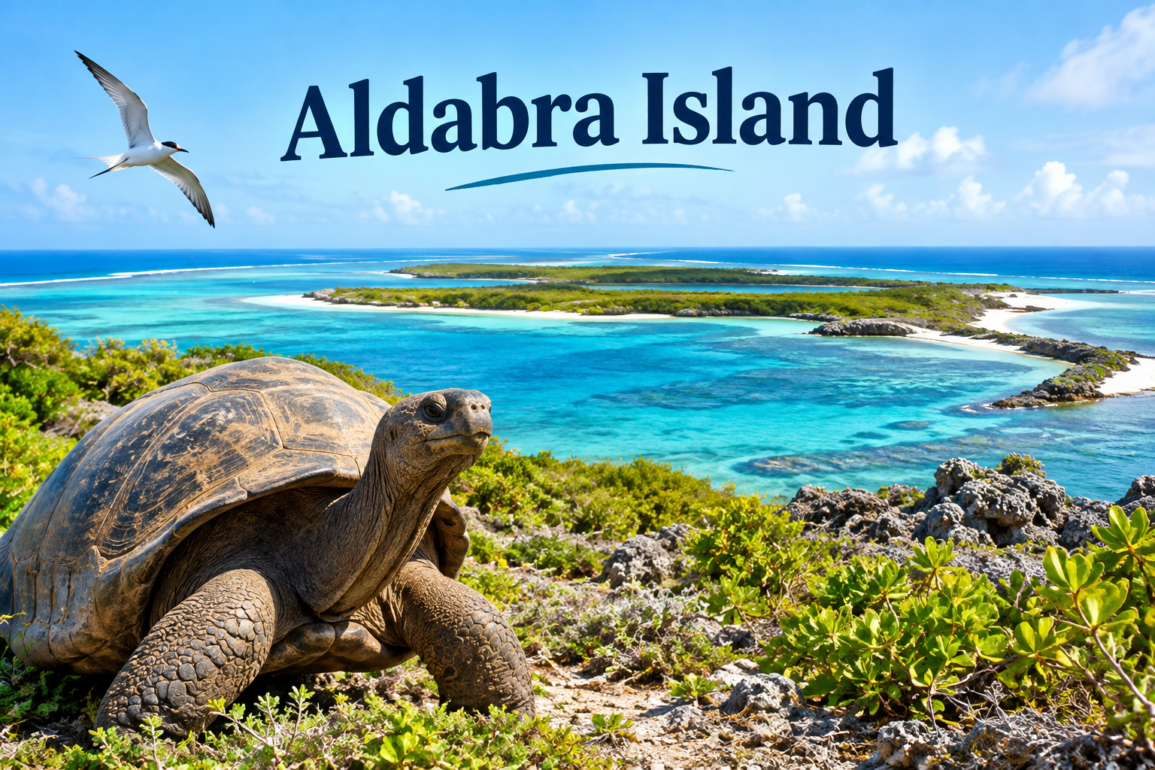
Imagine a remote island surrounded by turquoise waters, untouched beaches, and thriving wildlife, where giant tortoises move slowly across the landscape and seabirds soar above the ocean. This extraordinary destination exists in the Indian Ocean. Aldabra Island is one of the world’s most remarkable natural environments, celebrated for its unique ecosystem, enormous tortoise population, and exceptional conservation value. Located within the Seychelles, this isolated atoll offers a rare glimpse into a world shaped by nature rather than modern development.
Unlike popular tropical destinations filled with hotels, restaurants, and busy tourist attractions, Aldabra Island remains largely protected from human interference. Its geographical isolation has helped preserve its natural habitats and unusual wildlife. The island attracts the interest of scientists, conservationists, and nature enthusiasts who want to understand how ecosystems survive in remote environments.
Learning about Aldabra Island reveals much more than the beauty of an isolated tropical paradise. Its geological formation, marine habitats, and conservation programs demonstrate why protecting fragile natural environments matters for future generations.
Where Is Aldabra Island Located?
Aldabra Island belongs to the Republic of Seychelles, an island nation in the western Indian Ocean. It lies southwest of the Seychelles’ main inhabited islands and is considerably closer to Madagascar and the African coast than to many of the country’s central islands.
Geographically, Aldabra is an atoll rather than a conventional island. An atoll forms when coral reefs develop around a volcanic island or another elevated landmass and eventually create a ring-shaped structure around a lagoon. Over long periods, geological changes and erosion can leave a coral island with a distinctive arrangement of reefs, channels, and shallow water.
Aldabra Atoll consists of several main islands surrounding a large central lagoon. These land areas are separated by tidal channels through which seawater flows during changing tides. The landscape includes limestone formations, coral reefs, sandy shores, and areas of low vegetation.
Because of its remote location, Aldabra Island has remained relatively undisturbed compared with many tropical destinations. Access is difficult, and strict conservation measures limit human activities that could damage its fragile environment.
The Natural Beauty of Aldabra Island
A Unique Coral Atoll
One of the most fascinating features of Aldabra Island is its unusual landscape. The atoll developed through natural geological processes over millions of years, creating an environment where land and sea interact continuously.
Its limestone terrain contains irregular surfaces, shallow depressions, and areas shaped by wind and water. Coastal sections feature beaches, exposed coral rock, and mangrove habitats. Meanwhile, the central lagoon supports a complex marine environment that changes with the tides.
The lagoon is particularly important because it connects different habitats within the atoll. Tidal movements carry nutrients through channels, supporting marine organisms and creating feeding grounds for fish, crustaceans, and other wildlife.
A Protected Wilderness
Aldabra Island is not a conventional holiday resort. Much of its appeal comes from its isolation, limited development, and extraordinary ecological importance. Visitors cannot expect extensive tourist facilities or unrestricted access to every part of the atoll.
This protected status helps preserve the island’s natural character. It also allows researchers to study wildlife and environmental processes in a relatively undisturbed setting.
Giant Tortoises: The Most Famous Residents
The giant tortoises are among the strongest reasons Aldabra Island has gained international recognition. Aldabra supports one of the world’s largest populations of giant tortoises, with estimates commonly reaching around 100,000 individuals across the atoll.
These impressive reptiles are adapted to island life and play an important role in the local ecosystem. They feed on grasses, leaves, fallen vegetation, and other plant material. Their movement across the landscape also helps distribute seeds and influence the growth of vegetation.
How Giant Tortoises Survive
Giant tortoises have several adaptations that help them survive in warm island environments. Their strong shells provide protection, while their slow metabolism allows them to conserve energy. They can also tolerate periods of limited water availability, although they still depend on suitable environmental conditions.
During hot weather, tortoises may seek shade or become less active to reduce overheating. Their behaviour changes according to temperature, rainfall, food availability, and other environmental factors.
The tortoises of Aldabra Island are especially valuable to conservation scientists because their population provides opportunities to study long-term survival, reproduction, and ecosystem relationships.
Why Their Conservation Matters
Giant tortoises have historically faced serious threats on several islands around the world. Hunting, habitat destruction, and the introduction of non-native animals have contributed to population declines in different species.
Aldabra’s remote location and conservation protections have helped its tortoise population survive. However, protection remains essential because climate change, rising sea levels, severe weather, and habitat disruption may affect the atoll in the future.
Wildlife and Biodiversity on Aldabra Island
Although giant tortoises are its most famous inhabitants, Aldabra Island supports a much broader range of wildlife. Its terrestrial, coastal, and marine habitats provide shelter and food for numerous species.
Birds and Coastal Wildlife
The atoll provides important habitats for seabirds and other bird species. Birds use its vegetation, beaches, and coastal areas for feeding, nesting, and resting. Their presence contributes to the movement of nutrients between marine and terrestrial environments.
The Aldabra white-throated rail is particularly notable. It is a flightless bird associated with the atoll and represents an important example of how isolated island environments can support distinctive wildlife.
Other birds use the surrounding waters to find fish and marine invertebrates. Their nesting areas require protection from disturbance, introduced predators, and changes in coastal conditions.
Marine Life and Coral Reefs
The waters surrounding Aldabra Island contain coral reefs, fish, crustaceans, molluscs, and other marine organisms. These ecosystems provide food and shelter for a wide variety of species while helping maintain the ecological balance of the region.
Healthy coral reefs also support coastal resilience by reducing some of the energy generated by waves. However, corals are sensitive to rising ocean temperatures, pollution, and other environmental pressures.
Seagrass beds and mangrove areas contribute additional ecological benefits. They provide nursery habitats for marine animals, help retain sediment, and support the movement of nutrients through coastal ecosystems.
Plants and Island Vegetation
Vegetation on Aldabra Island has adapted to challenging conditions, including salty winds, limestone soils, seasonal rainfall, and periods of drought. Coastal plants help stabilize certain areas, while other vegetation provides food and shelter for animals.
Mangroves are especially valuable around suitable lagoon and shoreline habitats. Their roots create shelter for young marine organisms and contribute to coastal protection.
The relationships between plants and animals show how even seemingly simple island environments depend on interconnected ecological processes.
Why Aldabra Island Is a UNESCO World Heritage Site
Aldabra Atoll was designated a UNESCO World Heritage Site in 1982 because of its exceptional natural significance. The designation recognizes the atoll’s outstanding ecological features, distinctive wildlife, and relatively undisturbed natural systems.
World Heritage recognition highlights the importance of protecting places whose value extends beyond national borders. Aldabra Island is scientifically significant because it offers opportunities to study evolutionary processes, island biodiversity, and the functioning of coral atoll ecosystems.
The designation also strengthens international awareness of the threats facing isolated natural environments. Conservation requires continued monitoring, responsible management, and cooperation among scientists, government authorities, and environmental organizations.
Climate and Weather on Aldabra Island
Aldabra Island has a tropical climate influenced by its position in the Indian Ocean. Temperatures generally remain warm throughout the year, although humidity, rainfall, and wind conditions vary seasonally.
Rainfall often follows seasonal patterns, with wetter and drier periods affecting vegetation and wildlife behaviour. The availability of freshwater can become particularly important during dry conditions because the atoll has limited freshwater resources.
Ocean conditions also influence life on the island. Tides affect lagoon channels, while strong winds and storms can change coastal environments. Seasonal weather patterns matter to researchers planning fieldwork and to conservation teams managing access.
Anyone considering a visit should understand that conditions may be unpredictable. Remote travel requires careful preparation, and access depends on authorization, transport arrangements, and environmental rules.
Conservation Challenges Facing Aldabra Island
Despite its protected status, Aldabra Island faces environmental challenges that require long-term attention.
Climate Change and Rising Sea Levels
Climate change presents a major concern for low-lying coral atolls. Rising sea levels can alter coastal habitats, increase saltwater intrusion, and affect beaches used by wildlife. Changes in ocean temperature can also place stress on nearby coral reefs.
More intense storms and changing rainfall patterns may further influence the atoll’s ecology. Scientists monitor these changes to understand which habitats are most vulnerable and how conservation strategies can respond.
Invasive Species and Human Disturbance
Introduced species can threaten island ecosystems by competing with native wildlife, consuming eggs, spreading disease, or changing vegetation. Preventing accidental introductions is therefore an important part of protecting Aldabra Island.
Human disturbance also needs careful management. Waste, unauthorized access, and poorly controlled activities can damage habitats that have developed over thousands of years.
Protecting Fragile Ecosystems
Effective conservation involves regular wildlife surveys, habitat monitoring, research, and strict controls on activities that may cause environmental harm. Conservation teams must balance scientific access with the need to keep disturbance to a minimum.
Protecting Aldabra Island is not simply about preserving beautiful scenery. It is about maintaining an entire ecological system in which plants, animals, reefs, and tidal processes depend on one another.
Can Tourists Visit Aldabra Island?
Visiting Aldabra Island is possible only under controlled conditions, and it is not a typical destination for independent travellers. Its remoteness, protected status, and limited facilities make access considerably more complicated than visiting the main tourist islands of Seychelles.
Travel generally requires advance arrangements and permission from the relevant authorities or conservation managers. Researchers, conservation personnel, and approved visitors may be able to access the atoll under applicable rules.
Anyone planning a trip should confirm current access requirements, transportation availability, costs, and environmental restrictions through official Seychelles conservation or tourism channels before making arrangements.
Visitors who receive permission should follow responsible travel practices. They should avoid disturbing wildlife, remain within authorized areas, remove their waste, and respect restrictions designed to protect nesting sites and sensitive habitats.
For travellers who mainly want to experience the Seychelles’ natural beauty, other islands offer more accessible beaches, accommodation, guided excursions, and wildlife experiences.
Interesting Facts About Aldabra Island
Aldabra Island has several features that make it one of the Indian Ocean’s most extraordinary natural places. It is part of a large coral atoll rather than a typical volcanic island, and its central lagoon is connected to the ocean through tidal channels.
Its giant tortoise population is among the largest anywhere in the world. The atoll also supports distinctive birdlife, including the Aldabra white-throated rail, and provides important habitats for coral reef organisms.
Another remarkable fact is that Aldabra remains relatively isolated from large-scale development. This has helped preserve ecological relationships that have disappeared or become altered in more heavily populated environments.
Its UNESCO World Heritage status further emphasizes its global importance. The atoll is not only a natural landmark of Seychelles but also a valuable location for understanding biodiversity, evolution, and conservation.
Conclusion
Aldabra Island stands out as a remarkable example of nature thriving in a remote and carefully protected environment. Its coral formations, tidal lagoon, diverse marine habitats, and famous giant tortoises make it one of the most important natural treasures in Seychelles.
Beyond its beauty, the atoll demonstrates why conservation matters. Its wildlife and habitats face challenges from climate change, invasive species, and human disturbance, making long-term protection essential. Scientific research and responsible management help preserve the ecological relationships that make this destination unique.
For anyone interested in wildlife, geography, or environmental protection, Aldabra Island offers valuable lessons about the importance of preserving natural ecosystems. Its continued survival depends on protecting its fragile habitats so that future generations can learn from and appreciate this extraordinary part of the Indian Ocean.