

Learning the alphabet is an important milestone in a child’s early education. Each letter introduces new sounds, words, and writing skills that help children become confident readers and writers. The letter V can be particularly interesting because children can connect it with familiar objects such as a van, violin, vase, and vegetables. With the right activities, children can learn to recognize, pronounce, and write this letter while enjoying the learning process.
Letter V worksheets provide a simple and effective way to introduce these skills to preschoolers, kindergarten students, and early elementary learners. They combine tracing, coloring, matching, and word recognition exercises to make learning more interactive. Parents and teachers can use these printable resources at home or in the classroom to reinforce alphabet knowledge without making lessons feel difficult.
Why Letter V Worksheets Are Important
Early literacy begins with recognizing letters and understanding the sounds they represent. Children need regular opportunities to see, hear, and write each letter before they can use these skills confidently in reading and spelling. Letter V worksheets provide structured activities that support this process.
When children practice the uppercase V and lowercase v, they become familiar with their shapes and differences. Repeated exposure helps them recognize the letter in books, signs, labels, and everyday objects. These exercises also encourage children to connect the letter with its sound and identify words that begin with it.
Another advantage of letter V worksheets is that they support several learning skills at once. Tracing develops pencil control, coloring encourages creativity, and picture-matching activities strengthen visual recognition. Children can practice at their own pace, allowing parents and teachers to identify areas where additional guidance may help.
Different Types of Letter V Worksheets
Children learn in different ways, so using several worksheet styles can make alphabet practice more effective. Some activities focus on handwriting, while others help learners recognize sounds, expand vocabulary, and remember new words.
Letter V Tracing Worksheets
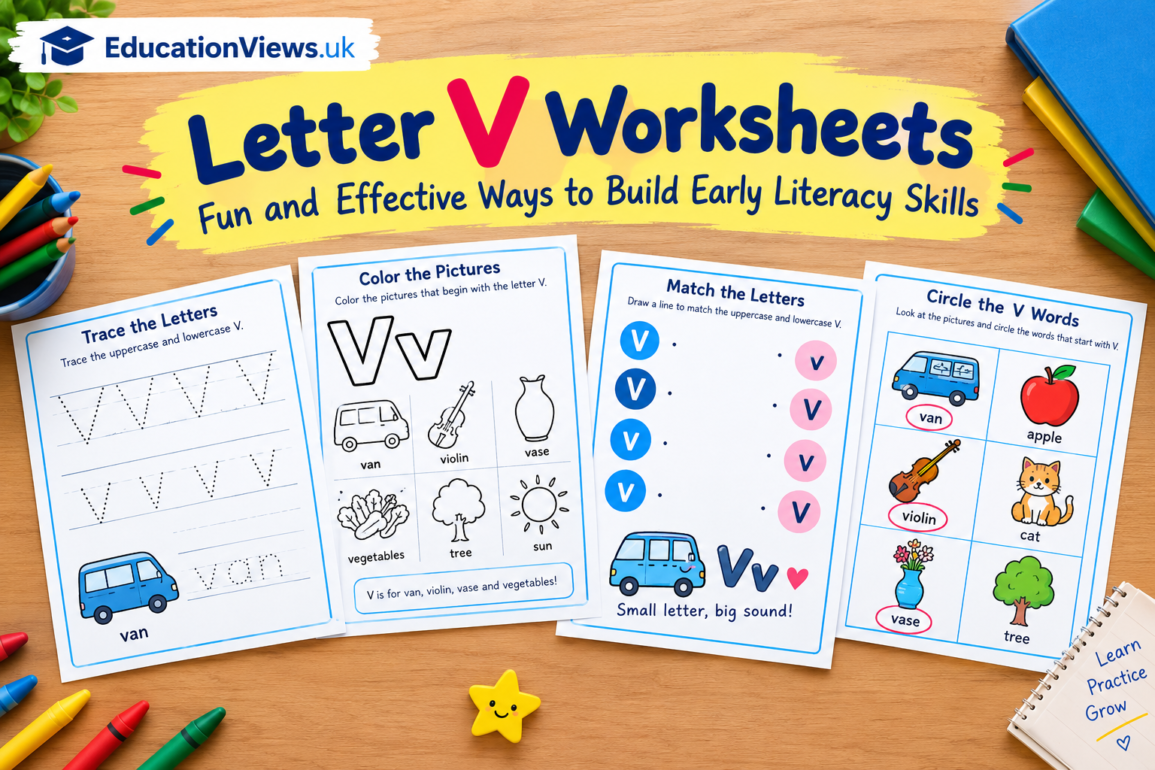
Tracing worksheets introduce children to the correct way to write uppercase and lowercase V. These pages typically include dotted outlines, directional examples, and blank spaces where children can practice independently.
At first, an adult can demonstrate how to draw the letter using two diagonal lines. Children can then trace the examples before attempting to write the letter without assistance. This gradual approach helps them develop control and confidence.
Letter V worksheets featuring tracing exercises are particularly useful for preschoolers who are still developing fine motor skills. Short practice sessions can help children improve their handwriting without becoming tired or frustrated.
Letter V Coloring Worksheets
Coloring activities make alphabet learning enjoyable by connecting letters with recognizable pictures. A worksheet might feature a van, violin, vase, or vegetables alongside a large letter V.
Children can color the pictures while repeating the names of the objects. This simple activity strengthens the connection between the written letter, its sound, and familiar vocabulary.
Parents can make the activity more interactive by asking children to identify each picture before coloring it. They can also encourage learners to find another object beginning with V in their surroundings.
Uppercase and Lowercase Matching Worksheets
Young learners need to understand that uppercase V and lowercase v represent the same letter. Matching activities help them recognize both forms and distinguish them from other letters.
For example, a worksheet might ask children to connect an uppercase V with a lowercase v or circle every V in a group of mixed letters. These exercises improve visual discrimination and prepare children to recognize letters in different types of text.
Regular practice with letter V worksheets can help learners identify the letter more quickly when they begin reading simple words and sentences.
Letter V Picture-Matching Worksheets
Picture-matching activities encourage children to connect vocabulary with the correct beginning sound. A page might include pictures of a violin, van, apple, vase, and ball. Children must identify the pictures whose names begin with V.
These exercises help develop phonemic awareness, which involves recognizing and working with the sounds in spoken words. Adults can pronounce each word slowly and ask children to listen for the initial sound.
As children become more confident, they can complete the activities independently and explain why particular pictures belong in the V category.
Building Vocabulary With Letter V Worksheets
Alphabet lessons become more meaningful when children learn real words alongside letter shapes. The letter V appears in several everyday words that young learners can understand and remember.
Common examples include van, vet, vest, vase, violin, vegetable, and volcano. Parents and teachers can introduce a few words at a time instead of overwhelming children with a long vocabulary list.
Letter V worksheets can reinforce these words through picture identification, word tracing, simple puzzles, and matching exercises. Children might match the word “van” to a vehicle picture or trace the word “vet” beneath an illustration of an animal doctor.
Adults can also introduce short sentences to help learners understand how new vocabulary works in context. For example, “The van is blue” or “The violin makes music” connects familiar words with simple reading practice.
The goal is not to memorize every possible V word immediately. Instead, children should gradually build a useful vocabulary while learning to recognize the letter in different contexts.
How to Use Letter V Worksheets Effectively
Choosing an appropriate worksheet is only one part of teaching the alphabet. The way adults introduce and reinforce each activity can influence how well children understand the material.
Start With Letter Recognition
Before asking children to write the letter, show them a clear example of uppercase V and lowercase v. Explain the difference between the two forms and ask children to find them among other letters.
Use simple questions such as, “Can you point to the letter V?” or “Which of these letters looks like a V?” This approach helps children focus on the letter’s shape before moving to more challenging exercises.
Practice Writing Step by Step
Begin with tracing activities that provide clear visual guidance. Demonstrate the letter slowly and encourage children to follow the same movement. Once they become comfortable, let them write the letter independently.
Avoid correcting every small mistake immediately. Instead, offer gentle guidance and celebrate progress. Children generally benefit more from regular encouragement than from pressure to produce perfect handwriting.
Combine Worksheets With Hands-On Activities
Worksheets become more engaging when children can connect them with real objects and experiences. Ask learners to look around the classroom or home for items beginning with V.
They might find a vase, a vegetable, or a picture of a violin. You can also use picture cards, alphabet blocks, or simple drawing games to reinforce the same concepts.
These activities complement letter V worksheets by giving children opportunities to apply what they have learned beyond the page.
Three Tips for Better Letter V Practice
Keep sessions short
Five to ten minutes of focused practice may be more productive for a young child than a long lesson.
Use colorful materials
Crayons, picture cards, and child-friendly worksheets can make alphabet activities more appealing.
Celebrate improvement
Praise effort, careful tracing, and correct letter recognition to encourage children to keep learning.
Benefits for Preschool and Kindergarten Students
Preschool and kindergarten are important stages for developing early reading and writing abilities. Children at these ages benefit from activities that introduce basic concepts through repetition, exploration, and play.
Letter V worksheets support visual recognition by helping children distinguish V from similar-looking letters. They also encourage fine motor development through tracing, coloring, and drawing.
Another important benefit is improved listening and speaking awareness. When children say words aloud and identify their beginning sounds, they begin to understand how spoken language connects with written letters.
These worksheets can also support independence. Once children understand the instructions, they can complete simple activities with less adult assistance. This gives them opportunities to build concentration, follow directions, and develop confidence in their abilities.
However, worksheets should remain one part of a broader literacy routine. Reading picture books, singing alphabet songs, talking about everyday objects, and practicing letter sounds can provide valuable additional experiences.
Choosing the Right Printable Letter V Worksheets
The best worksheet depends on a child’s age, current abilities, and learning goals. A preschooler who is just beginning to recognize letters may need large, simple outlines and colorful pictures. A kindergarten student who already knows the alphabet may benefit from word matching, beginning-sound activities, and independent writing practice.
Look for letter V worksheets with clear instructions, readable text, and enough space for children to write comfortably. Avoid pages that contain too many activities at once, especially for beginners.
Printable worksheets can be convenient because parents and teachers can select individual pages according to a lesson plan. They can print extra copies when children need more practice or reuse a favorite activity during review sessions.
It is also helpful to check whether a worksheet includes both uppercase and lowercase letters. A balanced selection can support recognition, handwriting, vocabulary, and phonics without concentrating on only one skill.
Common Mistakes to Avoid During Letter Practice
One common mistake is introducing too many new words before children understand the basic letter sound. Begin with a few familiar examples, then add more vocabulary as their confidence grows.
Another mistake is expecting children to master handwriting immediately. Young learners develop pencil control at different rates, so their progress may vary. Offer opportunities to trace, copy, and write independently without demanding perfect results from the beginning.
Adults should also avoid relying exclusively on written exercises. Although letter V worksheets offer useful practice, children need conversation, reading, movement, and play to develop a broader understanding of language.
Finally, make sure each activity has a clear purpose. If a child is learning letter recognition, choose a page that emphasizes identifying V rather than one that requires advanced spelling skills.
Frequently Asked Questions
1. What age is suitable for letter V worksheets?
Most children can begin simple letter-recognition activities during preschool, often around ages three to four. More structured tracing and writing exercises may suit preschoolers and kindergarten students as their fine motor skills develop.
2. What words should children learn with the letter V?
Useful beginner words include van, vet, vest, vase, violin, vegetable, and volcano. Start with familiar words and introduce more examples gradually.
3. Are printable letter V worksheets useful for home learning?
Yes. Parents can use printable activities for short practice sessions at home. Combining them with books, conversations, and real-world objects helps reinforce letter recognition and sound awareness.
4. How can I make letter V practice more enjoyable?
Use coloring pages, picture matching, tracing games, and simple object hunts. Allow children to choose colors and draw their own V-related pictures to make the experience more engaging.
5. Should children practice uppercase and lowercase V together?
Yes, although beginners may benefit from learning one form at a time before comparing them. Gradually introduce both forms so children can recognize the letter in different words and sentences.
Conclusion
Learning the alphabet becomes easier when children have opportunities to see, hear, write, and use each letter in meaningful ways. Letter V worksheets offer a practical approach to developing letter recognition, handwriting, vocabulary, and early phonics skills through activities that suit different learning levels.
Parents and teachers can make these resources more effective by choosing age-appropriate exercises, keeping practice sessions short, and combining worksheets with everyday learning experiences. With patience, encouragement, and regular practice, children can become more confident in recognizing and writing the letter V while building a strong foundation for future reading and writing success.