



Introduction
Learning vowel sounds is an important step in developing strong reading and spelling skills. Among the five vowels, E plays a significant role in helping children recognize words, pronounce them correctly, and understand basic phonics. The short E sound is one of the first vowel sounds that young learners encounter when they begin reading simple English words. Understanding this sound can make reading more comfortable and improve early literacy skills.
The short E sound appears in familiar words such as bed, red, pen, hen, and ten. Although these words are simple, they provide valuable practice for recognizing vowel sounds and connecting letters with pronunciation. Children who learn to identify short E can gradually build their vocabulary and become more confident readers.
Parents, teachers, and students can use practical examples, reading exercises, and phonics games to strengthen this skill. This guide explains the short E sound, provides useful word lists, and explores activities that make learning easier and more enjoyable.
What Is Short E?
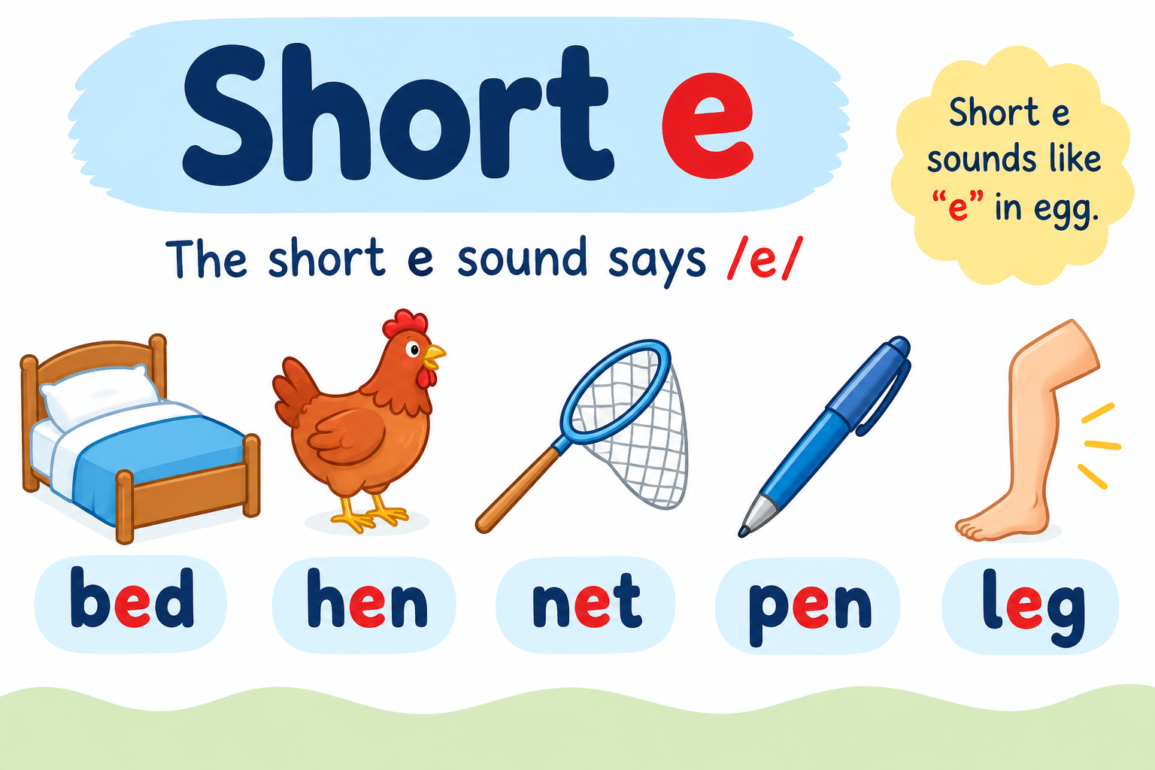
Short E is the vowel sound commonly heard in words such as egg, elephant, and red. In phonics, it is usually represented by the letter E and pronounced /ɛ/, as in the word bed.
Unlike the long E sound in words such as see and tree, the short E sound is produced with a relatively relaxed mouth position. The mouth opens slightly, and the tongue remains near the middle of the mouth.
For beginning readers, learning the difference between short and long vowel sounds is essential. It helps them decode unfamiliar words and understand how spelling patterns influence pronunciation.
The short E sound frequently appears in simple consonant-vowel-consonant words. These words follow a basic pattern in which a consonant comes first, the vowel appears in the middle, and another consonant comes last.
For example, the word pen contains P, E, and N. Recognizing the middle vowel allows a learner to pronounce the word accurately.
How to Pronounce Short E
To pronounce short E correctly, begin by saying the word egg slowly. Pay attention to the vowel sound at the beginning. The same sound appears in bed, red, and ten.
Keep your jaw slightly open and your tongue relaxed. Avoid stretching the sound into a long E, as heard in eat or even. Repeating simple words helps learners become familiar with the difference.
Teachers can demonstrate the sound by saying several words aloud and asking students to identify the common vowel. For example, bed, net, and pet all contain the same vowel sound.
Practicing in short sessions is often more effective than memorizing a long list of words at once. Children can repeat each word, listen carefully, and then use it in a simple sentence.
Short E Words for Beginners
Building a vocabulary of familiar words helps children recognize vowel patterns in everyday reading. Start with short words that have clear pronunciation and simple spelling.
Three-Letter Words
Three-letter words are especially useful for early phonics instruction because they allow students to focus on each individual sound.
Common examples include bed, red, fed, led, pen, hen, ten, men, net, pet, set, wet, get, let, met, leg, beg, peg, den, and web.
Parents and teachers can write these words on flashcards and ask children to read them aloud. After practicing pronunciation, learners can group words according to their ending sounds.
For instance, bed, red, and fed share the same ending pattern. Similarly, pen, hen, and ten provide an opportunity to recognize the -en pattern.
These exercises help learners understand that changing one letter can create a different word while leaving the vowel sound unchanged.
Four-Letter Words
Once students become comfortable with simple examples, they can practice longer words containing the same vowel sound.
Useful examples include help, kept, left, next, best, bend, send, tent, desk, and rest.
Some words introduce consonant combinations that require additional attention. In help, for example, learners must recognize the consonant blend at the beginning and the consonants at the end.
Practicing these examples strengthens decoding skills and prepares students to read more complex words. Teachers should introduce new patterns gradually so that learners can focus on accuracy before increasing their reading speed.
Short E and Long E: Understanding the Difference
Short and long vowel sounds can sometimes confuse beginning readers. Learning to distinguish between them helps students pronounce words accurately and recognize common spelling patterns.
The short E sound appears in words such as bed, pen, and ten. The long E sound appears in words such as see, tree, and green.
The main difference is pronunciation. Short E sounds similar to the vowel in bed, while long E sounds like the vowel in see.
Spelling patterns can also provide useful clues. A short vowel often appears in consonant-vowel-consonant words, including red and pet. Long E frequently appears in patterns such as ee and ea, as in tree and sea.
However, English spelling includes exceptions. Learners should treat these patterns as helpful guidelines rather than rules that work in every situation.
Teachers can make comparisons easier by placing pairs of words side by side. Students can read each pair aloud and explain how the vowel sounds differ.
Why Learning Short E Matters
Recognizing vowel sounds supports several important reading and writing skills. The short E sound provides a foundation for understanding how letters represent sounds in spoken language.
First, it improves phonemic awareness. Children learn to hear the individual sounds within words and identify the vowel in the middle. This ability supports the development of decoding and spelling skills.
Second, it strengthens word recognition. When learners become familiar with common spelling patterns, they can read familiar words more quickly and approach new words with greater confidence.
Third, phonics practice supports spelling development. Children who understand the relationship between sounds and letters are better prepared to write simple words independently.
Finally, vowel instruction encourages reading fluency. As learners become more accurate at recognizing words, they can focus more attention on meaning instead of struggling with individual letters.
Fun Activities for Practicing Short E
Children often learn more effectively when they can actively participate in a lesson. Teachers and parents can introduce simple activities that combine listening, speaking, reading, and writing.
Word Sorting
Prepare cards containing words with different vowel sounds. Ask students to separate words containing short E from those containing other vowel sounds.
For example, place bed, red, and ten in one group. Put cat, sit, and dog in separate groups according to their vowel sounds.
This activity encourages learners to listen carefully and compare pronunciation.
Fill-in-the-Blank Exercises
Write simple sentences with missing words and provide a small word bank.
For example, complete the sentence: “The hen is in the ___.”
Possible answers might include pen, den, or nest, depending on the intended meaning and the words provided.
These exercises connect phonics with comprehension and help children understand how words function in sentences.
Picture Matching
Show pictures of a bed, pen, red object, or hen. Ask students to match each picture with its written label.
Visual support can help younger learners connect the meaning of a word with its spelling and pronunciation. Teachers can gradually remove the pictures as students become more confident.
Reading Aloud
Choose a short passage containing several familiar words with the target vowel sound. Ask students to underline the words and read the passage aloud.
Repeated reading provides opportunities to practice pronunciation, improve fluency, and notice spelling patterns in context.
Common Mistakes to Avoid
One common mistake is confusing short E with short I. The words bed and bid contain different vowel sounds, even though their spellings are similar.
Another mistake is stretching a short vowel into a long sound. Learners should practice saying pen without changing the vowel into the sound heard in a word such as seen.
Some students also memorize individual words without learning the underlying pattern. Although memorization has a place in reading instruction, students benefit more when they understand how sounds and letters work together.
Teachers should avoid introducing too many unfamiliar words at once. A small, carefully selected group allows students to concentrate on pronunciation and spelling.
Regular review is equally important. Revisiting familiar examples helps reinforce learning and makes it easier for children to apply their knowledge to new words.
Tips for Parents and Teachers
Consistent practice can make vowel instruction more effective. Begin with words children already know, then gradually introduce unfamiliar examples.
Use clear pronunciation when demonstrating each sound. Encourage students to repeat the word and identify the vowel rather than simply copying its spelling.
Keep practice sessions short and engaging. Five to ten minutes of focused reading, word sorting, or flashcard practice can provide a useful addition to regular literacy lessons.
Provide positive feedback when learners identify sounds correctly. When a mistake occurs, pronounce the word again and invite the student to listen carefully before trying once more.
Most importantly, connect phonics activities with everyday reading. Storybooks, classroom labels, simple sentences, and familiar objects provide natural opportunities to notice vowel sounds.
Frequently Asked Questions
1. What is the short E sound?
The short E sound is /ɛ/, as heard in words such as bed, red, pen, and ten.
2. What are some examples of short E words?
Common examples include egg, bed, pen, hen, net, pet, red, leg, help, and best.
3. How is short E different from long E?
Short E sounds like the vowel in bed, while long E sounds like the vowel in see. Their spelling patterns and pronunciations often differ.
4. How can children practice short E at home?
Children can practice by reading word cards, matching pictures with labels, sorting vowel sounds, completing sentences, and reading short passages aloud.
5. Why is short E important in phonics?
It helps children develop sound recognition, decode unfamiliar words, improve spelling, and build confidence in reading.
Conclusion
Learning vowel sounds is an essential part of early literacy, and the short E sound provides an accessible starting point for many beginning readers. Familiar examples such as bed, pen, red, and ten help children connect spoken sounds with written letters.
Through regular reading, listening exercises, word sorting, and simple phonics games, students can improve their pronunciation and spelling skills. Parents and teachers can support progress by introducing words gradually, offering clear demonstrations, and encouraging consistent practice.
With patience and repetition, children can recognize the short E sound more confidently and apply their knowledge to new words. These foundational skills create a stronger starting point for reading comprehension, written communication, and continued language development.