




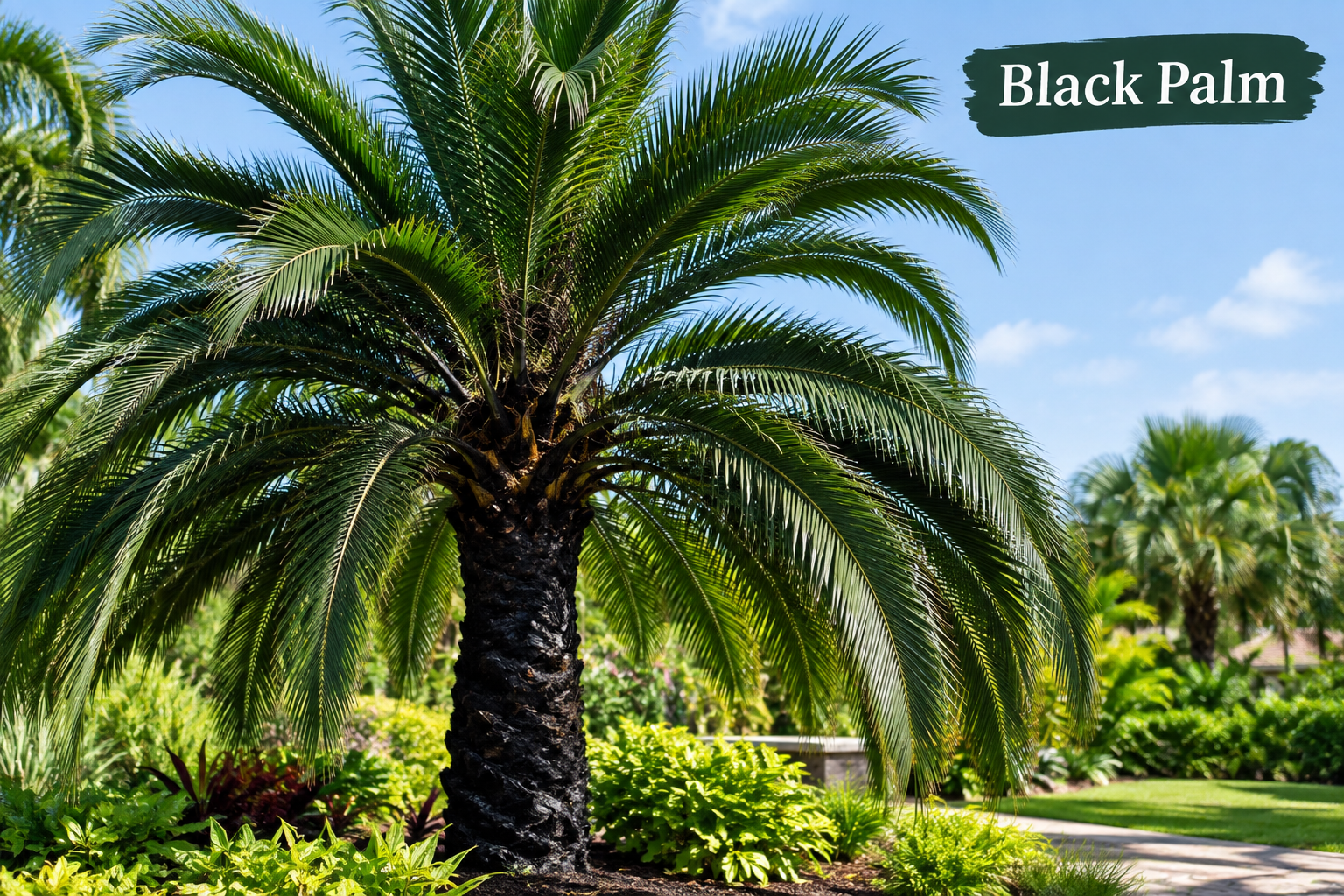
The black palm is a striking tropical plant known for its dramatic appearance, graceful structure, and unusual dark coloring. Unlike ordinary palms that mainly attract attention through their green foliage, this palm can create a bold visual statement with darker trunks, stems, or leaf structures, depending on the species being discussed. Its exotic appearance makes it especially appealing to gardeners, landscape designers, and plant enthusiasts who want something distinctive.
Understanding the black palm requires more than simply looking at its color. Different palms may receive this common name because of their dark trunks, blackish leaf bases, or naturally deep-colored features. Some are valued mainly as ornamental plants, while others are associated with tropical landscapes and specialized botanical collections. Learning about their appearance, growing conditions, care requirements, and uses can help you appreciate why this unusual palm has become so interesting to plant lovers.
What Is a Black Palm?
The term black palm is generally used as a common name rather than a precise botanical classification. Several palm species can develop dark or nearly black characteristics, so the exact plant can vary according to region and context. This is important because two plants sold under the same common name may have different growth habits and care requirements.
A black palm may stand out because of a dark trunk, dark leaf sheaths, or an overall deep-toned appearance. In tropical and subtropical environments, these characteristics can provide strong contrast against bright green foliage and colorful flowering plants.
Because common plant names can vary, it is wise to identify the scientific name before purchasing one. Correct identification helps gardeners understand its mature size, temperature tolerance, watering needs, and preferred soil conditions.
Appearance and Distinctive Features
One of the most attractive qualities of a black palm is its visual contrast. The dark structural parts of the plant can make its green fronds appear even brighter. This creates a dramatic appearance that works particularly well in modern gardens and tropical landscapes.
Trunk and Stem Characteristics
Depending on the species, the trunk may range from deep brown to almost black. Younger growth can sometimes appear different from mature sections, meaning the plant’s appearance may change as it develops. Texture also varies, with some palms having relatively smooth trunks and others developing more noticeable patterns from old leaf bases.
Leaves and Fronds
The foliage of a black palm is usually one of its most important decorative features. Long, arching fronds can form a natural canopy that provides shade and movement. Healthy leaves typically have a rich green color, although their exact shape and size depend on the species.
The combination of dark structural elements and green foliage gives this palm an exotic character without requiring unusual flower colors.
Where Does a Black Palm Grow Naturally?
Many palms associated with dark coloration originate from warm regions where temperatures remain relatively high throughout much of the year. Tropical and subtropical environments generally provide the warmth, moisture, and sunlight needed for healthy development.
A black palm may struggle in climates with prolonged freezing temperatures. Some species tolerate brief cool periods better than others, but gardeners should never assume that every palm with this common name has the same cold tolerance.
In suitable climates, palms can become impressive landscape plants. In colder regions, growing one may require a protected location, container cultivation, or seasonal protection.
Ideal Growing Conditions
Successful cultivation depends on matching the plant with the environment it needs. Before planting a black palm, consider sunlight, soil, water, humidity, and temperature.
Sunlight Requirements
Most tropical palms perform well when they receive plenty of bright light. However, young plants may appreciate some protection from intense afternoon sunlight while they establish their root systems.
A mature black palm planted in an appropriate location can benefit from several hours of sunlight each day. Poor lighting can lead to weak growth and less attractive foliage.
Soil and Drainage
Well-draining soil is essential. Palms generally dislike sitting in constantly saturated soil because excessive moisture around the roots can encourage root problems.
Adding organic matter can improve soil structure, particularly when the existing ground is compacted or poor. At the same time, drainage should remain a priority. Rich soil is helpful, but waterlogged soil can be harmful.
Watering
Young palms usually need consistent moisture while their roots become established. Once established, watering frequency depends on rainfall, soil type, temperature, and the particular species.
The goal is to provide adequate moisture without keeping the root zone permanently wet. Checking the soil before watering can help prevent unnecessary irrigation.
How to Care for a Black Palm
Routine care can keep a black palm healthy and attractive for many years. Proper watering, feeding, pruning, and monitoring are more important than complicated maintenance.
Fertilization may be useful during active growth, especially when the soil lacks important nutrients. A fertilizer formulated for palms can provide nutrients needed for healthy leaves and structural development. Always follow the product directions rather than applying excessive fertilizer.
Pruning should also be approached carefully. Remove dead or severely damaged fronds when necessary, but avoid cutting healthy green leaves simply for cosmetic reasons. Excessive pruning can weaken a palm and reduce its ability to produce energy.
Common Problems and Pests
Like other ornamental plants, a black palm can experience pest and disease problems when environmental conditions are poor. Stress caused by drought, poor drainage, nutrient deficiencies, or unsuitable temperatures can make plants more vulnerable.
Common palm pests may include scale insects, mites, and other sap-feeding insects. Signs of trouble can include yellowing foliage, spotting, reduced growth, or visible insects on leaves and stems.
Regular inspection makes problems easier to manage. Look closely at both sides of the leaves and around the bases of fronds. Early detection often allows gardeners to address the underlying issue before serious damage occurs.
Landscaping Uses
The dramatic appearance of a black palm makes it a useful focal point in landscape design. Instead of blending into a garden, it can become one of the first plants visitors notice.
It can work effectively near patios, pool areas, entrances, courtyards, and tropical-themed gardens. When space allows, planting it where its trunk and canopy can be viewed clearly can increase its visual impact.
Garden designers can also combine dark-toned palms with lighter foliage, ornamental grasses, flowering plants, and stone features. The contrast can create a sophisticated outdoor setting.
Container Growing
Some smaller palm species can be grown in containers, making them useful for patios, balconies, and protected outdoor spaces. Container cultivation also gives gardeners greater control over soil and drainage.
However, container-grown palms generally require more frequent attention to watering and nutrition because their root systems have limited access to soil resources. The container should also have adequate drainage holes.
Black Palm vs. Other Ornamental Palms
The main appeal of a black palm is its unusual appearance. Traditional palms often create a bright, tropical atmosphere through green trunks and foliage, while darker palms can introduce stronger visual contrast.
That does not necessarily make one type better than another. The best choice depends on the climate, available space, maintenance preferences, and desired landscape style.
A gardener seeking a dramatic centerpiece may prefer a darker palm, while someone creating a softer tropical garden may choose species with lighter trunks and broader foliage.
How Fast Does a Black Palm Grow?
Growth rate varies considerably among species. Temperature, sunlight, soil quality, water availability, nutrition, and plant age all influence development.
Young palms may appear to grow slowly while establishing their root systems. Growth can become more noticeable when conditions are consistently favorable.
Rather than expecting rapid height increases, gardeners should focus on healthy root development and strong foliage. A well-established black palm is more likely to perform successfully over the long term.
Is a Black Palm Difficult to Grow?
Growing a black palm is not necessarily difficult when the plant is matched with the right climate. The biggest challenge is often environmental rather than technical.
Cold weather, poor drainage, inadequate sunlight, and inconsistent watering can create problems. Gardeners in warm climates may find cultivation relatively straightforward, while those in colder areas may need containers or winter protection.
Researching the exact species before planting is one of the most valuable steps. The common name alone does not provide enough information to establish an ideal care routine.
Benefits of Adding a Black Palm to a Garden
A black palm can provide several landscape benefits. Its distinctive structure adds architectural interest, while its fronds create movement and a tropical atmosphere.
The dark trunk can also provide year-round visual appeal, particularly when the plant is surrounded by lighter vegetation. Unlike flowering plants that may only attract attention during a short blooming period, palms can remain prominent throughout the growing season.
For landscape projects that need a strong focal point, this unusual palm can offer a memorable solution.
Frequently Asked Questions
What is a black palm?
A black palm is a common name used for palms that feature notably dark trunks, stems, leaf bases, or other structural characteristics. The exact species can vary by location.
Can a black palm grow indoors?
Some smaller palm species can adapt to indoor containers when they receive sufficient bright light and suitable humidity. However, larger species may eventually become unsuitable for indoor spaces.
Does a black palm need full sun?
Many palms appreciate strong sunlight, but requirements differ between species. Young plants may benefit from gradual exposure rather than immediate placement in intense sunlight.
How often should a black palm be watered?
Watering depends on climate, soil, plant size, and species. Keep the soil adequately moist while avoiding prolonged waterlogging.
Can black palms survive cold weather?
Cold tolerance varies significantly. Many tropical palms can suffer damage from freezing temperatures, so gardeners should identify the exact species and understand its temperature limits.
Conclusion
The black palm offers a distinctive combination of tropical beauty, architectural form, and dramatic coloration. Its unusual appearance makes it an appealing choice for gardeners who want a landscape feature that feels different from conventional ornamental palms. From its dark structural features to its graceful green fronds, the plant can bring character to gardens, patios, courtyards, and other outdoor spaces.
Successful cultivation ultimately depends on choosing the right species and providing suitable growing conditions. Good drainage, appropriate sunlight, consistent moisture, adequate nutrition, and protection from unsuitable temperatures can make a major difference. With thoughtful care and proper placement, a black palm can become a long-lasting centerpiece that gives a garden an elegant and exotic character.