


Introduction
If you have ever seen a round, tent-like home in a travel documentary or luxury camping destination, you may have wondered, what’s a yurt and why has this unusual structure remained popular for centuries? A yurt is much more than a simple tent. It is a practical, portable, and comfortable dwelling with deep cultural roots in Central Asia.
Today, yurts are used in many different ways. Some people live in them permanently, while others use them for camping, tourism, meditation spaces, gardens, and vacation rentals. Modern versions can include electricity, heating, insulation, furniture, bathrooms, and other comforts found in traditional homes.
Understanding what’s a yurt helps explain why this circular structure has survived for generations. Its simple design combines flexibility, strength, and efficient use of materials. From the open grasslands of Mongolia to modern glamping resorts, the yurt continues to attract people who appreciate natural living and unique architecture.
What’s a Yurt?
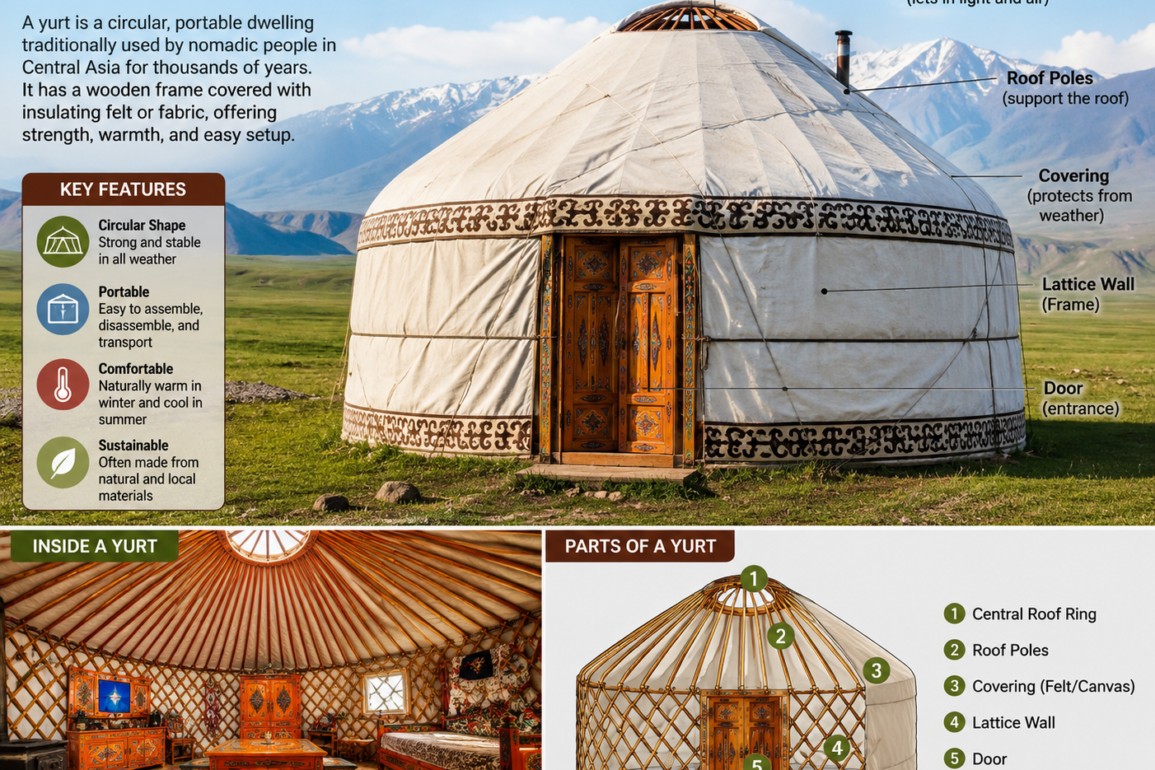
So, what’s a yurt exactly? A yurt is a circular portable dwelling traditionally used by nomadic communities in Central Asia. It usually consists of a wooden frame covered with layers of fabric, felt, or other protective materials.
Traditional yurts are especially associated with Mongolia, Kazakhstan, Kyrgyzstan, and other parts of Central Asia. In Mongolia, a similar structure is often called a ger. Although modern designs may look different, the basic concept remains similar.
The circular shape is one of the most important features of a yurt. Unlike rectangular buildings, a circular structure distributes pressure efficiently and can withstand strong winds. The design also creates an open interior without requiring many internal walls.
When asking what’s a yurt, it is useful to think of it as a carefully engineered portable home rather than simply a large tent.
The History Behind the Yurt
Yurts have been part of Central Asian life for thousands of years. Nomadic communities needed homes that could be assembled, dismantled, and transported when they moved with their animals.
A permanent stone or brick house was not practical for people who regularly changed locations. The yurt provided an effective solution because it was lightweight compared with traditional buildings and could be packed for transportation.
The structure also offered protection against difficult weather conditions. Central Asia experiences hot summers, cold winters, strong winds, and changing temperatures. Layers of felt and fabric helped provide insulation and shelter.
The long history behind what’s a yurt shows that the design developed from practical needs. It allowed families to create comfortable living spaces while maintaining a mobile lifestyle.
What Is a Yurt Made Of?
The materials used in a yurt can vary depending on location and purpose. Traditional yurts generally use natural materials, while modern yurts may include manufactured fabrics and advanced insulation.
The Wooden Frame
The internal structure usually includes a collapsible wooden wall frame. This frame creates the circular shape and supports the roof.
Wooden poles extend upward toward the center of the structure. These poles create the roof and connect to a central opening.
The frame is designed to be strong while remaining relatively easy to transport.
The Central Roof Ring
One distinctive feature is the central circular opening at the top. This component supports the roof poles and often allows light and air to enter.
In traditional homes, the opening can also allow smoke to escape from a stove or fire.
The Outer Covering
Traditional yurts often use wool felt as insulation. Additional layers of fabric or protective material may cover the outside.
Modern designs can use waterproof canvas, synthetic fabrics, reflective insulation, and weather-resistant materials.
These components provide a clearer answer to what’s a yurt because the structure depends on several parts working together rather than one simple covering.
Why Are Yurts Circular?
The circular design is not simply decorative. It offers several practical advantages.
A circle has no corners where wind pressure can easily concentrate. This shape helps the structure remain stable during strong winds. The curved design also allows air to move more naturally around the outside.
Inside, the circular layout creates an open living space. Families can arrange sleeping areas, storage, furniture, and heating around the central area.
The shape also has cultural importance. In many traditional communities, the circular home represents unity, family, and connection with nature.
Therefore, when considering what’s a yurt, its shape is an essential part of the answer.
Traditional Yurts vs Modern Yurts
Although traditional yurts continue to exist, modern versions have introduced many new features.
Traditional yurts focus on portability and local materials. Families can assemble them and move them when necessary. Their construction often reflects cultural traditions passed through generations.
Modern yurts are sometimes built on permanent platforms. They may include insulated walls, glass windows, locking doors, electrical systems, plumbing, and climate control.
Some luxury yurts are designed for tourism and glamping. These structures may contain comfortable beds, private bathrooms, kitchens, and decorative interiors.
The meaning of what’s a yurt has therefore expanded over time. While the traditional concept remains important, the word can now describe a wide range of circular structures inspired by the original design.
Can You Live in a Yurt?
Yes, many people live in yurts either temporarily or permanently. However, comfort depends on the design, climate, and available facilities.
A well-designed modern yurt can provide a practical living environment. Insulation helps control temperature, while windows improve natural lighting and ventilation.
Permanent residents may install plumbing and electricity. Some build yurts on raised wooden platforms to improve stability and protect against moisture.
However, living in a yurt also presents challenges. Extreme weather can require additional insulation and heating. Local building regulations may also affect whether a permanent yurt is allowed.
Before deciding to live in one, it is important to understand local laws, climate conditions, maintenance needs, and utility requirements.
What’s the Difference Between a Yurt and a Tent?
Many people asking what’s a yurt assume that it is simply a type of tent. While yurts and tents share some similarities, they are different structures.
A typical tent uses flexible poles and lightweight fabric. It is usually designed for short-term shelter and can be assembled quickly.
A yurt has a more substantial framework. Traditional designs use lattice walls and roof poles connected to a central ring. The structure is generally stronger and more suitable for long-term use.
Modern yurts may also include solid doors, windows, insulation, and flooring. These features make them feel more like small homes than ordinary camping tents.
Benefits of Living in a Yurt
Yurts offer several advantages that make them appealing to modern homeowners and travelers.
Efficient Use of Space
The open circular interior provides flexibility. Without many internal walls, people can organize the space according to their needs.
Connection With Nature
Yurts are often built in natural environments. Large windows, roof openings, and simple designs can create a closer connection with the outdoors.
Potentially Lower Construction Costs
Depending on the location and materials, a yurt may cost less than constructing a conventional house. However, foundations, utilities, insulation, and permits can increase the total expense.
Unique Design
A yurt offers an architectural style that stands out from traditional rectangular buildings. Many people enjoy its warm, open, and distinctive appearance.
Portability
Traditional designs can be dismantled and transported. This makes them useful for people who need flexible living arrangements.
These advantages explain why interest in what’s a yurt continues to grow among travelers, homeowners, and architecture enthusiasts.
Common Uses for Modern Yurts
Modern yurts are no longer limited to nomadic communities. Their flexibility allows people to use them in many creative ways.
Some popular uses include vacation cabins, glamping accommodations, garden offices, meditation rooms, classrooms, art studios, and guest houses.
Tourism businesses often use yurts because they offer visitors a memorable experience. A guest can enjoy nature without giving up all modern comforts.
Homeowners may also build a small yurt as an additional outdoor space. Its circular design can create a peaceful environment for reading, working, exercising, or relaxing.
Are Yurts Suitable for All Climates?
A yurt can be adapted for many climates, but the materials and design must match local weather conditions.
Cold regions require effective insulation and reliable heating. Traditional wool felt provides some insulation, while modern materials can offer additional protection.
Hot climates require ventilation and shade. Windows, roof openings, and breathable materials can improve airflow.
Rainy locations need waterproof coverings and proper drainage. A raised platform can help protect the structure from ground moisture.
Therefore, the answer to what’s a yurt also depends partly on how the structure adapts to its environment.
How Long Can a Yurt Last?
The lifespan of a yurt depends on construction quality, materials, maintenance, and weather exposure.
A well-maintained wooden frame can last for many years. However, fabric coverings may need replacement sooner because sunlight, rain, wind, and snow can gradually damage them.
Modern weather-resistant materials can increase durability. Regular inspections are important for identifying leaks, mold, damaged fabric, or weakened structural components.
With proper care, a high-quality yurt can serve as a comfortable living or recreational space for many years.
Why Are Yurts Popular Today?
Interest in alternative housing has increased in recent years. Many people want smaller homes, lower environmental impact, and stronger connections with nature.
Yurts offer an interesting alternative because they combine ancient design principles with modern technology. A contemporary yurt can include solar power, efficient heating, insulation, and sustainable building materials.
The popularity of glamping has also introduced more people to these structures. Travelers enjoy staying somewhere that feels different from a standard hotel room.
For anyone researching unusual homes, understanding what’s a yurt reveals why this ancient structure remains relevant in the modern world.
Conclusion
So, what’s a yurt? It is a traditional circular dwelling with roots in Central Asian nomadic culture, designed to provide strength, portability, and comfort. Its wooden framework, central roof ring, and protective covering create a practical structure that has survived for generations. Today, yurts have evolved into modern homes, vacation spaces, and creative outdoor buildings. Their combination of history, flexibility, and natural beauty ensures that the yurt remains one of the world’s most fascinating forms of shelter.