


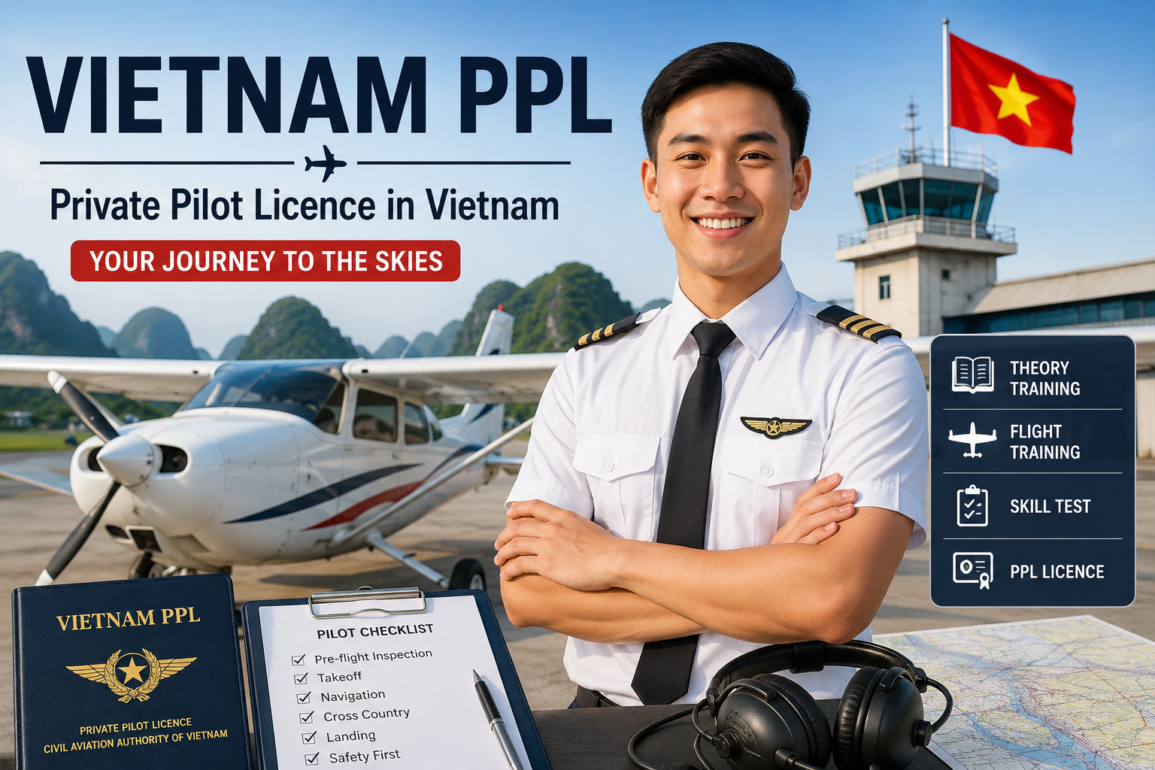
If you dream of flying an aircraft for personal travel, recreation, or aviation experience, earning a vietnam ppl can be an exciting goal. A Private Pilot Licence (PPL) allows qualified pilots to operate an aircraft under the privileges and limitations attached to the licence. Vietnam has established aviation regulations covering private pilots, including requirements for age, medical fitness, training, examinations, and flight experience.
Understanding the licensing process before beginning training can help you make better decisions about flight schools, aircraft ratings, study requirements, and your long-term aviation plans. This guide explains the vietnam ppl pathway, eligibility requirements, training process, examinations, flight experience, and important considerations for prospective pilots.
What Is a Vietnam PPL?
A vietnam ppl refers to a Private Pilot Licence issued under Vietnam’s civil aviation regulatory framework. It is designed for people who want to fly privately rather than work as professional airline pilots.
A PPL generally gives its holder private flying privileges within the limitations of the licence and applicable aviation regulations. It is different from a Commercial Pilot Licence because a private licence is not intended to provide the privileges associated with commercial air transport employment.
The Civil Aviation Authority of Vietnam (CAAV) maintains regulations and documentation relating to aviation personnel licensing. Its official materials include a Private Pilot Licence skill test report and other aviation licensing forms.
For someone considering a vietnam ppl, understanding the distinction between private and commercial flying is essential. If your ultimate objective is an airline career, you will normally need additional training and licensing beyond the private pilot stage.
Who Can Apply for a Vietnam PPL?
Vietnam’s aviation regulations establish several basic eligibility requirements for private pilot applicants. Under the published private pilot provisions, an applicant for an aeroplane or helicopter-related rating must generally be at least 17 years old. Different minimum ages can apply to glider or balloon ratings.
Applicants also need to demonstrate the required language proficiency. The regulations specify a minimum demonstrated proficiency of Level 4 for relevant aeronautical communication, with English requirements applying to international operations.
Medical fitness is another important part of the vietnam ppl process. The published requirements state that an applicant must hold at least a Class 2 medical certificate. This helps establish that the applicant is medically fit to perform the duties associated with private flying.
Basic Eligibility Checklist
Before starting a vietnam ppl program, prospective students should consider whether they can meet requirements such as:
- Meeting the applicable minimum age.
- Obtaining the required medical certificate.
- Meeting aviation language requirements.
- Completing approved theoretical instruction.
- Completing the required flight training.
- Passing the required knowledge examination.
- Completing the required practical or skill test.
- Receiving the appropriate instructor endorsements and documentation.
Exact administrative requirements can change, so applicants should confirm the current requirements with CAAV and their approved training organisation.
Vietnam PPL Flight Experience Requirements
Flight experience is one of the most important parts of earning a vietnam ppl. According to CAAV information published about updated private pilot requirements, applicants need a minimum total flight experience of 40 hours for the relevant aircraft category. The requirements also include at least 10 hours of supervised solo flight and at least five hours of solo cross-country experience.
Applicants must also complete specific takeoff and landing experience. The published requirements include at least five solo takeoffs and full-stop landings at an airport with an operating control tower, with each landing associated with a circuit flight.
Cross-country flying is another important element. The requirement described by CAAV includes a solo cross-country flight covering at least 270 kilometres, or 150 nautical miles, involving two different landing points.
These requirements show why a vietnam ppl is more than simply completing a fixed number of classroom lessons. Students must demonstrate practical competence and develop safe decision-making skills in real flight conditions.
Theoretical Training for a Vietnam PPL
Ground school provides the knowledge needed to understand aircraft operations and aviation safety. A vietnam ppl student should expect to study subjects that support practical flying and safe decision-making.
Typical areas of private pilot knowledge can include aviation regulations, meteorology, navigation, aircraft systems, human factors, flight operations, communications, and general flight safety. The precise syllabus and examination arrangements depend on the applicable Vietnamese regulations and approved training organisation.
Theoretical knowledge is particularly important because pilots must understand what is happening around them rather than simply follow instructions from an instructor. Weather changes, navigation challenges, aircraft limitations, and communication procedures can all influence flight safety.
Students preparing for a vietnam ppl should therefore treat ground training as an essential part of pilot development rather than a formality before flying.
Practical Flight Training
Practical training is where students apply their theoretical knowledge in an aircraft. Training normally begins with basic aircraft handling before progressing toward more advanced exercises.
Early lessons may introduce aircraft controls, straight-and-level flight, climbing, descending, turns, taxiing, takeoffs, and landings. As the student’s skills improve, training can progress to navigation, emergency procedures, circuit operations, and solo flying.
An instructor monitors the student’s performance and determines when the student is ready to complete particular exercises. The regulations require flight training and an instructor endorsement confirming preparation for the practical test.
For a vietnam ppl student, consistency is valuable. Flying regularly can help maintain skills and reduce the amount of time spent relearning techniques after long breaks.
Vietnam PPL Knowledge and Skill Tests
Passing the required examinations is a central part of obtaining a vietnam ppl. The applicant must complete the required knowledge test and practical test according to the applicable regulations.
The knowledge examination evaluates whether the applicant understands important aviation concepts. The practical test, meanwhile, evaluates the ability to apply those concepts while operating the aircraft.
CAAV currently lists a Private Pilot Licence skill test report among its aviation personnel licensing forms. This demonstrates that practical assessment forms part of the official licensing process.
Students should prepare for both stages rather than focusing exclusively on flight hours. A pilot who understands procedures but cannot apply them effectively needs more practical development, while strong aircraft handling without adequate theoretical knowledge is also insufficient.
How Much Does a Vietnam PPL Cost?
The total cost of a vietnam ppl can vary significantly. Factors include the flight school, aircraft type, aircraft rental rates, instructor fees, ground training, examination fees, medical certification, administrative charges, and the number of additional training hours required.
The minimum regulatory flight experience does not necessarily represent the exact number of hours every student will need before becoming test-ready. Some students progress quickly, while others require additional practice in areas such as navigation, landing, radio communication, or emergency procedures.
For this reason, prospective students should request a detailed quotation from an approved training organisation. Ask whether the quoted price includes aircraft rental, instructor time, ground school, examinations, medical costs, licence processing, and any additional training.
Rather than choosing a vietnam ppl provider solely because it advertises the lowest price, compare the training environment, aircraft availability, instructor experience, safety standards, scheduling flexibility, and regulatory approvals.
Choosing a Vietnam PPL Training Organisation
Selecting the right training organisation can make a major difference to your learning experience. Before enrolling in a vietnam ppl course, verify that the organisation is properly authorised to provide the relevant aviation training.
CAAV maintains official aviation personnel and training information, including licensing documents and regulatory material. Prospective students should use current official information when checking licensing and training requirements.
It is also useful to ask a school about its aircraft fleet and maintenance arrangements. Aircraft availability matters because students who experience frequent cancellations may take longer to build consistent skills.
Another useful consideration is instructor continuity. Having access to qualified instructors who understand your progress can make training more structured and efficient.
Can Foreign Pilots Use Their Licence in Vietnam?
Foreign pilots should not assume that a licence issued elsewhere automatically provides unrestricted flying privileges in Vietnam. Licence validation, conversion, recognition, and associated requirements depend on the circumstances and applicable Vietnamese regulations.
Vietnam’s aviation framework includes procedures concerning validation or conversion of aviation licences. CAAV also publishes forms related to aviation licensing and licence validation.
Applicants who already hold an ICAO-member-state licence should therefore contact the appropriate Vietnamese aviation authority or an authorised organisation before making flight arrangements. Requirements can include documentation, verification, examinations, skill checks, medical requirements, or other conditions.
This is especially important for pilots planning to use a vietnam ppl for private flying after completing training or holding a licence in another country.
Vietnam PPL vs Commercial Pilot Licence
The biggest difference between a vietnam ppl and a commercial licence is the purpose and privileges associated with each qualification.
A private pilot normally flies for personal or recreational purposes within the privileges of the licence. A commercial pilot licence is intended for professional flying privileges subject to additional requirements.
The private licence can therefore serve as an important first step for someone exploring aviation. However, students who want to become airline pilots should discuss the complete professional pathway with an approved flight training organisation before choosing their training plan.
Tips for Successful PPL Training
Success in a vietnam ppl program depends on more than natural flying ability. Good preparation and consistent study can make training considerably easier.
First, study ground-school subjects regularly instead of waiting until examination time. Second, maintain accurate flight records and review instructor feedback after each lesson. Third, develop strong communication habits because clear radio work is an important part of safe flying.
Weather awareness should also become a routine habit. Understanding forecasts, wind conditions, visibility, cloud conditions, and changing weather helps pilots make better decisions.
Finally, do not rush toward the practical test simply because you have reached the minimum number of hours. The objective of a vietnam ppl is to develop safe and competent pilots, not simply to reach a numerical target.
Final Thoughts
A vietnam ppl can provide an exciting entry into general aviation and private flying. The pathway combines medical fitness, theoretical knowledge, practical training, solo experience, cross-country flying, examinations, and a final skills assessment. Current CAAV information identifies important requirements, including minimum flight experience, solo training, cross-country experience, and practical testing.
Anyone considering this licence should research approved training organisations carefully and confirm the latest rules before enrolling. Costs and training times can differ from one student to another, so a realistic budget should include the possibility of additional flight hours.
With disciplined study, regular flying, professional instruction, and a strong commitment to safety, earning a vietnam ppl can become a valuable milestone in an aviation journey.
FAQs About Vietnam PPL
What is a Vietnam PPL?
A vietnam ppl is a Private Pilot Licence issued under Vietnam’s civil aviation licensing framework. It is intended for private flying rather than airline or commercial air transport operations.
What is the minimum age for a Vietnam PPL?
For the relevant aeroplane or helicopter rating, the published Vietnamese private pilot requirements specify a minimum age of 17. Different age requirements may apply to glider and balloon ratings.
How many flight hours are required?
Current CAAV information states that applicants for a private pilot licence need at least 40 hours of total flight experience, including specified solo and cross-country experience.
Is a medical certificate required?
Yes. The published private pilot eligibility requirements specify at least a Class 2 medical certificate.
Can a foreign pilot use a licence in Vietnam?
A foreign licence may require validation, conversion, or recognition procedures depending on the circumstances. Pilots should confirm the current requirements with CAAV before flying in Vietnam.