



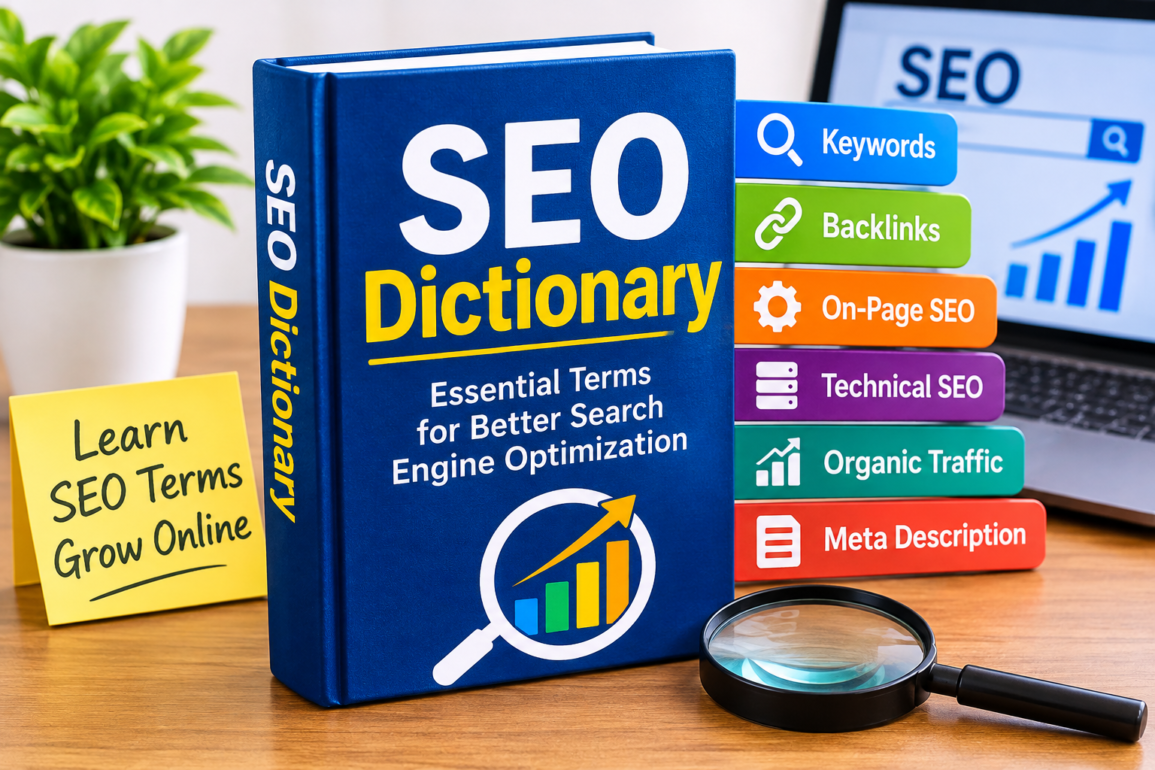
Search engine optimisation can seem complicated when you first enter the world of digital marketing. You may come across unfamiliar words such as backlinks, indexing, crawling, domain authority, keyword difficulty, and search intent. Understanding these terms makes it easier to develop effective strategies and improve website performance. This is where an seo dictionary becomes a valuable resource.
An seo dictionary explains important search engine optimisation terms in simple language. It helps website owners, bloggers, content writers, and digital marketers understand the technical language used in SEO. Whether you manage a personal blog or run a professional website, knowing these concepts can help you make better decisions and attract more visitors from search engines.
In this guide, you will discover essential SEO terminology, understand how different concepts work, and learn why an seo dictionary can support your digital marketing journey.
What Is an SEO Dictionary?
An seo dictionary is a collection of commonly used terms, definitions, and explanations related to search engine optimisation. It covers different areas, including keyword research, technical SEO, content optimisation, link building, website performance, and search engine algorithms.
The primary purpose of this resource is to make SEO terminology easier to understand. Instead of searching for individual definitions whenever you encounter an unfamiliar word, you can use one organised reference to find the information you need.
For beginners, an seo dictionary provides a starting point for learning digital marketing. Experienced professionals can also use it to refresh their knowledge and explain complicated concepts to clients or colleagues.
Why Is an SEO Dictionary Important?
Search engine optimisation involves many interconnected activities. Each activity has its own terminology, and misunderstanding one concept can lead to incorrect decisions.
An seo dictionary helps simplify this learning process by providing clear explanations of important words. It also allows readers to understand industry discussions, follow SEO tutorials, and communicate more effectively with marketing professionals.
Makes SEO Easier for Beginners
People who are new to website optimisation often struggle with technical expressions. Terms such as canonical tags, crawl budget, and structured data may initially seem difficult.
A reliable seo dictionary explains these expressions without requiring advanced technical knowledge. Beginners can gradually build their understanding and become more confident when working on websites.
Improves Digital Marketing Knowledge
Digital marketing professionals regularly encounter new SEO concepts and techniques. Learning the correct terminology helps them understand industry developments and apply suitable strategies.
Supports Better SEO Decisions
Understanding SEO terminology allows website owners to recognise problems and identify opportunities. For example, knowing the difference between impressions and clicks helps you interpret search performance more accurately.
Essential SEO Terms You Should Understand
The following terms cover important areas of search engine optimisation. Learning them will help you understand how search engines discover, evaluate, and display website content.
1. Search Engine Optimisation (SEO)
Search engine optimisation refers to improving a website so that its pages can appear more prominently in relevant organic search results. It includes content improvements, technical adjustments, website structure, and other practices that help search engines understand pages.
2. Keyword
A keyword is a word or phrase that people enter into search engines when looking for information, products, or services. Website owners use relevant keywords to understand audience interests and create useful content.
3. Long-Tail Keyword
A long-tail keyword is a more specific search phrase that usually contains several words. For example, “best SEO tools for small businesses” is more specific than “SEO tools.”
These seo dictionary phrases can help websites attract visitors with clearly defined interests.
4. Backlink
A backlink is a link from one website to another. Search engines can use links as signals when discovering pages and understanding relationships between websites.
Relevant, naturally earned backlinks can support a website’s visibility and authority.
5. Domain Authority
Domain Authority is a website metric developed by Moz to estimate how likely a domain is to rank in search results compared with other websites. It is not a Google ranking factor.
6. Organic Traffic
Organic traffic refers to visitors who reach a website through unpaid search engine results. Businesses often aim to increase this traffic by publishing useful content and improving website optimisation.
7. SERP
SERP stands for Search Engine Results Page. It is the page displayed after someone searches for a particular query.
Search results may include organic listings, advertisements, featured snippets, images, videos, and other specialised results.
8. Meta Description
A meta description is a short summary of a webpage’s content. Search engines may display it below the page title in search results.
A clear and relevant description can encourage users to visit a webpage.
9. Title Tag
A title tag is an HTML element that communicates a webpage’s title. Search engines may use it to understand the page and display a title link in search results.
An informative title should accurately describe the content and match the page’s purpose.
10. Anchor Text
Anchor text refers to the clickable words within a hyperlink. Descriptive anchor text helps visitors and search engines understand the destination of a link.
Different Types of SEO
A useful seo dictionary should also explain the major categories of search engine optimisation. Each category focuses on a different part of website performance.
On-Page SEO
On-page SEO involves improving individual webpages to make their content more useful and understandable. It includes writing relevant titles, organising headings, improving internal links, using descriptive images, and answering visitors’ questions.
Quality content remains central to this process because search engines aim to provide helpful results that satisfy user needs.
Off-Page SEO
Off-page SEO covers activities outside your website that can influence its visibility and reputation. Link building, digital public relations, brand mentions, and genuine industry relationships are common examples.
The objective is to build credibility and increase awareness of your website.
Technical SEO
Technical SEO focuses on the technical elements that help search engines access, crawl, and understand website content.
It includes improving website speed, managing redirects, implementing HTTPS, creating XML sitemaps, and ensuring mobile compatibility.
Local SEO
Local SEO helps businesses improve their visibility in location-based searches. It is particularly useful for restaurants, shops, service providers, and other businesses that serve specific geographical areas.
Accurate business information, customer reviews, and a well-maintained Google Business Profile can support local visibility.
Important Technical SEO Vocabulary
Technical concepts can be challenging for beginners, but understanding them is essential for managing a healthy website.
Crawling: The process through which search engine bots discover webpages and follow links.
Indexing: The process of analysing and storing information about webpages so they may appear in search results.
Canonical URL: A URL identified as the preferred version of a webpage when similar or duplicate pages exist.
XML Sitemap: A file that provides search engines with information about important website URLs.
Robots.txt: A file that gives search engine crawlers instructions about which website areas they should or should not access.
Redirect: A method of sending visitors and search engines from one URL to another.
Core Web Vitals: A set of Google metrics that measure important aspects of user experience, including loading performance, responsiveness, and visual stability.
Mobile-Friendly Website: A website designed to work properly on smartphones and other smaller screens.
SEO Metrics Every Website Owner Should Know
Understanding performance metrics helps website owners evaluate their optimisation efforts. An seo dictionary can introduce these measurements and explain what they reveal.
Click-Through Rate (CTR)
CTR measures the percentage of impressions that result in clicks. A higher CTR may indicate that a search result attracts attention and matches user expectations.
Impressions
Impressions represent how often a webpage appears in search results. They help website owners understand how frequently their content becomes visible to searchers.
Bounce Rate
Bounce rate measures the percentage of sessions that do not meet the analytics platform’s engagement criteria. Its interpretation depends on the type of website and the visitor’s purpose.
Conversion Rate
Conversion rate measures the percentage of visitors who complete a desired action. Examples include purchasing a product, subscribing to a newsletter, or submitting a contact form.
Keyword Difficulty
Keyword difficulty is a third-party SEO metric that estimates how challenging it may be to rank for a particular search phrase. Different SEO tools calculate this measurement using their own methods.
How to Use an SEO Dictionary Effectively
Simply reading definitions is not enough to develop practical SEO knowledge. You should connect each term with real website activities and apply what you learn.
Start by selecting an unfamiliar term whenever you encounter it in an article, tutorial, or SEO tool. Find its meaning in an seo dictionary and read a practical explanation of how it works.
Next, look for examples on an actual website. If you learn about internal linking, examine how different pages connect through relevant hyperlinks. If you study meta descriptions, review the descriptions used on your published articles.
You should also maintain a personal glossary of important concepts. Organise the terms into categories such as content SEO, technical SEO, keyword research, and link building.
Finally, revisit your glossary regularly. Search engine optimisation continues to develop, so keeping your knowledge updated is important.
Common SEO Mistakes Beginners Should Avoid
Learning terminology can help prevent common optimisation mistakes, but applying concepts correctly is equally important.
One frequent mistake is keyword stuffing. Repeating the same phrase unnaturally can make content difficult to read. Instead, use relevant expressions naturally and focus on answering the reader’s question.
Another mistake is building backlinks without considering relevance or quality. A large number of unrelated links does not automatically improve website performance.
Some website owners also ignore technical issues. Broken links, incorrect redirects, inaccessible pages, and poor mobile experiences can affect how visitors interact with a website.
Additionally, beginners sometimes focus entirely on rankings instead of understanding user intent. Successful content should provide accurate information and solve genuine problems.
Using an seo dictionary alongside reliable SEO documentation can help you understand these issues and avoid unnecessary mistakes.
Best Resources for Learning SEO Terminology
Several reliable resources can help you expand your understanding beyond basic definitions.
Google Search Central provides official documentation about crawling, indexing, structured data, and search guidelines. It is particularly useful for understanding how Google Search works.
Moz offers educational resources about keyword research, link building, and SEO terminology. Ahrefs publishes practical guides covering backlinks, organic traffic, and competitive research.
Semrush also provides learning materials about keyword analysis, content optimisation, and digital marketing.
Combining these resources with an seo dictionary gives you a stronger foundation for understanding both basic and advanced concepts.
Conclusion
Understanding search engine optimisation terminology is an important step towards building a successful online presence. From keywords and backlinks to crawling, indexing, and conversion rates, every concept contributes to a broader understanding of website performance.
A reliable seo dictionary makes complicated terminology easier to understand and helps beginners develop practical digital marketing skills. It also gives experienced website owners a convenient reference when exploring unfamiliar techniques or explaining SEO concepts to others.
Rather than memorising definitions, focus on understanding how each term applies to real websites. Keep learning, follow reliable resources, and use your knowledge to create helpful content and improve user experience. With consistent effort, you can develop the confidence to manage SEO activities more effectively.
Frequently Asked Questions (FAQs)
1. What is an SEO dictionary?
An SEO dictionary is a reference guide containing definitions and explanations of terms related to search engine optimisation, digital marketing, website performance, and search engines.
2. Why should beginners use an SEO dictionary?
Beginners can use it to understand unfamiliar terminology, learn basic optimisation techniques, follow professional SEO discussions, and develop practical digital marketing knowledge.
3. What are the most important SEO terms?
Some essential terms include keywords, backlinks, organic traffic, indexing, crawling, title tags, meta descriptions, anchor text, and search intent.
4. Is SEO difficult to learn?
SEO may seem complicated initially because it involves several technical and creative activities. However, learning basic terminology and practising on real websites makes the subject easier to understand.
5. Where can I learn more about SEO terminology?
You can explore Google Search Central, Moz, Ahrefs, and Semrush for detailed explanations, tutorials, and practical SEO guidance.