



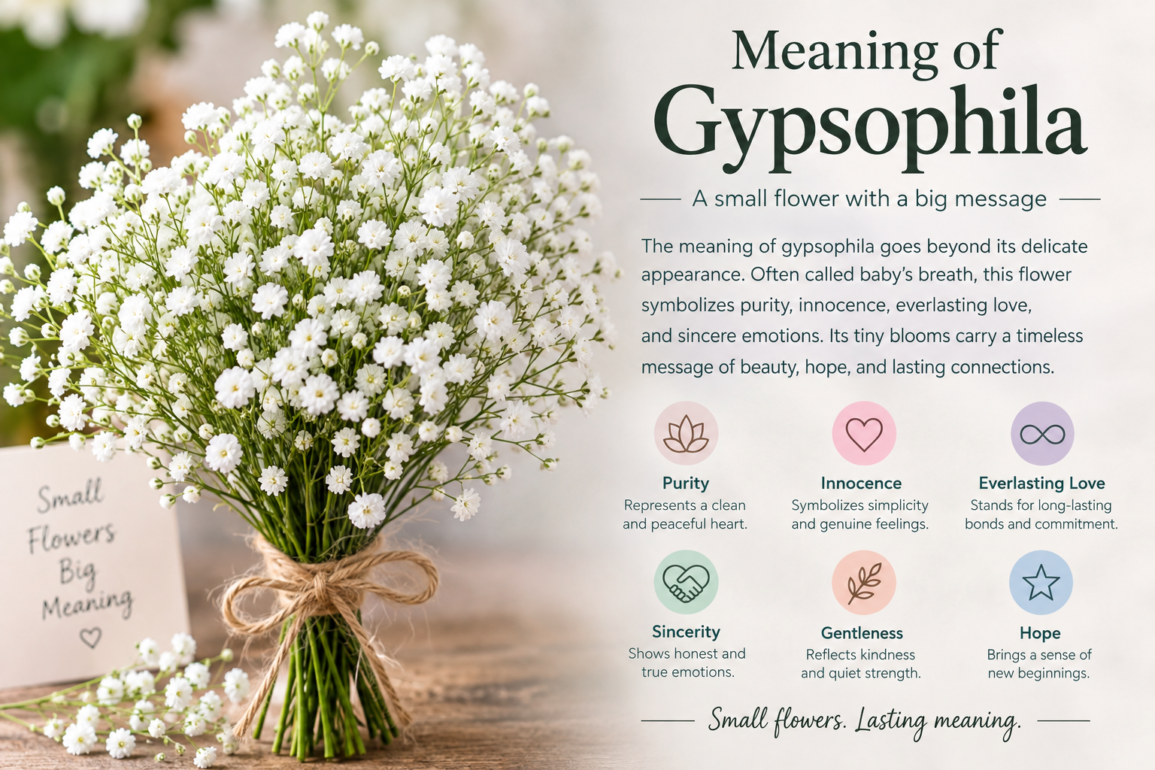
The meaning of gypsophila goes far beyond the delicate appearance of its tiny flowers. Often called baby’s breath, gypsophila is widely associated with purity, innocence, everlasting love, and sincere emotions. Its soft white blooms commonly appear in wedding bouquets, floral arrangements, decorations, and meaningful gifts. Although the flowers look simple, they carry rich symbolism that has developed through cultural traditions and modern floral practices.
Understanding the meaning of gypsophila can help you choose this flower for the right occasion. Its gentle appearance makes it suitable for celebrations, romantic moments, remembrance ceremonies, and everyday decorations. The plant also has practical value because its small flowers complement larger blooms without overpowering them. This article explores its symbolism, history, colors, uses, and cultural significance.
What Is Gypsophila?
Gypsophila is a genus of flowering plants belonging to the Caryophyllaceae family. It includes many species that produce small, star-shaped flowers on thin, branching stems. The most familiar variety is Gypsophila paniculata, commonly known as baby’s breath.
The plant usually produces clusters of tiny flowers that create a light, cloud-like appearance. White is the most recognizable color, although pink and other shades are also available through different varieties and cultivation methods.
The delicate structure explains why florists frequently use gypsophila as a filler flower. However, its popularity does not depend only on appearance. The meaning of gypsophila gives it emotional importance, particularly in weddings and romantic celebrations.
Meaning of Gypsophila in Flower Symbolism
The meaning of gypsophila is commonly connected with purity, innocence, and everlasting love. These associations make the flower especially popular for weddings and other occasions involving commitment.
Its tiny blooms can represent feelings that remain gentle yet strong. Rather than communicating dramatic passion, gypsophila often expresses quiet affection, sincerity, and lasting emotional bonds.
Purity and Innocence
White gypsophila is strongly associated with purity. Its clean color and delicate petals create an innocent and peaceful visual impression. For this reason, florists often include it in wedding bouquets and ceremonies.
Everlasting Love
Another important part of the meaning of gypsophila is everlasting love. The flower’s numerous small blossoms can symbolize a relationship built from many meaningful moments. Its association with lasting affection makes it appropriate for anniversaries and romantic gifts.
Sincerity and Gentleness
Gypsophila can also represent sincerity and gentle emotions. Its appearance does not demand attention, yet it creates a noticeable effect when used in an arrangement. This quality makes it a useful symbol for humble and genuine feelings.
Why Is Gypsophila Called Baby’s Breath?
The common name “baby’s breath” refers to the flower’s soft and delicate appearance. The tiny blooms resemble a light cloud or a baby’s gentle breath, which helps explain the affectionate name.
The name has also contributed to the flower’s association with innocence and tenderness. Consequently, the meaning of gypsophila and the symbolism of baby’s breath are often discussed together.
The common name is especially popular in floristry. Customers may ask for baby’s breath rather than gypsophila when purchasing flowers for weddings, gifts, or decorations.
Meaning of Gypsophila by Color
Color can influence floral symbolism. Although white remains the most popular shade, different gypsophila colors can create different emotional impressions.
White Gypsophila
White gypsophila traditionally represents purity, innocence, peace, and lasting affection. It is particularly popular for weddings, religious ceremonies, and formal floral displays.
Pink Gypsophila
Pink varieties can communicate tenderness, admiration, affection, and gentle romance. They work well for birthdays, anniversaries, baby celebrations, and romantic arrangements.
Dyed Gypsophila
Florists sometimes use dyed gypsophila in bright or unusual colors. These flowers can provide a modern interpretation of traditional symbolism. Their meaning often depends on the color selected and the purpose of the arrangement.
Gypsophila in Weddings
One of the strongest modern associations with the meaning of gypsophila comes from wedding traditions. Florists frequently use baby’s breath in bridal bouquets, table decorations, arches, centerpieces, and hair accessories.
Its small flowers create volume without making an arrangement appear excessively heavy. The stems can also blend naturally with roses, lilies, carnations, tulips, and other popular wedding flowers.
Because gypsophila symbolizes purity and everlasting love, it fits naturally into wedding ceremonies. Couples may choose it as a primary flower or as a supporting element around more prominent blooms.
Gypsophila as a Gift
The meaning of gypsophila makes it an attractive choice when you want to communicate affection without using an overly dramatic flower. A bouquet containing baby’s breath can express appreciation, friendship, tenderness, or romantic feelings.
It can also work well as a gift for someone who prefers simple and elegant floral designs. Its airy structure gives bouquets a soft appearance while maintaining a natural character.
When selecting gypsophila as a gift, consider the recipient and occasion. White arrangements suit formal and sentimental events, while pink or colorful varieties can create a more playful impression.
Spiritual and Emotional Symbolism
Flowers often acquire emotional meanings through tradition rather than through scientific properties. Gypsophila has developed symbolism around innocence, purity, and lasting relationships because of its delicate appearance and frequent use in important ceremonies.
The meaning of gypsophila can therefore vary according to culture, personal experience, and context. Someone may associate the flower with a wedding, while another person may connect it with friendship or remembrance.
This flexibility makes baby’s breath useful in many types of arrangements. Its symbolism can remain subtle while supporting the emotional message of the overall bouquet.
How Florists Use Gypsophila
Florists value gypsophila because it is versatile and visually light. It can fill empty spaces between larger flowers and help create a balanced arrangement.
Common uses include:
- Bridal bouquets
- Wedding centerpieces
- Floral arches
- Table decorations
- Gift bouquets
- Corsages and boutonnieres
- Dried flower arrangements
- Home decorations
Its branching stems can spread across an arrangement, creating a fuller appearance without requiring large quantities of flowers.
Dried Gypsophila and Its Meaning
Gypsophila is also popular in dried floral arrangements. Once dried properly, the small flowers can maintain their general shape and remain decorative for an extended period.
This quality adds another dimension to the meaning of gypsophila. Dried baby’s breath can represent memories, lasting affection, and relationships that continue to hold emotional value.
People often use dried gypsophila in home decorations, wreaths, crafts, and keepsake arrangements. Its neutral appearance allows it to fit into many interior styles.
Caring for Fresh Gypsophila
Fresh gypsophila can last longer when it receives proper care. Place the stems in clean water and use a clean vase. Removing leaves that sit below the waterline can help maintain water quality.
Keep the flowers away from excessive heat and direct sunlight. Changing the water regularly can also support freshness.
Proper care allows the delicate flowers to remain attractive and helps preserve the visual qualities that contribute to their symbolism.
Gypsophila in Modern Floral Design
Modern florists have expanded the traditional use of baby’s breath. Instead of treating it only as a filler, designers sometimes use large quantities of gypsophila to create entire installations.
Cloud-like wedding backdrops, hanging arrangements, minimalist bouquets, and decorative walls can all feature the flower prominently. This approach demonstrates how a traditionally supporting flower can become the central visual element.
The continued popularity of gypsophila shows that its simple appearance remains relevant in contemporary design.
Is Gypsophila Suitable for Every Occasion?
Gypsophila is remarkably adaptable, but the best choice depends on the message you want to communicate. Its traditional symbolism makes it especially suitable for weddings, romantic occasions, celebrations, and sentimental events.
For formal occasions, white baby’s breath provides an elegant and restrained appearance. Colored varieties may work better when the goal is to create a cheerful or contemporary arrangement.
Understanding the meaning of gypsophila can therefore help you select the right variety and presentation for your event.
Frequently Asked Questions
What is the main meaning of gypsophila?
The main meaning of gypsophila is commonly associated with purity, innocence, everlasting love, sincerity, and gentle affection.
Why is gypsophila popular at weddings?
Gypsophila is popular at weddings because its delicate appearance complements other flowers, while its symbolism connects with purity and lasting love.
Is gypsophila the same as baby’s breath?
Yes. Baby’s breath is the common name widely used for several gypsophila species, particularly Gypsophila paniculata.
What does white gypsophila symbolize?
White gypsophila commonly symbolizes purity, innocence, peace, sincerity, and enduring affection.
Can gypsophila be dried?
Yes. Gypsophila is commonly dried and used in decorative arrangements, wreaths, crafts, and long-lasting floral displays.
Conclusion
The meaning of gypsophila combines delicate beauty with powerful emotional symbolism. Its tiny flowers commonly represent purity, innocence, sincerity, and everlasting love, making them particularly meaningful for weddings and sentimental occasions. Beyond traditional bouquets, gypsophila has become popular in modern floral design, home decoration, gifts, and dried arrangements. Whether used as a subtle filler or as the main attraction, baby’s breath offers a simple yet elegant way to express lasting emotions. Its versatility and timeless appearance explain why this small flower continues to hold an important place in floral traditions around the world.