



Introduction
This is a term often used casually to describe excitement, energy, or intense enthusiasm. However, in a clinical context, mania has a much more specific meaning. It describes a significant change in mood, energy, activity, and behavior that can strongly affect a person’s daily life. Understanding it is important because awareness can encourage earlier recognition, better communication, and appropriate professional support.
People experiencing mania may feel unusually energetic, confident, creative, or powerful. They may sleep less while still feeling active and may begin several activities at once. Although increased energy can initially seem positive, the condition can also lead to impulsive decisions, strained relationships, financial problems, and difficulties at work or school.
Learning about this helps separate myths from facts. This article explains its meaning, common characteristics, possible causes, effects, and general approaches to management.
What Is Mania?
Mania is an elevated or unusually irritable mood state accompanied by increased energy and activity. It is more intense than ordinary happiness or excitement. The changes can become noticeable to family members, friends, colleagues, or other people around the individual.
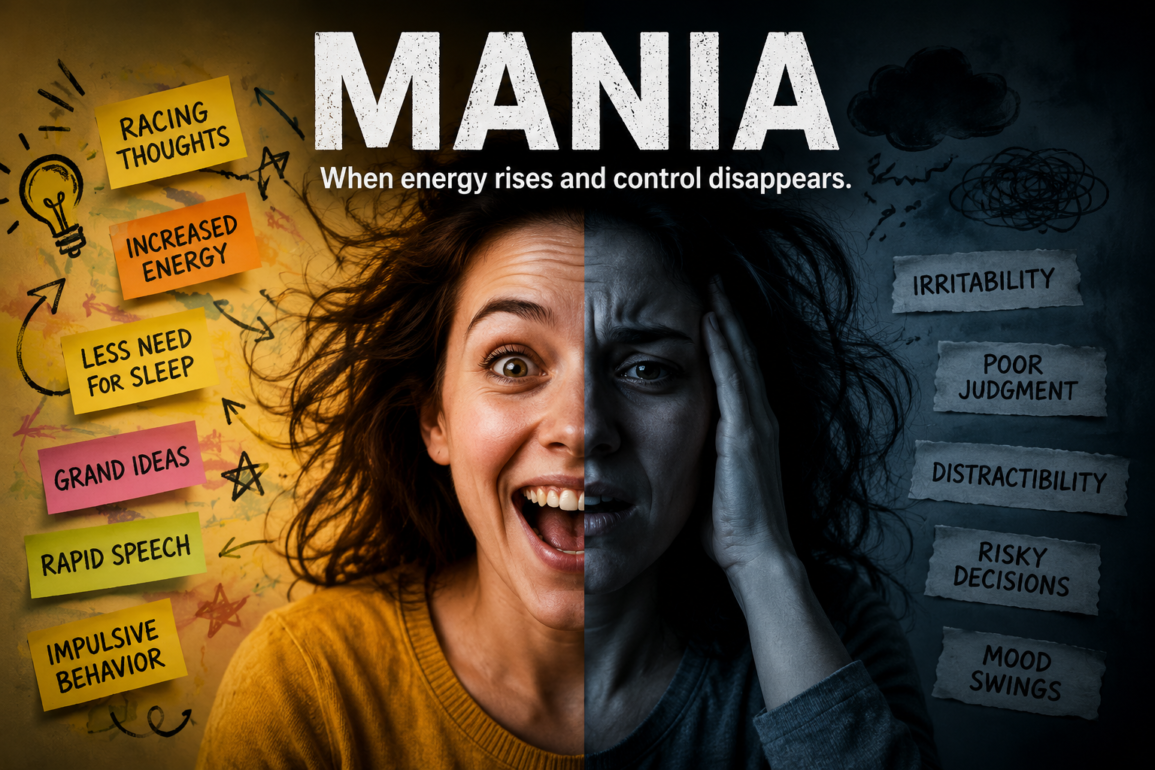
During mania, a person may experience racing thoughts and speak more quickly than usual. They may feel highly confident and believe they can accomplish extraordinary things. Some individuals become intensely focused on new projects, business ideas, social activities, or creative plans.
The experience varies between individuals. Not everyone shows the same signs, and the intensity can differ considerably.
Mania Is More Than Feeling Happy
Ordinary happiness usually develops in response to positive events and remains manageable. Mania involves a more substantial shift in mood and behavior. The increased energy may continue even when the person has little sleep or faces negative consequences.
This difference is important. A person can feel enthusiastic without experiencing mania. Clinical evaluation considers the overall pattern, duration, intensity, and effect on daily functioning.
Common Signs and Characteristics of Mania
Recognizing possible symptoms can help people understand why mania requires attention. Some common characteristics include unusually high energy, reduced need for sleep, rapid speech, racing thoughts, and increased activity.
A person may also become easily distracted. They might move quickly from one idea to another and find it difficult to complete tasks. Increased confidence can sometimes develop into unrealistic beliefs about personal abilities.
Impulsive behavior may also occur during mania. Examples can include excessive spending, risky decisions, sudden travel plans, or other actions taken without considering possible consequences.
Emotional Changes
Mania does not always appear as happiness. Some people become highly irritable, impatient, or easily frustrated. Small disagreements can feel more intense than usual.
Mood changes may happen alongside increased confidence and energy. This combination can make it difficult for the individual to recognize that their behavior has changed.
Changes in Sleep
A reduced need for sleep is commonly associated with mania. Someone may sleep only a few hours and still report feeling energetic. This differs from ordinary insomnia, where a person usually feels tired after inadequate sleep.
Persistent changes in sleep patterns can therefore be an important warning sign when combined with other behavioral changes.
What Causes Mania?
There is no single cause of mania. Mental health conditions, biological factors, genetics, stress, and changes in sleep patterns may all play a role.
Mania is commonly associated with bipolar disorder, a condition involving significant changes in mood and energy. However, understanding the exact cause for an individual requires professional assessment.
Family history may influence vulnerability. Researchers also study how brain chemistry and biological processes contribute to changes in mood regulation.
Stress and Life Changes
Major life events can sometimes affect emotional stability. Stressful experiences, disrupted routines, and prolonged sleep problems may contribute to mood changes in vulnerable individuals.
Positive events can also create major changes in routine. Starting a new job, moving to another location, or experiencing intense excitement may disrupt normal sleep and daily habits.
Maintaining a consistent routine can be useful for overall emotional well-being.
Mania and Bipolar Disorder
Mania is strongly connected with bipolar disorder, particularly bipolar I disorder. Bipolar conditions involve episodes of significant changes in mood and activity levels.
Some periods may involve depression, while others involve elevated mood states. However, every person’s experience is different.
It is important not to diagnose yourself or another person based on a few symptoms. Many conditions and circumstances can affect mood, sleep, energy, and behavior.
Understanding Hypomania
Hypomania is another term associated with elevated mood and increased activity. It generally refers to a less severe form of mood elevation than full mania.
A person experiencing hypomania may appear unusually energetic, productive, or sociable. However, the behavior may still represent a noticeable change from their normal personality or routine.
The distinction between hypomania and mania depends on severity and impact. Mental health professionals evaluate these differences carefully.
How Mania Can Affect Daily Life
The effects of mania can extend into many areas of life. Increased confidence and energy may initially seem productive, but impulsive actions can create serious consequences.
For example, someone might make large financial purchases without planning. Another person may start multiple projects and struggle to complete them. Rapid communication and intense social behavior can also create misunderstandings.
Relationships may become difficult when friends or family members notice dramatic behavioral changes.
Effects on Work and Education
During mania, concentration may become inconsistent. A person can feel extremely productive while simultaneously becoming distracted by numerous ideas.
They may take on more responsibilities than they can realistically manage. Decisions made during an episode can sometimes affect professional relationships or academic performance.
Supportive communication and early recognition can help reduce unnecessary difficulties.
Financial and Social Consequences
Impulsive spending is one possible consequence of mania. A person may make expensive purchases or financial commitments without carefully considering the future.
Social behavior can also change. Increased confidence may lead someone to speak more openly, take unusual risks, or make commitments they later regret.
These consequences demonstrate why early support can be important.
How Is Mania Recognized?
Recognizing mania usually involves observing patterns rather than focusing on a single behavior. A professional may consider changes in mood, sleep, activity, thinking, communication, and daily functioning.
Information from family members can sometimes provide useful context because the person experiencing mania may not recognize the full extent of behavioral changes.
A proper assessment may also consider physical health, medications, substance use, stress, and previous mood patterns.
Why Professional Evaluation Matters
Only a qualified healthcare professional can provide an accurate diagnosis. Many symptoms associated with mania can overlap with other conditions.
Professional evaluation helps identify possible causes and determine appropriate support. Early assessment may also reduce the risk of serious consequences related to impulsive behavior.
If someone shows extreme mood changes, dangerous behavior, confusion, or thoughts of harming themselves or others, urgent professional help is important.
General Approaches to Managing Mania
Management approaches depend on the individual and their underlying condition. Healthcare professionals may recommend medical treatment, therapy, lifestyle adjustments, and ongoing monitoring.
Consistency is often important. Regular sleep, structured routines, and reduced exposure to unnecessary stress may support emotional stability.
Family and trusted friends can also play a valuable role by noticing unusual changes and encouraging appropriate support.
The Importance of Sleep and Routine
Sleep disruption can affect mood regulation. Maintaining regular sleeping and waking times may help support overall mental health.
A structured daily routine can also reduce unnecessary stress. Regular meals, manageable responsibilities, and balanced activity levels may provide stability.
These strategies should complement, rather than replace, professional guidance when significant symptoms are present.
Building a Support System
Supportive relationships can make a meaningful difference. Trusted people may notice changes that the individual does not immediately recognize.
Open and respectful communication is usually more helpful than criticism. Family members can encourage professional support while avoiding arguments during periods of intense mood changes.
Creating a plan during stable periods may also help individuals and families prepare for possible future challenges.
Myths and Misunderstandings About Mania
One common misconception is that mania simply means being very happy. In reality, it can involve irritability, impulsivity, poor judgment, and significant disruption.
Another misconception is that people can always control the experience through willpower. Mental health conditions are complex and often require professional care.
It is also inaccurate to assume that every energetic or ambitious person is experiencing mania. High energy alone does not indicate a medical condition.
Understanding these distinctions helps reduce stigma and encourages more compassionate conversations.
When Should Someone Seek Help?
Professional support is important when major mood and behavior changes interfere with daily life. Warning signs may include very little sleep combined with unusually high energy, risky decisions, severe agitation, or dramatic changes in thinking.
Immediate help should be sought if there is danger of self-harm, harm to others, severe confusion, or an inability to stay safe.
Friends and family members should take significant behavioral changes seriously. Calm encouragement and practical support can make it easier for someone to seek appropriate care.
Conclusion
Mania is a complex mental state that involves significant changes in mood, energy, thinking, and behavior. While increased confidence and activity may sometimes appear positive, the condition can also create serious personal, social, and financial consequences. Understanding the signs and possible effects of mania encourages early recognition and compassionate support. Professional evaluation remains essential for accurate diagnosis and appropriate management, helping individuals build stability and protect their long-term well-being.