




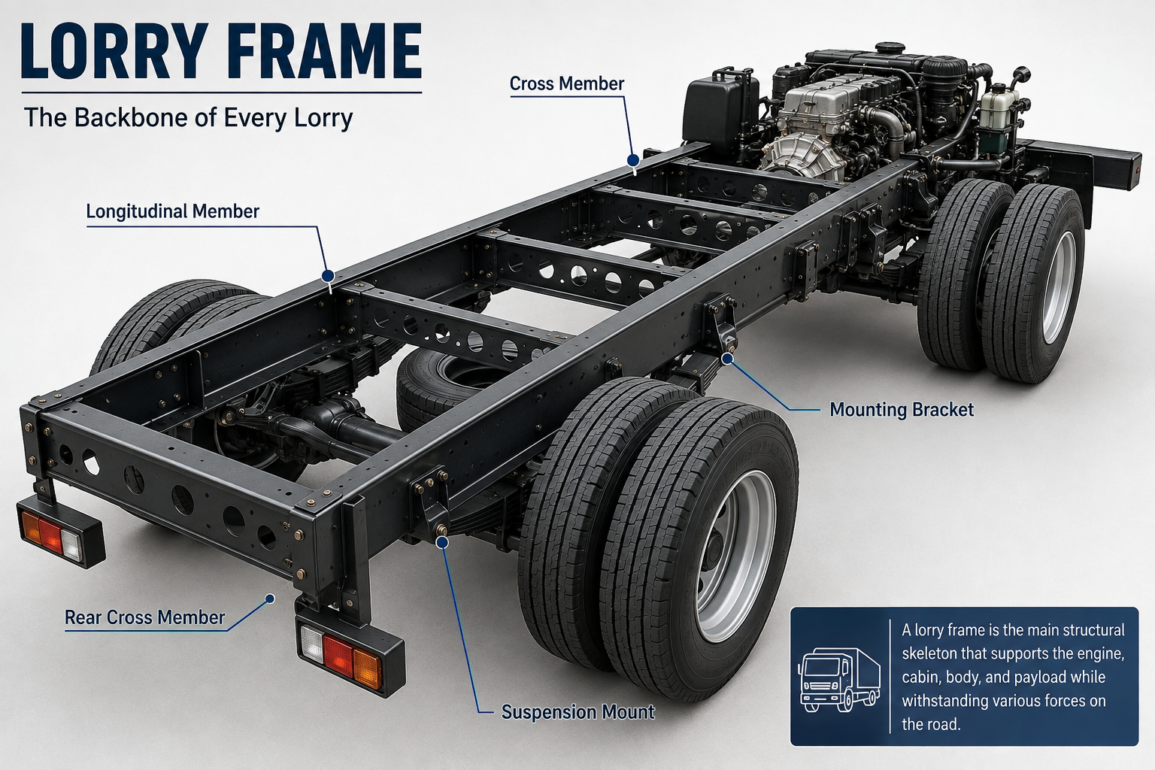
A lorry frame forms the structural foundation of a heavy commercial vehicle. It supports the engine, cab, suspension, axles, cargo body, and other major components. Because lorries regularly carry heavy loads and travel across challenging roads, the frame must provide strength, stability, and durability. A well-designed structure also helps distribute weight evenly and reduces stress on individual components. Understanding how a lorry frame works can help vehicle owners, mechanics, transport operators, and students make better decisions about maintenance and repairs. This guide explains its construction, types, materials, functions, common problems, and maintenance requirements in clear and practical terms.
What Is a Lorry Frame?
A lorry frame is the main structural assembly that supports the vehicle’s essential mechanical and body components. It usually consists of two long longitudinal members connected by several cross members. This arrangement creates a strong platform capable of handling substantial loads.
The frame transfers forces between the suspension, axles, wheels, engine, and cargo area. It also helps maintain the vehicle’s overall shape when it travels over uneven surfaces. Unlike a passenger car’s body, many conventional lorries use a separate frame and body construction.
This design allows manufacturers to build different cargo bodies on the same basic chassis. For example, a manufacturer can use one chassis platform for a flatbed, tanker, tipper, or box body.
Why Is the Lorry Frame Important?
The importance of a lorry frame goes beyond simply holding vehicle components together. It must withstand several types of forces during normal operation.
Load Support
Heavy cargo places significant vertical pressure on the frame. The structure must support this weight without excessive bending or permanent deformation.
Structural Stability
The frame helps maintain wheel alignment and provides a stable foundation for the suspension and steering systems. A damaged structure can affect vehicle handling.
Force Distribution
When a lorry accelerates, brakes, turns, or travels over rough roads, different forces act on its structure. The frame distributes these forces across multiple areas.
Component Mounting
Engine mounts, suspension brackets, fuel tanks, cab supports, and other components often attach directly or indirectly to the chassis frame.
Main Parts of a Lorry Frame
A typical lorry frame contains several structural elements that work together.
Longitudinal Members
These are the two primary rails that run along the length of the vehicle. They carry much of the vehicle’s weight and bending forces.
Cross Members
Cross members connect the main rails. They increase rigidity and help prevent the frame from twisting under load.
Brackets and Mounting Points
Manufacturers attach various components through specially designed brackets. These mounting points must remain strong because they experience repeated mechanical forces.
Reinforcement Sections
Some high-load areas receive additional reinforcement. Engineers may strengthen locations around suspension mounts, engine supports, and heavily loaded sections.
Common Types of Lorry Frames
Different applications require different structural designs. Therefore, manufacturers use several frame configurations.
Ladder Frame
The ladder frame remains one of the most recognizable designs. It uses two long rails connected by cross members, creating a shape similar to a ladder.
This arrangement provides excellent strength and makes it suitable for many heavy-duty vehicles.
Box Section Frame
A box-style structure encloses more material around the structural section. It can provide good resistance to certain bending and twisting forces.
C-Section Frame
Many traditional commercial vehicles use rails with a C-shaped cross-section. This design can provide a useful balance between strength, weight, manufacturing simplicity, and repairability.
Custom Heavy-Duty Frames
Special-purpose vehicles may require reinforced structures. Mining trucks, construction vehicles, recovery vehicles, and other specialized lorries can use frames designed for particularly demanding environments.
Materials Used in Lorry Frames
Steel remains a common choice for a lorry frame because it offers high strength and durability. Manufacturers select specific grades according to the vehicle’s expected loads and operating conditions.
Modern engineering also focuses on reducing unnecessary weight. A lighter frame can contribute to improved fuel efficiency and payload capacity. However, reducing weight cannot compromise structural safety.
High-strength steels can help engineers achieve both objectives. These materials allow manufacturers to produce strong structural components while controlling overall vehicle mass.
Aluminium and other lightweight materials can appear in certain commercial vehicle structures, although their suitability depends on the vehicle’s application and design requirements.
How a Lorry Frame Handles Heavy Loads
A lorry frame experiences different forces throughout a typical journey. Cargo produces a downward load, while road surfaces create upward reactions through the wheels and suspension.
During braking, the structure experiences longitudinal forces. Turning creates lateral forces, while uneven terrain can produce twisting or torsional loads.
Engineers therefore consider several factors when designing the frame. They examine the expected payload, wheelbase, suspension configuration, operating environment, and fatigue life.
The goal is not simply to make the structure extremely heavy. Instead, engineers aim to achieve an appropriate combination of strength, stiffness, durability, and weight.
Signs of a Damaged Lorry Frame
A damaged lorry frame can create serious mechanical and safety concerns. Operators should pay attention to unusual changes in vehicle behavior.
Visible cracks, bends, corrosion, or damaged mounting points can indicate structural problems. Uneven tire wear may also appear when structural damage affects alignment.
Other warning signs can include unusual steering behavior, changes in ride height, abnormal noises, or difficulty maintaining a straight path.
After a significant collision or severe overloading incident, professional inspection becomes especially important. Structural damage may not always be obvious during a basic visual check.
Common Causes of Lorry Frame Damage
Several conditions can reduce the service life of a lorry frame.
Overloading
Carrying loads beyond the manufacturer’s rated capacity places excessive stress on structural components. Repeated overloading can contribute to fatigue and deformation.
Corrosion
Moisture, road salt, chemicals, and accumulated dirt can encourage corrosion. Severe corrosion may reduce the thickness and strength of structural sections.
Rough Roads
Repeated travel over potholes, construction sites, and uneven terrain creates continuous shock loads. These forces can contribute to fatigue over time.
Accidents
A collision can bend or twist the frame even when the vehicle appears repairable externally. Professional measurement may be necessary after a serious impact.
Poor Modifications
Incorrect drilling, welding, or alteration can weaken structural areas. Any modification should follow the manufacturer’s engineering requirements and applicable regulations.
Lorry Frame Maintenance
Regular inspection can help extend the service life of a lorry frame. Fleet operators should include the chassis in routine maintenance schedules rather than focusing only on the engine and brakes.
Inspect the rails and cross members for cracks, corrosion, deformation, and loose connections. Pay particular attention to suspension mounting points and areas exposed to water or road contaminants.
Cleaning the underside can also help reveal structural problems earlier. If corrosion appears, the affected area should receive an appropriate professional assessment.
Operators should also follow the manufacturer’s recommended load limits. Correct loading reduces unnecessary stress and improves overall vehicle stability.
Repairing a Damaged Lorry Frame
Repairing a lorry frame requires careful assessment. A technician must determine whether the structure has suffered cosmetic damage, localized deformation, cracking, corrosion, or significant misalignment.
Straightening may be possible in certain circumstances, but technicians should use suitable measurement and repair equipment. Welding or reinforcement should follow approved engineering procedures.
Improvised repairs can create new stress concentrations or weaken the surrounding metal. For this reason, major structural repairs should be handled by qualified professionals familiar with commercial vehicle chassis systems.
How Frame Design Affects Vehicle Performance
The design of a lorry frame influences several aspects of vehicle performance. A rigid and properly engineered structure helps maintain predictable suspension geometry and handling.
Frame weight also affects payload capacity. If engineers can safely reduce structural mass, operators may gain additional capacity without exceeding the vehicle’s legal gross weight.
At the same time, excessive flexibility can create undesirable movement and stress. Engineers therefore balance stiffness with controlled flexibility to suit the vehicle’s intended operating conditions.
Choosing the Right Lorry Frame
When selecting a commercial vehicle, buyers should consider how the lorry frame matches the intended application.
A vehicle designed for highway freight may have different structural requirements from a tipper used regularly on construction sites. Payload, road conditions, body type, wheelbase, and expected annual mileage all matter.
Buyers should review the manufacturer’s gross vehicle weight rating, permitted axle loads, body-building guidelines, and maintenance recommendations. These details help ensure that the selected chassis suits the intended work.
Future Developments in Lorry Frame Technology
The commercial vehicle industry continues to explore stronger and lighter structural solutions. Advanced high-strength steels, improved manufacturing techniques, and computer-aided engineering can help optimize chassis structures.
Engineers increasingly use digital simulations to predict how a lorry frame will respond to different loads and operating conditions. Such analysis can identify stress concentrations before physical production.
Electric commercial vehicles may also influence future frame design. Battery packs require dedicated structural protection and mounting arrangements, creating new engineering considerations.
Conclusion
A lorry frame provides the essential structural foundation for a commercial vehicle. It supports major components, distributes loads, manages forces, and contributes to overall stability. Its design must balance strength, durability, weight, and practical maintenance requirements.
Regular inspections can help identify cracks, corrosion, deformation, and other problems before they become more serious. Avoiding overloading and unauthorized structural modifications also protects the chassis. For significant damage, professional assessment and approved repair procedures are essential. By understanding the role of a lorry frame, vehicle owners and operators can make better decisions about maintenance, safety, and long-term vehicle performance.
FAQs About Lorry Frame
What is a lorry frame made of?
Most commercial vehicle frames use specially selected steel because it provides a strong combination of durability, strength, and practical manufacturability.
Can a damaged lorry frame be repaired?
Some damage can be repaired, depending on its location and severity. A qualified professional should inspect the structure before deciding on an appropriate repair.
What causes frame cracks?
Overloading, repeated heavy impacts, fatigue, corrosion, accidents, and improper modifications can contribute to frame cracking.
How can frame corrosion be prevented?
Regular cleaning, inspection, appropriate protective coatings, and prompt treatment of corrosion can help protect structural components.
Why is frame maintenance important?
A properly maintained lorry frame supports safe vehicle operation, protects mounted components, and helps maintain the structural integrity of the vehicle.