




A jacking shaft is an essential structure used in modern underground construction projects. It provides a controlled access point for installing pipelines, tunnels, utility lines, and other underground infrastructure using trenchless construction methods. As cities become more crowded, engineers increasingly need techniques that reduce surface disruption. This is where a jacking shaft becomes extremely valuable.
Traditional excavation often requires digging large open trenches. These methods can interrupt traffic, damage landscapes, and create inconvenience for nearby communities. A properly designed jacking shaft allows engineers to install underground pipelines and structures with less disturbance at ground level.
The technology behind a jacking shaft combines civil engineering, geotechnical planning, hydraulic systems, and careful construction management. Whether used for sewer pipelines, water systems, railway crossings, or utility tunnels, this structure plays a major role in successful trenchless projects.
What Is a Jacking Shaft?
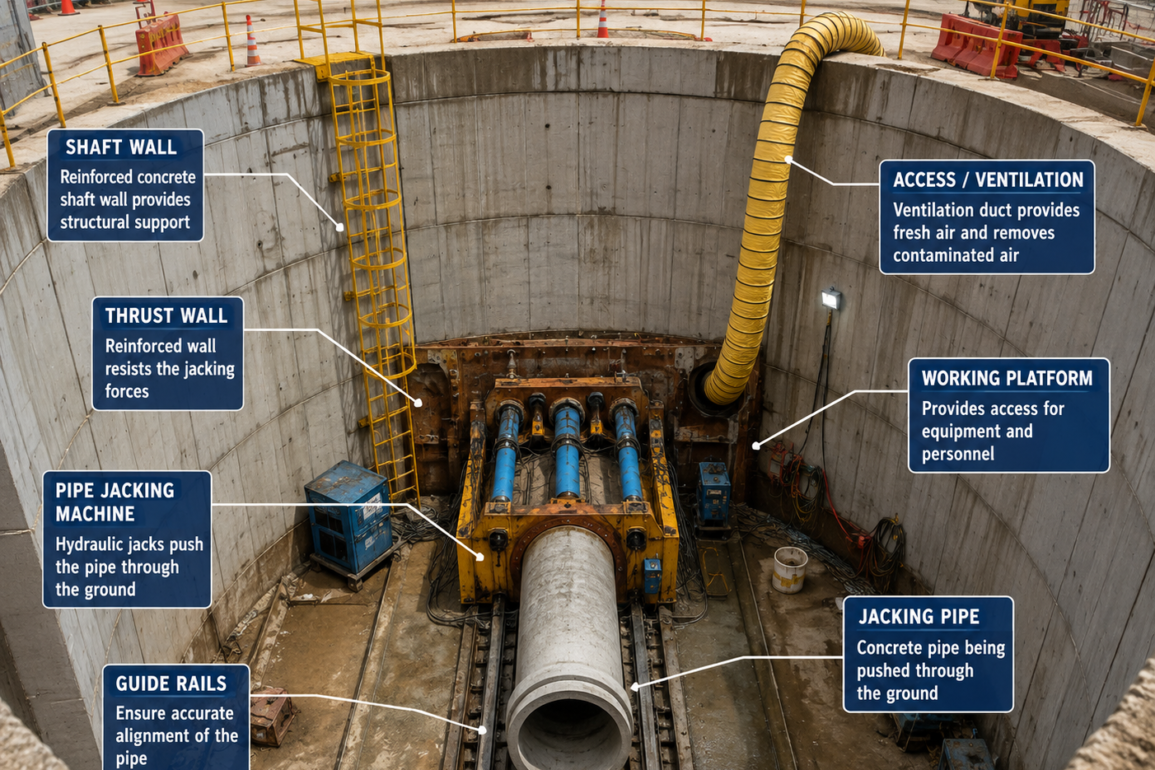
A jacking shaft is a vertical excavation constructed to provide a starting point for pipe jacking or microtunneling operations. Workers place hydraulic jacks and other equipment inside the shaft. These machines push pipes horizontally through the ground toward a receiving location.
The shaft must be strong enough to withstand significant forces created during the jacking process. Engineers carefully design its walls, base, dimensions, and reinforcement according to soil conditions and project requirements.
In simple terms, the jacking shaft acts as an underground launch chamber. From this location, pipes or tunnel sections are pushed through the soil without opening the entire ground surface.
This approach makes trenchless construction practical in busy urban environments.
Why Jacking Shafts Are Important
Modern cities contain roads, buildings, railways, communication networks, and underground utility systems. Digging open trenches through these areas can be expensive and disruptive.
A jacking shaft helps engineers overcome these challenges by providing controlled underground access. Instead of excavating an entire route, workers only need specific access points.
This method offers several important advantages. It reduces traffic disruption, protects existing infrastructure, minimizes environmental disturbance, and allows pipelines to pass beneath obstacles.
For example, engineers may need to install a sewer pipe beneath a major highway. Opening the road could create serious transportation problems. Using a jacking shaft allows the pipeline to move beneath the highway while traffic continues above.
How a Jacking Shaft Works
The construction process begins with detailed site investigations. Engineers study soil conditions, groundwater levels, nearby structures, and underground utilities.
After planning, contractors excavate the jacking shaft to the required depth. The walls may use reinforced concrete, sheet piles, diaphragm walls, or other support systems.
Once the shaft is complete, hydraulic jacks are installed. A pipe section is placed against the jacking equipment. The hydraulic system applies controlled force and pushes the pipe into the ground.
As the first pipe moves forward, additional sections are added behind it. The process continues until the pipeline reaches the receiving shaft.
The Role of Hydraulic Jacks
Hydraulic jacks provide the powerful force required to move heavy pipes through the soil. These machines operate carefully because excessive pressure could damage pipes or affect surrounding ground conditions.
The back wall of the jacking shaft, sometimes called a thrust wall, transfers these forces safely into the surrounding structure.
Engineers calculate the required jacking force before construction begins. Factors such as pipe diameter, soil friction, alignment length, and groundwater conditions influence the calculations.
Excavation During Pipe Jacking
A cutting head or excavation machine removes soil from the front of the advancing pipeline. The excavation method depends on the project and geological conditions.
Some projects use manual excavation, while larger projects may use microtunneling machines or advanced boring systems.
The removed material travels back through the pipeline or another controlled system. This process allows the pipe to advance gradually through the ground.
Main Components of a Jacking Shaft
A successful jacking shaft includes several important structural and mechanical components.
The shaft walls provide stability and prevent soil collapse. Reinforced concrete is commonly used because it offers strength and durability.
The base provides a stable working platform. Engineers must ensure that it can support heavy machinery and construction loads.
The thrust wall receives the force generated by hydraulic jacks. This component is particularly important because pipe jacking creates substantial pressure.
Guide rails help maintain the correct pipe alignment. Even small alignment errors can create serious problems during long-distance installations.
Access systems allow workers and equipment to safely enter and leave the shaft.
Drainage and groundwater control systems may also be necessary, especially when the excavation extends below the water table.
Types of Jacking Shafts
Different projects require different shaft designs. Engineers select the most suitable type based on available space, depth, soil conditions, and construction requirements.
Circular Jacking Shafts
Circular shafts are common because their shape distributes surrounding soil pressure efficiently. They are particularly suitable for deep excavations.
Precast concrete rings may also be used during construction. These structures provide strong support and can speed up the installation process.
Rectangular Jacking Shafts
A rectangular jacking shaft can provide additional working space for equipment and personnel. This design is often useful when large hydraulic systems or multiple pipe sections need to be handled.
However, rectangular shafts may require stronger structural reinforcement because soil pressure acts differently around corners.
Segmental Shafts
Segmental shafts use prefabricated structural components. Contractors assemble these components during excavation.
This method can reduce construction time and improve consistency in some projects.
Sheet Pile Shafts
Steel sheet piles can create temporary or permanent shaft walls. These systems are useful where space is limited or soil conditions require strong excavation support.
Construction Process of a Jacking Shaft
Building a jacking shaft requires careful planning and professional supervision.
The first step involves surveying the location. Engineers identify underground utilities and assess nearby structures.
The construction team then prepares the site and installs safety barriers.
Excavation begins gradually. Workers install support systems as the excavation becomes deeper. Groundwater control may be necessary to prevent water from entering the work area.
After reaching the required depth, contractors construct the base and structural walls.
The thrust wall and jacking equipment are then installed.
Before pipe jacking begins, engineers check the alignment. Accurate positioning is essential because correcting underground pipe movement can be difficult.
Once everything is ready, the hydraulic system starts pushing the pipeline forward.
Safety Considerations
Safety is one of the most important aspects of jacking shaft construction. Deep excavations can create serious risks if they are not properly supported.
Workers must follow strict excavation safety procedures. Shaft walls should be inspected regularly for movement, cracks, or water leakage.
Adequate ventilation is important because underground work areas may contain harmful gases.
Emergency access and communication systems should also be available.
Groundwater presents another major challenge. Excessive water pressure can weaken the excavation or create flooding risks.
Engineers may use pumps, waterproof structures, or specialized ground treatment techniques to control water.
Regular monitoring helps identify problems before they become dangerous.
Advantages of Using a Jacking Shaft
One major benefit of a jacking shaft is reduced surface disruption. Roads, parks, and buildings can remain largely undisturbed during underground installation.
This method can also reduce restoration costs. Traditional trench construction often requires repairing roads, sidewalks, and landscaping after excavation.
Another advantage is improved access beneath obstacles. Pipelines can pass under railways, rivers, highways, and existing structures.
Trenchless construction may also reduce environmental impacts by disturbing smaller areas of land.
In crowded cities, these benefits can make pipe jacking more practical than conventional excavation.
Common Applications
A jacking shaft supports many types of infrastructure projects.
Sewer construction is one of the most common applications. New pipelines can be installed beneath developed areas without opening long trenches.
Water supply projects also use pipe jacking methods when pipelines need to cross roads or sensitive locations.
Utility companies may install electrical ducts, communication lines, and other underground systems through trenchless techniques.
Railway crossings are another important application. Engineers can install pipelines beneath railway tracks without interrupting train operations.
Industrial projects may also require underground connections where open excavation is impractical.
Challenges During Construction
Although the jacking shaft offers many benefits, construction can involve technical challenges.
Unexpected soil conditions may increase construction difficulty. Hard rock, unstable soil, or mixed ground can affect excavation and pipe movement.
Groundwater can also create significant problems. Engineers must manage water pressure carefully to maintain shaft stability.
Alignment errors represent another challenge. A small deviation at the beginning can become more serious over a long distance.
Equipment failure may also delay construction. Hydraulic systems require regular inspection and maintenance.
Proper planning and experienced engineering teams help reduce these risks.
Environmental Benefits
Trenchless construction can provide important environmental advantages. A jacking shaft limits the amount of surface excavation required for underground infrastructure.
This approach can protect trees, reduce soil disturbance, and minimize construction noise across long project routes.
It may also reduce the amount of construction waste generated during excavation.
In urban areas, reducing road closures can lower traffic congestion and associated emissions.
These benefits make trenchless technologies increasingly attractive for sustainable infrastructure development.
Future of Jacking Shaft Technology
Construction technology continues to improve. Modern guidance systems allow engineers to monitor underground alignment with greater accuracy.
Automation is also becoming more important. Advanced microtunneling machines can perform excavation and steering with high precision.
Digital monitoring systems help construction teams track ground movement, hydraulic pressure, and equipment performance.
New materials may also improve the durability and efficiency of shaft structures.
As cities continue to expand, the demand for underground infrastructure will increase. The jacking shaft will remain an important part of modern construction because it supports efficient development while reducing disruption at the surface.
Conclusion
A jacking shaft is a vital component of trenchless construction and underground infrastructure development. It provides a secure starting point for pipe jacking, microtunneling, and other underground installation methods. By reducing surface excavation, it helps protect roads, buildings, landscapes, and existing utility systems. Proper design, accurate planning, strong structural support, and careful safety management are essential for successful projects. As urban infrastructure continues to grow, the jacking shaft will remain a practical and reliable engineering solution.
Frequently Asked Questions
What is the purpose of a jacking shaft?
A jacking shaft provides a controlled underground location where hydraulic equipment pushes pipes or tunnels horizontally through the ground.
How deep can a jacking shaft be?
The depth depends on project requirements, soil conditions, groundwater levels, and the required pipeline alignment.
What is the difference between a jacking shaft and a receiving shaft?
A jacking shaft is the starting point where pipes are pushed into the ground, while a receiving shaft is the location where the equipment or pipeline reaches the end.
Is a jacking shaft used only for sewer projects?
No. It can support sewer, water, utility, railway crossing, communication, and other underground infrastructure projects.
Why is trenchless construction useful?
Trenchless construction reduces surface disruption, limits excavation, protects existing infrastructure, and can lower restoration requirements.