




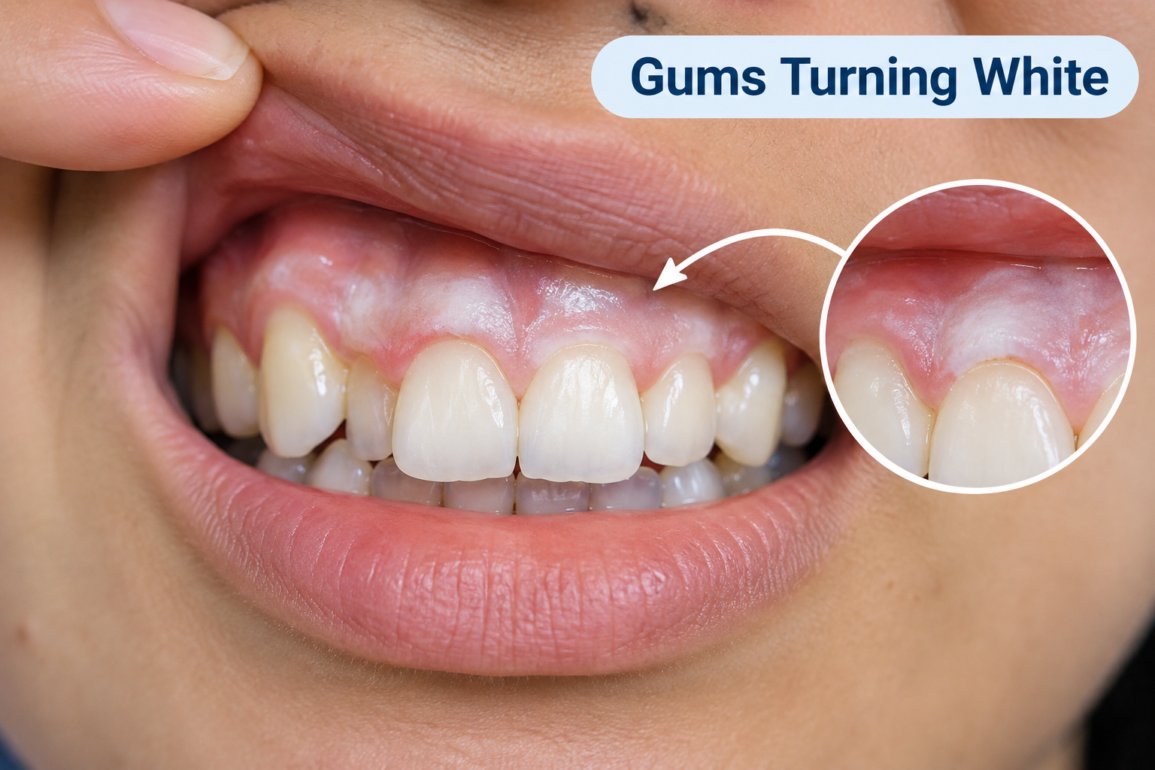
White gums can be surprising, especially when the change appears suddenly or affects only one area of the mouth. While some cases are temporary and harmless, others may point to irritation, infection, nutritional problems, or an underlying oral condition. Understanding why gums turning white happens can help you decide when simple home care is enough and when professional dental advice is necessary.
The appearance of healthy gums can vary from person to person. They are generally pink, although natural pigmentation can make them darker. When the tissue becomes noticeably pale, white, patchy, or coated, it deserves attention. The cause may be something as simple as irritation from brushing too hard, but persistent changes should not be ignored.
What Does Gums Turning White Mean?
The phrase gums turning white describes a visible change in gum tissue where part or all of the gums appear lighter than usual. The whiteness may look like a thin film, a patch, a sore area, or a thicker coating.
The change itself is not a diagnosis. Several different conditions can produce similar appearances. For example, temporary irritation can make the tissue look pale, while certain infections may create white patches or deposits.
The location, texture, duration, and accompanying symptoms are important clues. Pain, swelling, bleeding, bad breath, fever, ulcers, or difficulty eating can make a dental evaluation more important.
Common Causes of White Gums
There are many possible explanations for gums turning white, ranging from minor irritation to conditions that require treatment.
Irritation or Minor Injury
One common reason for gums turning white is physical irritation. Aggressive brushing, flossing, sharp foods, or accidental injury can damage the delicate gum tissue.
After irritation, the affected area may temporarily appear pale or white while it heals. Using a soft-bristled toothbrush and avoiding further trauma can help the tissue recover.
Oral Thrush
Oral thrush is a fungal infection that can produce creamy white patches inside the mouth. These patches may occur on the tongue, inner cheeks, roof of the mouth, or gums.
People with weakened immune systems, certain medical conditions, or recent antibiotic use may have a higher risk. If white patches persist or repeatedly return, a healthcare professional or dentist can determine whether an antifungal treatment is appropriate.
Canker Sores
Canker sores can sometimes make surrounding tissue appear white or pale. They usually develop as small, painful ulcers with a lighter center and reddish border.
Although canker sores often heal on their own, frequent or unusually large sores deserve professional evaluation.
Gum Disease
Gum disease can affect the appearance and health of the gums. Early gum disease commonly causes redness, swelling, tenderness, and bleeding, but changes in tissue color can occur as the condition progresses.
If gums turning white occur together with persistent bleeding, swelling, bad breath, or gum recession, schedule a dental examination rather than relying only on home treatment.
Chemical or Thermal Burns
Very hot foods and drinks can burn the soft tissues of the mouth. Certain dental products or chemicals can also irritate the gums.
A burned area may become white as the damaged surface begins to heal. Avoiding the irritating substance and allowing the tissue to recover can often resolve mild cases.
Nutritional Deficiencies and Pale Gums
Sometimes gums turning white may occur alongside generally pale oral tissues because of nutritional problems or anemia.
Iron, vitamin B12, and folate are important for normal blood production and overall tissue health. A deficiency can contribute to paleness, fatigue, weakness, or other symptoms.
However, white gums alone cannot confirm a nutritional deficiency. A healthcare professional may recommend blood tests if other symptoms suggest anemia or inadequate nutrient levels.
Can Dehydration Cause White Gums?
Dehydration can affect saliva production and cause the mouth to feel dry and uncomfortable. A dry mouth may make oral tissues look different, although dehydration is not the only explanation for gums turning white.
Drinking enough water, maintaining good oral hygiene, and avoiding excessive alcohol or tobacco use can support a healthier mouth.
If dryness continues despite adequate fluid intake, discuss it with a dentist or doctor because some medications and health conditions can reduce saliva production.
When Should You Be Concerned?
Not every episode of gums turning white indicates a serious problem. Temporary discoloration following irritation may disappear as the tissue heals.
However, seek professional dental advice if the white area lasts longer than expected, becomes larger, repeatedly returns, or develops alongside pain, swelling, bleeding, ulcers, or unusual lumps.
You should also seek prompt medical attention if mouth changes are accompanied by difficulty swallowing, significant facial swelling, breathing difficulties, or severe infection symptoms.
How Dentists Diagnose White Gums
A dentist will usually begin by examining the affected tissue and asking when the change began. They may ask about recent injuries, oral hygiene products, medications, smoking, diet, and other symptoms.
The dentist may also examine the tongue, cheeks, teeth, and other parts of the mouth. In some situations, additional testing may be necessary to identify an infection or investigate a persistent lesion.
This is why the appearance alone cannot reliably determine the cause of gums turning white.
Treatment Options
Treatment depends entirely on the underlying cause. Mild irritation may improve simply by avoiding the source of trauma and maintaining gentle oral hygiene.
If an infection is responsible, a dentist or doctor may recommend an appropriate medication. Gum disease may require professional cleaning and improvements in daily oral care.
For suspected nutritional problems, the underlying deficiency needs to be identified before supplements are taken. Taking large amounts of vitamins without professional guidance is not always beneficial and can sometimes cause harm.
What You Can Do at Home
If you notice gums turning white, begin with gentle oral care. Brush twice daily using a soft toothbrush and avoid aggressive pressure around the affected area.
Keep your mouth clean, drink sufficient water, and avoid very spicy, acidic, or extremely hot foods if they cause discomfort. Do not scrape or peel white tissue from the gums because doing so can cause additional injury.
Avoid smoking and tobacco products, as they can negatively affect oral tissues and make some mouth problems more difficult to identify or heal.
Most importantly, monitor the area. If the appearance does not improve or additional symptoms develop, arrange an appointment with a dental professional.
How to Prevent Gum Problems
Good oral hygiene is one of the best ways to reduce the risk of many conditions associated with gums turning white and other gum changes.
Brush with fluoride toothpaste, clean between the teeth regularly, and attend routine dental examinations. A balanced diet also supports healthy oral tissues.
Replacing a toothbrush when its bristles become worn can help prevent unnecessary irritation. It is also useful to follow product instructions when using whitening products, mouthwashes, or other oral-care treatments.
Frequently Asked Questions
Is gums turning white always serious?
No. Gums turning white can result from minor irritation, burns, sores, or other temporary problems. Persistent or unexplained changes should nevertheless be examined by a dentist.
Can brushing too hard cause white gums?
Yes. Excessive brushing can irritate or injure gum tissue. A soft-bristled toothbrush and gentle technique can reduce unnecessary trauma.
Can oral thrush affect the gums?
Yes. Oral thrush can cause white or creamy patches in different areas of the mouth, including the gums. Professional evaluation can confirm the cause.
Should I scrape away a white patch?
No. Scraping can injure the tissue and potentially worsen irritation. It is safer to have persistent white patches assessed professionally.
How long should white gums last?
The duration depends on the cause. Minor irritation may improve as the tissue heals, while infections and other conditions may require treatment. If gums turning white persist, worsen, or repeatedly return, seek dental advice.
Conclusion
Gums turning white can have many causes, and the appearance alone cannot identify the underlying problem. Minor irritation, burns, mouth sores, infections, gum disease, and nutritional issues can all produce changes in the color or texture of oral tissues. Paying attention to how long the change lasts and whether other symptoms appear is therefore important.
Gentle brushing, good oral hygiene, adequate hydration, and avoiding irritating substances can support recovery from minor problems. However, persistent white patches, pain, bleeding, swelling, ulcers, or other unusual changes should receive professional attention. A dentist can examine the gums, identify the likely cause, and recommend the right treatment rather than relying on guesswork.