




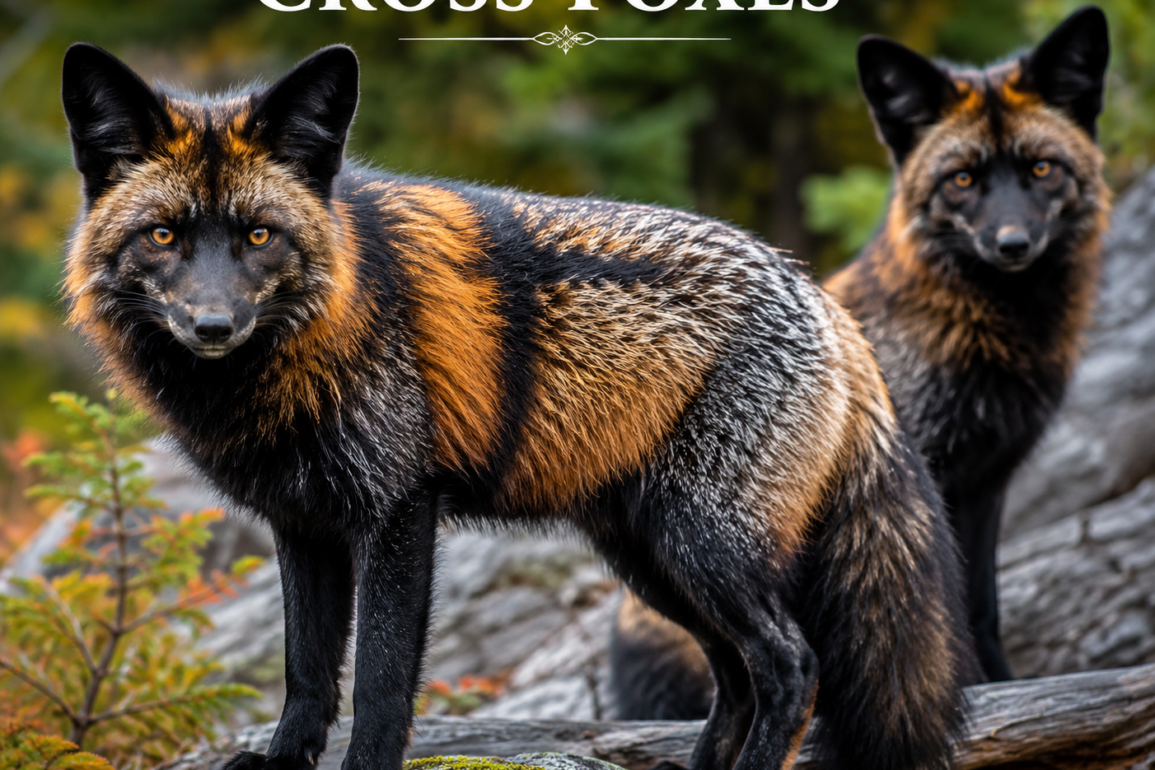
There are among the most striking color variations found in the red fox. Their unusual coat features a dark cross-like pattern across the shoulders and back, creating a distinctive appearance that attracts wildlife enthusiasts. Although many people think cross foxes represent a separate species, they are actually a color morph of the common red fox.
These animals have fascinated people for centuries because of their beautiful fur and elusive behavior. Their appearance can vary considerably, with some individuals showing strong dark markings while others have a lighter and more subtle pattern. Understanding it helps explain how genetics can create remarkable differences within the same animal species.
What Are Cross Foxes?
There are red foxes with a specific coat-color variation. Their scientific classification remains the same as that of other red foxes, Vulpes vulpes. The distinctive appearance comes from differences in pigmentation rather than from a separate species or subspecies.
The name comes from the dark markings that often extend along the animal’s spine and across its shoulders. When viewed from above, these markings can resemble a cross. The rest of the coat may contain reddish, brown, gray, or black shades.
Not every individual has an identical pattern. Some cross foxes have a very obvious cross-shaped marking, while others show less pronounced coloration.
How Do Cross Foxes Get Their Color?
Genetics play the primary role in producing the unusual coat associated with this. Red foxes naturally display considerable color variation, and different genetic combinations can influence the amount and distribution of dark pigmentation.
The same species can therefore produce animals with noticeably different appearances. Common red fox coloration usually includes orange or reddish fur, while darker morphs can display extensive black or brown pigmentation.
Cross foxes generally fall between these visual extremes. Their bodies often combine reddish fur with darker areas around the back, shoulders, legs, and face.
Is a Cross Fox a Different Species?
No. Cross foxes belong to the same species as ordinary red foxes. Their unusual appearance should not be confused with a separate animal species.
This distinction is important because physical appearance alone does not always determine species classification. Genetic variation can create dramatic differences without changing an animal’s species identity.
Physical Characteristics of Cross Foxes
The appearance of cross foxes can differ from one individual to another. Their coats often contain several contrasting shades that make them easy to recognize.
A typical animal may have reddish or orange fur on parts of the body, combined with dark brown or black coloration. The back and shoulders commonly show the strongest dark markings.
The tail can also appear darker than that of a typical red fox. Many individuals have a noticeable dark stripe along the tail, sometimes accompanied by a lighter or contrasting tip.
Like other red foxes, they have pointed ears, a narrow muzzle, a long bushy tail, and relatively slender legs. Their body structure remains similar to other members of the species.
Where Do Cross Foxes Live?
It can occur anywhere suitable red fox populations exist. Red foxes have an exceptionally broad geographic range, and their different coat colors can appear in various regions.
Historically, darker fox color morphs have been particularly associated with northern areas. Cross foxes have been reported in parts of Canada, Alaska, and other northern regions, although their distribution is not limited to these locations.
They can use forests, grasslands, agricultural landscapes, coastal areas, and regions close to human settlements. Their adaptability allows red foxes to survive in many different environments.
Forests and Open Landscapes
Woodlands provide shelter, hiding places, and opportunities to hunt. Open fields can also offer excellent hunting grounds because foxes can search for small mammals and other prey.
Cross foxes may move between these habitats depending on food availability, weather, and seasonal conditions.
What Do Cross Foxes Eat?
Like other red foxes, cross foxes are opportunistic omnivores. Their diet can change according to what food is available in their environment.
Small mammals often form an important part of their diet. Depending on location, they may hunt mice, voles, rabbits, and other small animals. Birds, insects, amphibians, and reptiles can also become food sources.
Plant material may supplement their diet. Fruits, berries, and other vegetation can provide additional nutrition when animal prey becomes less available.
This flexible feeding strategy helps this survive in environments where food availability changes throughout the year.
Hunting Behavior
Cross foxes generally rely on stealth and patience when hunting. Their excellent hearing helps them detect prey hidden beneath grass, leaves, or snow.
A fox may pause and listen before suddenly jumping toward a target. This behavior is especially useful when hunting small rodents.
Their ability to adapt their hunting techniques makes them successful predators despite their relatively small size. They may hunt during different times of day depending on local conditions and human activity.
Are Cross Foxes Dangerous?
Cross foxes are wild animals and should be treated with appropriate caution. However, they generally avoid people and do not normally seek human confrontation.
A fox that appears unusually aggressive, confused, or unafraid of people may require special caution. People should never attempt to capture, feed, or handle a wild fox.
Keeping a respectful distance protects both the animal and the observer. Wildlife should be allowed to move naturally without unnecessary interference.
Cross Foxes and Their Relationship With Humans
People have interacted with red foxes for thousands of years. Their intelligence, adaptability, and beautiful coats have contributed to their place in folklore, literature, wildlife photography, and traditional stories.
Historically, fox fur was also valued in the fur trade. Color variations sometimes received special attention because of their unusual appearance.
Today, many people encounter cross foxes through wildlife photographs, documentaries, or observations in natural habitats. Their rarity in some areas makes a sighting especially memorable.
How Rare Are Cross Foxes?
Cross foxes are less commonly observed than typical red-colored red foxes in many regions. However, their exact frequency varies geographically and depends on local genetics and historical population patterns.
A fox may also appear darker because of lighting, seasonal changes, distance, or individual variation. Therefore, identifying a cross fox from a photograph can sometimes be difficult.
Wildlife observers should consider the entire coat pattern rather than relying on one dark patch.
Why Are They Considered Special?
Their unusual markings provide an excellent example of natural variation. Cross foxes demonstrate how genetic differences can produce visually impressive results within a single species.
For photographers and wildlife enthusiasts, the combination of red, brown, gray, and black tones can make these animals particularly attractive subjects.
Cross Foxes in Winter
Winter can dramatically change the appearance of foxes. Their coats may become thicker and fuller as temperatures fall.
In snowy environments, the darker markings of cross foxes can stand out strongly against the surrounding landscape. Their thick fur helps provide insulation while their bushy tails can assist with warmth.
Winter also changes hunting conditions. Snow can make some prey easier to locate through tracks and movement, while deep snow can create additional challenges.
How to Identify Cross Foxes
Identifying cross foxes requires attention to several features. The most important clue is the combination of dark and reddish coloration.
Look for a darker stripe extending along the back and another dark area crossing the shoulders. These markings may create the characteristic cross-like appearance.
Other useful features include a dark face, darker legs, and a heavily colored tail. However, patterns vary, so not every cross fox will display all these characteristics equally.
Observers should also remember that lighting can affect how fur colors appear in photographs.
Why Cross Foxes Matter to Wildlife Studies
Cross foxes offer useful insight into genetic diversity within wildlife populations. Coat-color variation can help researchers understand inheritance, population history, and adaptation.
Studying different color morphs also demonstrates that wildlife populations are rarely visually uniform. Genetic diversity can produce many natural variations without creating separate species.
Cross foxes therefore provide an accessible example of how genetics influences the appearance of wild animals.
Conservation and Responsible Wildlife Watching
Because cross foxes are part of broader red fox populations, their conservation is closely connected with healthy habitats and sustainable wildlife management.
Habitat destruction, road traffic, disease, hunting pressure, and human-wildlife conflict can affect fox populations in some regions. Protecting natural habitats benefits foxes and many other species that share their environment.
If you encounter cross foxes in the wild, observe them from a safe distance. Avoid feeding them, chasing them, or approaching dens. Responsible wildlife watching allows animals to maintain their natural behaviors.
Interesting Facts About Cross Foxes
Cross foxes have several characteristics that make them especially interesting. They are not a separate species but a color variation of the red fox. Their distinctive coat can include reddish, brown, gray, and black tones.
Their famous cross-shaped marking results from darker pigmentation across the back and shoulders. They share the same body structure, behavior, and broad ecological flexibility as other red foxes.
Cross foxes can adapt to forests, fields, rural landscapes, and areas influenced by human activity. Their diet is similarly flexible and can include small mammals, birds, insects, fruits, and other available foods.
Their ability to survive across different habitats demonstrates the remarkable adaptability of the red fox species.
Frequently Asked Questions
Are cross foxes rare?
Cross foxes are less frequently seen than typical red foxes in many areas, although their occurrence varies by region and population genetics.
Are cross foxes black foxes?
Not exactly. Cross foxes have substantial dark pigmentation, but their coats commonly combine black or dark brown areas with reddish or orange coloration.
Can cross foxes breed with red foxes?
Yes. Because cross foxes are red foxes rather than a separate species, they can reproduce with other red foxes.
Where can you find cross foxes?
They can occur in regions where red foxes live. Northern parts of North America have historically been associated with darker fox color variations.
What do cross foxes eat?
Their diet is highly flexible and may include rodents, rabbits, birds, insects, amphibians, reptiles, fruits, berries, and other available foods.
Conclusion
Cross foxes are a remarkable example of natural variation within the red fox species. Their distinctive dark cross-like markings make them visually fascinating, while their behavior reveals the same adaptability that has helped red foxes thrive across diverse environments. Understanding cross foxes also shows why genetic diversity matters in wildlife. Whether seen in a forest, photographed in winter, or studied through wildlife research, these animals offer a memorable glimpse into the complexity of nature. Respectful observation remains the best way to appreciate their beauty while allowing them to remain wild.