



Catholicism is one of the world’s oldest and most influential Christian traditions. It has developed a rich system of beliefs, teachings, traditions, and practices that guide millions of people around the world. Understanding catholic rules can help both practicing Catholics and curious readers learn how faith influences daily life.
The Catholic Church does not view its teachings simply as a collection of restrictions. Instead, these principles aim to guide believers toward spiritual growth, moral responsibility, worship, and a closer relationship with God. Some rules come directly from biblical teachings, while others are based on Church tradition and canon law.
Although Catholics live in many different cultures, certain fundamental expectations remain important throughout the global Church. From attending Mass to receiving the sacraments, these practices create a shared religious identity.
This guide explains the most important catholic rules in clear and simple language.
Understanding Catholic Rules and Church Teachings
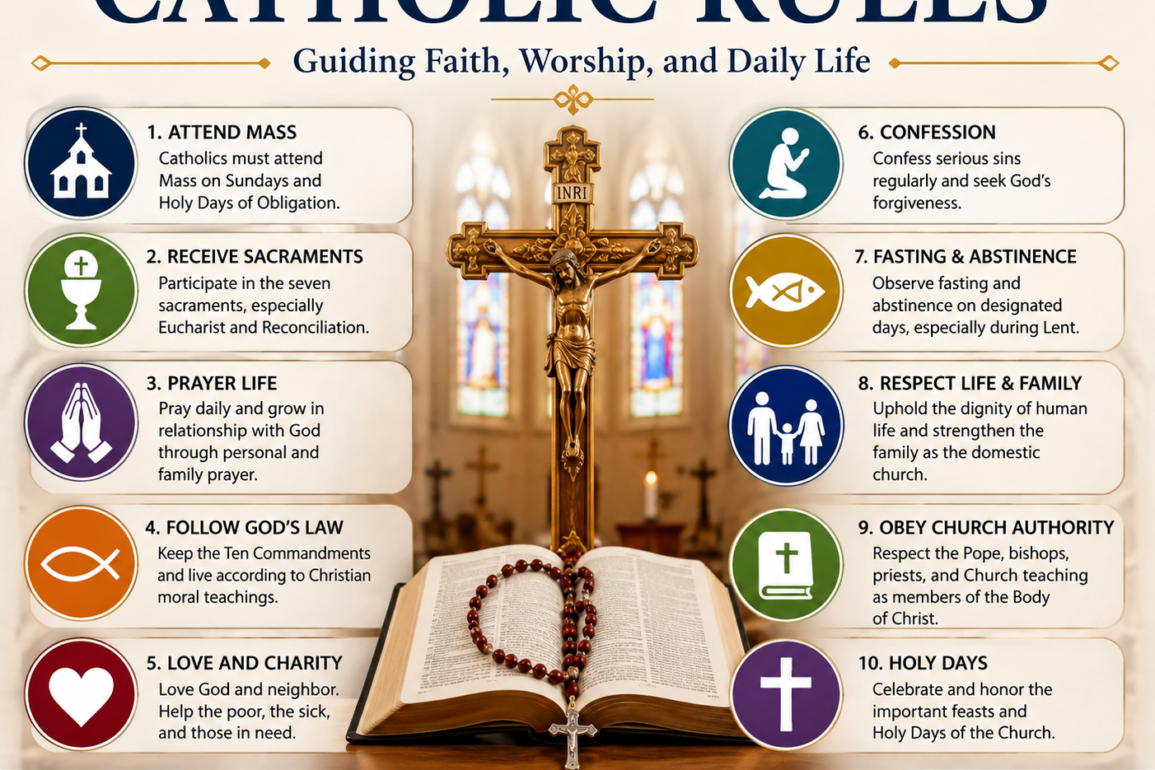
The term catholic rules can refer to several different things. Some are moral teachings based on the Bible, while others are official obligations established by the Church. Catholics are also encouraged to follow traditions that strengthen their spiritual lives.
It is important to understand that not every Catholic practice carries the same level of obligation. Some teachings are essential beliefs, while others are recommended devotional practices.
For example, attending Sunday Mass is considered an important obligation for Catholics, while praying the Rosary is strongly encouraged but not required for every person.
The purpose of catholic rules is generally to provide spiritual direction rather than create unnecessary restrictions.
The Ten Commandments
The Ten Commandments form an important moral foundation for Christian life. Catholics learn these commandments as guidance for their relationship with God and other people.
The commandments teach believers to worship God, respect parents, avoid murder, theft, dishonesty, and harmful behavior. They also encourage people to live responsibly and respect the dignity of others.
These principles remain central to catholic rules because they address everyday moral decisions.
Catholics are encouraged to examine their actions regularly and consider whether their choices reflect Christian values. The commandments are therefore not only religious instructions but also a framework for ethical living.
Attending Sunday Mass
One of the most widely recognized catholic rules involves participation in Sunday Mass. Catholics are expected to gather for worship on Sundays and certain important holy days.
Mass is the central form of worship in the Catholic Church. During the service, believers listen to Scripture, participate in prayers, and celebrate the Eucharist.
Sunday holds special importance because Christians traditionally commemorate the resurrection of Jesus Christ on this day.
Why Mass Matters
Attending Mass allows Catholics to worship as a community rather than practicing faith entirely alone. It also provides an opportunity for reflection, prayer, and spiritual renewal.
However, the Church recognizes that serious circumstances may prevent someone from attending. Illness, caregiving responsibilities, and other significant situations can affect a person’s ability to participate.
Understanding the purpose behind this practice helps explain why Mass remains one of the most important catholic rules.
Receiving the Sacraments
The Catholic Church recognizes seven sacraments. These sacred ceremonies mark important moments in the spiritual journey of believers.
The seven sacraments include Baptism, Confirmation, Eucharist, Reconciliation, Anointing of the Sick, Holy Orders, and Matrimony.
Each sacrament has a specific purpose. Baptism represents entry into the Christian community, while Confirmation strengthens a person’s commitment to faith.
The Eucharist holds a particularly central role in Catholic worship.
Preparation for the Eucharist
Catholics normally prepare for receiving Holy Communion through religious instruction and spiritual preparation. A person should approach the sacrament respectfully and with awareness of its religious significance.
Catholics who believe they have committed serious sin are traditionally encouraged to seek reconciliation before receiving Communion.
These practices demonstrate how catholic rules connect religious beliefs with personal responsibility.
The Importance of Confession
Reconciliation, often called Confession or Penance, allows Catholics to confess sins and seek forgiveness.
During the sacrament, a person speaks privately with a priest, expresses sorrow for wrongdoing, and receives spiritual guidance.
Confession emphasizes personal accountability. Instead of ignoring mistakes, believers are encouraged to recognize them and work toward positive change.
The Church traditionally requires Catholics conscious of serious sin to seek reconciliation before receiving Holy Communion.
Among the major catholic rules, this practice highlights the importance of repentance and spiritual renewal.
Rules About Fasting and Abstinence
Fasting and abstinence are traditional spiritual practices within Catholicism. They are especially associated with Lent, the period leading up to Easter.
On certain days, Catholics may be asked to reduce the amount of food they eat or avoid eating meat.
Ash Wednesday and Good Friday
Ash Wednesday and Good Friday are particularly important days of fasting and abstinence in many Catholic communities.
Fasting generally involves limiting meals, while abstinence traditionally means avoiding meat.
These practices are intended to encourage self-discipline and reflection. They also remind believers of sacrifice and spiritual priorities.
Age, health conditions, and personal circumstances can affect whether someone is required to fast. The Church recognizes that religious obligations should not unnecessarily harm a person’s health.
These catholic rules show that religious practices often involve both physical discipline and spiritual reflection.
Respecting Human Life
Catholic teaching places strong importance on the dignity and value of human life.
This principle influences the Church’s positions on many moral and social issues. Catholics are encouraged to treat every person with respect and compassion.
The idea of human dignity also encourages believers to care for vulnerable individuals, including the poor, elderly, sick, and marginalized.
Respect for life is therefore not limited to avoiding harmful actions. It also includes actively supporting others.
Many catholic rules are connected to this broader principle of protecting human dignity and promoting justice.
Marriage and Family Life
Marriage has an important place in Catholic teaching. The Church views marriage as a sacred commitment between spouses.
Catholics preparing for marriage often receive guidance from their local parish. This preparation helps couples understand the religious, emotional, and practical responsibilities involved in married life.
The Church also encourages families to create environments based on love, respect, forgiveness, and faith.
Parents often play an important role in introducing children to religious practices, including prayer and participation in the Church community.
These catholic rules surrounding family life aim to strengthen relationships and encourage long-term commitment.
The Role of Prayer
Prayer is an essential part of Catholic spiritual life. Catholics may pray individually or together with others.
Common forms of prayer include personal prayer, formal Church prayers, meditation, and devotional practices.
The Rosary is one of the best-known Catholic devotional traditions. It involves structured prayers and reflection on important events in the lives of Jesus and Mary.
However, Catholics can also speak to God using their own words.
Prayer helps believers express gratitude, seek guidance, ask forgiveness, and find comfort during difficult situations.
While not every prayer follows a strict formula, spiritual discipline remains an important part of catholic rules and traditions.
Following Church Moral Teachings
Catholic moral teaching encourages believers to consider how their actions affect themselves and others.
Honesty, compassion, forgiveness, justice, and responsibility are important values within Catholic ethics.
Catholics are encouraged to avoid actions that intentionally harm others. They are also taught to examine their conscience and take responsibility for mistakes.
Moral decisions can sometimes involve difficult circumstances. For this reason, Catholics may seek guidance through prayer, Scripture, Church teaching, and conversations with knowledgeable religious leaders.
Understanding catholic rules requires recognizing that moral teachings often focus on both actions and intentions.
Respect for Church Authority
The Catholic Church has a structured leadership system that includes the Pope, bishops, priests, and other religious leaders.
Catholics recognize the Pope as the spiritual leader of the worldwide Catholic Church. Bishops oversee dioceses, while priests serve local parishes.
Church authority plays an important role in interpreting doctrine and maintaining religious unity.
However, Catholic teaching also encourages believers to develop an informed conscience. Faith involves learning, reflection, prayer, and personal responsibility.
This balance between individual conscience and Church guidance is an important part of understanding catholic rules.
Holy Days of Obligation
In addition to Sundays, the Catholic Church recognizes certain major religious celebrations known as Holy Days of Obligation.
The exact list can vary depending on the country because local bishops’ conferences may receive permission to adjust particular observances.
These days commemorate important events and figures in Christian history.
Participation in worship during these celebrations helps Catholics remain connected to major moments in their religious tradition.
For practicing believers, these observances are another important aspect of catholic rules and religious responsibilities.
Charity and Helping Others
Catholic teaching strongly emphasizes charity and service.
Believers are encouraged to help people experiencing poverty, hunger, loneliness, or other difficulties. This can involve financial assistance, volunteering, community service, or simple acts of kindness.
Catholic organizations around the world operate schools, hospitals, charities, and humanitarian programs.
Helping others demonstrates that faith should influence practical actions.
For this reason, catholic rules are not focused only on worship and personal behavior. They also encourage responsibility toward society.
Common Misunderstandings About Catholic Rules
Some people assume that Catholicism consists entirely of strict regulations. In reality, Catholic teaching includes different levels of obligation, tradition, and personal devotion.
For example, attending Mass on required days is different from choosing a particular devotional prayer. Similarly, cultural traditions practiced by Catholics in one country may not be universal requirements.
Another misunderstanding is that Catholics must understand every Church teaching immediately. Faith formation is often a lifelong process involving study and reflection.
Learning about catholic rules requires patience and reliable information.
When questions involve specific obligations, believers should consult official Church resources or speak with a qualified priest or religious educator.
How Catholic Rules Apply in Modern Life
Modern life presents challenges that previous generations did not experience in exactly the same way. Technology, social media, changing workplaces, and global communication can create new ethical questions.
Catholic teaching continues to provide broad moral principles that believers can apply to contemporary situations.
For example, honesty remains important whether communication happens face-to-face or online. Respect for others also applies to social media interactions.
Similarly, charity can involve traditional community service or modern forms of support.
The continuing relevance of catholic rules depends partly on understanding the principles behind them rather than viewing them as isolated instructions.
Why Learning Catholic Rules Is Important
Learning about religious teachings can help Catholics make informed decisions about their faith.
It can also help non-Catholics understand one of the world’s largest Christian traditions.
Knowledge reduces misunderstandings and encourages respectful conversations between people with different beliefs.
Studying catholic rules also reveals the connection between worship, morality, community, and personal responsibility.
Rather than focusing only on restrictions, many Catholic teachings encourage believers to develop discipline, compassion, forgiveness, and spiritual awareness.
Conclusion
Understanding catholic rules provides valuable insight into how Catholic faith shapes everyday life. From attending Mass and receiving the sacraments to practicing charity and following moral teachings, these principles guide believers toward spiritual growth and responsible living. While some obligations are formally defined by the Church, others are personal devotional practices. Learning the meaning behind these teachings helps people understand Catholicism with greater accuracy, respect, and appreciation.
Frequently Asked Questions
What are the main Catholic rules?
Major Catholic obligations include attending Mass on required days, following moral teachings, participating respectfully in the sacraments, and observing certain fasting and abstinence practices.
Do Catholics have to attend Mass every Sunday?
Catholics are generally expected to attend Mass on Sundays, although serious circumstances such as illness may excuse someone from attending.
What foods are Catholics not allowed to eat?
Catholics are not permanently forbidden from eating most foods. However, abstinence from meat is traditionally observed on specific religious days, especially during Lent.
How many sacraments are there in the Catholic Church?
The Catholic Church recognizes seven sacraments: Baptism, Confirmation, Eucharist, Reconciliation, Anointing of the Sick, Holy Orders, and Matrimony.
Are all Catholic traditions mandatory?
No. Some practices are official obligations, while others are optional devotional traditions that Catholics may choose to follow.