


Introduction
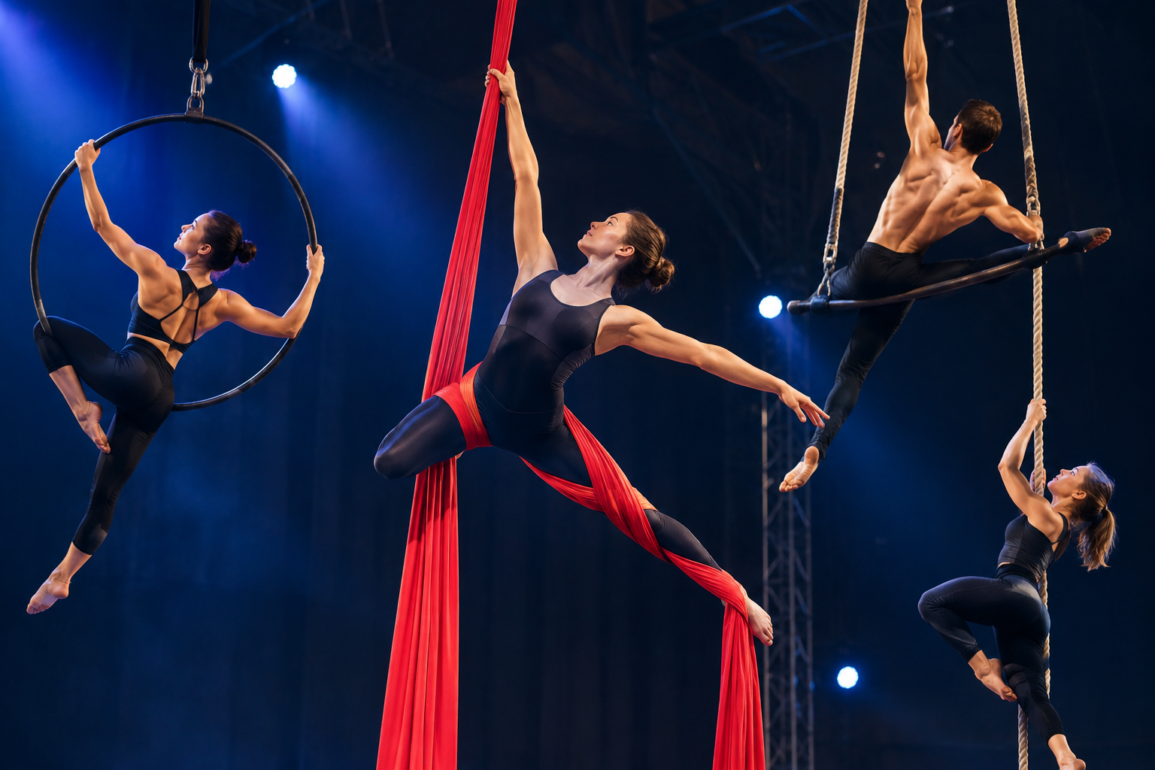
Aerial performance combines strength, balance, flexibility, courage, and artistic expression. At the center of this demanding art are aerialists, performers who work above the ground using specialized apparatus. They may perform in circuses, theaters, festivals, live shows, theme parks, and contemporary dance productions. Their routines can appear effortless, but every movement usually requires extensive training and careful preparation.
Unlike ordinary performers, aerialists must control their bodies while suspended in the air. They need strong muscles, excellent body awareness, and the ability to remain focused under pressure. A successful performance depends on more than physical strength. Timing, choreography, creativity, trust, and safety all play important roles.
Today, aerial arts have expanded beyond traditional circus settings. Schools and studios teach disciplines such as aerial silks, trapeze, aerial hoop, rope, and straps. This growth has introduced many people to the fascinating world of aerialists and their specialized skills.
What Are Aerialists?
Aerialists are trained performers who execute artistic or athletic movements while suspended above the ground. They use equipment designed for aerial performance and follow carefully developed techniques to climb, spin, balance, drop, pose, and transition between movements.
Their work can look very different depending on their chosen discipline. Some performers specialize in aerial silks, while others focus on trapeze or aerial hoop. Certain aerialists combine several disciplines to create more varied routines.
The profession requires a unique combination of athletic ability and artistic performance. Performers must understand how their bodies interact with gravity, momentum, tension, and movement. They also need to communicate emotion and storytelling through physical expression.
Different Types of Aerial Performance
Aerial arts include several disciplines, each with its own equipment and techniques. Understanding these styles helps explain the wide range of skills that aerialists develop.
Aerial Silks
Aerial silks use long pieces of strong fabric suspended from a secure point. Performers climb the fabric, create wraps, perform drops, and develop dramatic poses.
This discipline demands considerable upper-body strength, flexibility, grip control, and coordination. Beginners normally learn basic climbs and wraps before attempting advanced movements.
Trapeze
The trapeze consists of a horizontal bar suspended by ropes or cables. Depending on the style, performers may work alone or with partners.
Static trapeze emphasizes controlled poses, strength, and balance. Flying trapeze involves more dynamic movements and specialized catching techniques. Both forms require careful instruction and consistent practice.
Aerial Hoop
Aerial hoop, sometimes called lyra, uses a circular metal apparatus suspended in the air. Performers move around, inside, and above the hoop.
This discipline combines strength, flexibility, balance, and choreography. The circular shape also allows performers to create visually striking poses.
Aerial Rope
Aerial rope involves climbing, wrapping, spinning, and transitioning on a suspended rope. It requires strong grip and body control.
Experienced aerialists can use rope techniques to create smooth sequences that combine athletic movements with artistic presentation.
Aerial Straps
Aerial straps use two strong straps suspended from above. Performers support their body weight through their hands and arms while executing strength-based movements.
This discipline places significant demands on the shoulders, arms, core, and grip. It is often associated with highly athletic contemporary circus performances.
Skills Aerialists Need
Becoming successful requires more than learning tricks. Aerialists develop a broad collection of physical and mental abilities.
Strength and Conditioning
Aerial movements often require performers to lift or control their body weight. Strong shoulders, arms, hands, back, abdomen, and legs can improve performance.
Conditioning exercises help performers build the strength needed for climbs, holds, transitions, and controlled movements. Training programs should match the discipline and experience level of the performer.
Flexibility
Flexibility allows aerialists to achieve extended positions and perform movements with greater range. However, flexibility alone does not guarantee safe performance.
Strength must support the available range of motion. For this reason, many performers combine stretching with active flexibility and strength exercises.
Balance and Coordination
Performers must understand where their body is positioned in relation to the apparatus. Even small changes in weight distribution can affect movement.
Good coordination helps aerialists transition smoothly between positions. It also allows them to maintain rhythm while performing complicated sequences.
Mental Focus
Aerial performance requires concentration. Performers often work several meters above the floor, so losing focus can create unnecessary risk.
Confidence also develops gradually. Experienced aerialists learn to remain calm while executing challenging movements and responding to unexpected situations.
How Aerialists Train
Training usually progresses from basic skills toward more complex movements. Beginners first learn how to use equipment correctly and understand fundamental body positions.
A typical session may include a warm-up, strength exercises, technique practice, choreography, and conditioning. Aerialists also spend time repeating movements so they become controlled and consistent.
Rest is equally important. Muscles and connective tissues need recovery after demanding training. Professional performers often balance intense practice with mobility work, conditioning, sleep, nutrition, and recovery strategies.
Why Progression Matters
Advanced tricks can look exciting, but attempting them too early can increase risk. Good instruction allows performers to build strength and technical understanding gradually.
Coaches help aerialists identify weaknesses and improve technique before progressing to harder movements. This approach creates a stronger foundation for long-term development.
Safety in Aerial Arts
Safety is one of the most important parts of aerial performance. The equipment must be appropriate for the activity, correctly installed, and regularly inspected.
Professional aerialists typically work with trained riggers, coaches, or technicians when appropriate. Equipment selection also depends on the performer’s weight, movement type, rigging environment, and intended use.
Crash mats and suitable safety systems can provide additional protection during training. However, safety equipment does not replace proper instruction or responsible progression.
Performers should never assume that equipment is safe simply because it looks strong. Rigging involves specialized knowledge, and incorrect installation can have serious consequences.
The Role of Choreography
Aerial performance is not simply a collection of tricks. Choreography determines how movements connect and how the audience experiences the routine.
Aerialists may use music, lighting, costumes, facial expressions, and body language to create a particular mood. A routine can tell a story without spoken dialogue.
Strong choreography also considers transitions. A difficult trick may attract attention, but smooth movement between tricks can make a performance feel polished and professional.
Where Aerialists Perform
Modern aerialists can find opportunities across many entertainment industries. Traditional circuses remain an important part of the field, but they are not the only option.
Performers may appear in theaters, cruise productions, corporate events, music videos, television programs, festivals, and theme parks. Some also teach classes or create independent performances.
Contemporary circus companies have helped expand aerial arts by combining traditional techniques with dance, theater, visual design, and storytelling.
Career Opportunities for Aerialists
A professional career can involve several income sources. Some aerialists work as performers, while others combine performance with teaching, coaching, choreography, or creative direction.
Freelance performers may audition for individual productions. Established companies may offer longer engagements, while entertainment venues can provide seasonal or recurring opportunities.
Building a career usually requires more than technical ability. A strong portfolio, professional photographs, performance footage, networking skills, reliability, and communication can all help performers find opportunities.
Challenges Aerialists Face
The profession can be physically demanding. Repetitive training places stress on muscles and joints, while performance schedules can require frequent travel and irregular working hours.
Aerialists must also maintain their skills between contracts. Continued conditioning and technical practice help them remain performance-ready.
Another challenge is balancing artistic goals with physical limitations. Professional performers need to understand that recovery is part of training rather than an obstacle to success.
How Beginners Can Start
People interested in aerial arts should begin with an introductory class taught by a qualified instructor. Beginners do not need advanced athletic skills to start learning basic movements.
A good studio should provide suitable equipment, experienced instruction, clear safety procedures, and an appropriate progression system.
New aerialists should focus on technique instead of rushing toward impressive tricks. Building grip strength, body awareness, flexibility, and confidence creates a much stronger foundation.
It is also important to listen to the body. Persistent pain, unusual weakness, or other concerning symptoms should not simply be ignored during training.
Aerialists and Modern Fitness
Aerial training has become popular as a form of recreational exercise. It can develop strength, coordination, mobility, and body awareness while offering an artistic alternative to traditional gym workouts.
For many people, the creative aspect makes training more enjoyable. Instead of repeating conventional exercises, participants learn skills and sequences that provide measurable progress.
However, aerial fitness remains a specialized physical activity. Participants should follow appropriate instruction and avoid comparing their progress with experienced aerialists.
Why Aerial Performance Captivates Audiences
There is something naturally compelling about watching a person move through the air. Gravity creates an obvious challenge, while skilled performers appear to overcome it through control and artistry.
Audiences often remember aerialists because their performances combine visual spectacle with genuine physical achievement. A simple pose can communicate elegance, while a fast sequence can create excitement.
The best performances make difficult movements appear natural. That illusion comes from years of practice, preparation, and disciplined technique.
Conclusion
Aerialists represent a remarkable combination of athleticism, creativity, discipline, and performance. Their work transforms specialized equipment into a platform for movement, storytelling, and artistic expression. Whether they perform on silks, trapeze, hoop, rope, or straps, these performers rely on strength, flexibility, coordination, concentration, and careful preparation.
The world of aerial arts continues to grow through circus productions, dance companies, fitness studios, theaters, and independent performers. For beginners, the journey should start with qualified instruction and steady progression rather than advanced tricks. With patience and responsible training, aerial arts can become both a demanding discipline and a rewarding creative practice.
Ultimately, aerialists remind audiences that physical skill can become a form of art. Their performances demonstrate what focused training can achieve when strength and imagination work together.