




Introduction
Herbs have played an important role in cooking for centuries, adding aroma, flavor, and character to everyday meals. Among the many culinary herbs available, dried savory deserves more attention because of its distinctive peppery, slightly minty flavor and convenient shelf life. It can transform simple dishes without overpowering their main ingredients, making it useful for both home cooks and experienced chefs.
Savory belongs to the mint family and is commonly associated with Mediterranean and European cooking. Fresh savory has a delicate appearance and a bright herbal taste, while its dried form offers a more concentrated flavor that can be stored for extended periods. Understanding how to use dried savory, how it compares with fresh savory, and which foods complement it can help you make better use of this versatile herb.
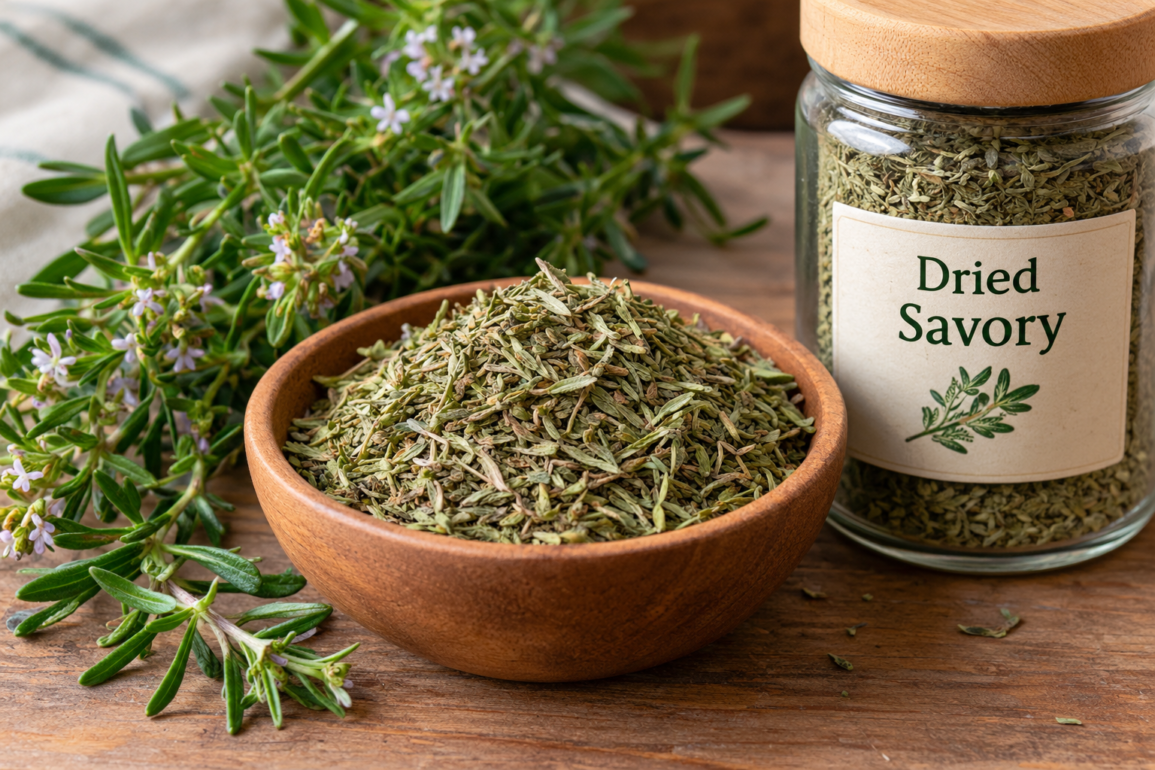
What Is Dried Savory?
Dried savory is made by removing moisture from savory leaves and tender stems. The drying process helps preserve the herb while concentrating its characteristic flavor. Depending on the variety and growing region, savory may have a warm, peppery, earthy, or slightly mint-like taste.
Two varieties are especially well known: summer savory and winter savory. Summer savory generally has a lighter and sweeter flavor, while winter savory tends to have a stronger and more robust character. Both can be dried and used as seasonings.
Because dried savory has less moisture than fresh leaves, a relatively small amount can provide noticeable flavor. This makes it particularly convenient for recipes that require longer cooking times.
Why Use Dried Savory in Cooking?
One major advantage of dried savory is convenience. Fresh herbs often require washing, trimming, and quick use, whereas dried herbs can remain in a pantry for much longer when stored properly.
The concentrated flavor of dried savory also makes it suitable for soups, stews, sauces, beans, vegetables, and meat dishes. Its peppery quality can add depth without requiring large quantities of salt or other strong seasonings.
Another useful feature is its ability to work well with other herbs. Savory can complement thyme, rosemary, oregano, parsley, and bay leaf. When combined thoughtfully, these herbs can create a balanced seasoning profile rather than a single dominant flavor.
Culinary Uses of Dried Savory
Seasoning Beans and Legumes
Beans and legumes are among the foods most traditionally associated with savory. Dried savory can add a warm herbal character to lentils, white beans, chickpeas, split peas, and other legumes.
Adding the herb during cooking allows its flavor to spread throughout the dish. It can be especially useful in hearty bean soups and stews where several flavors develop together.
Enhancing Soups and Stews
A small quantity of dried savory can bring additional depth to vegetable soups, chicken soups, and hearty stews. Since dried herbs release their flavor gradually, they often work well when added during cooking rather than only at the end.
For recipes with long cooking times, start with a modest amount and adjust the seasoning later. This approach helps prevent the herbal flavor from becoming too strong.
Flavoring Meat and Poultry
The peppery character of dried savory makes it a useful seasoning for chicken, turkey, pork, and other meats. It can be combined with garlic, black pepper, onion, thyme, or rosemary to create a balanced dry seasoning.
For roasted poultry, mixing dried savory with olive oil and other herbs can create a flavorful coating. The herb can also be incorporated into marinades and stuffing mixtures.
Adding Character to Vegetables
Vegetables can sometimes benefit from herbs that provide more than a mild leafy flavor. Dried savory works particularly well with potatoes, green beans, carrots, peas, mushrooms, and roasted root vegetables.
Sprinkling a small amount over vegetables before roasting can provide a pleasant herbal aroma. It can also be added to sautéed vegetables during cooking.
Dried Savory vs. Fresh Savory
Fresh and dried savory come from the same plant, but their culinary characteristics differ. Fresh savory contains more moisture and generally has a brighter, more delicate flavor. Dried savory has a more concentrated taste and can be kept in the pantry for convenient use.
The choice between them often depends on the recipe. Fresh leaves may be preferable when a dish needs a fresh herbal finish, while dried savory can be more practical for soups, stews, casseroles, and recipes that cook for longer periods.
When substituting dried savory for fresh, use a smaller quantity because the dried herb is more concentrated. It is usually better to begin conservatively and add more if necessary.
How to Store Dried Savory Properly
Proper storage can help preserve the aroma and flavor of dried savory. Keep it in a tightly sealed container away from direct sunlight, heat, and moisture.
A cool, dry pantry is generally more suitable than a location beside the stove. Heat and humidity can gradually reduce the herb’s quality.
It is also useful to label containers with the purchase or drying date. Over time, dried savory may lose its fragrance even if it remains safe to use. A weak aroma is often a sign that the herb has become less flavorful.
For the best results, avoid repeatedly opening the container in a humid environment. Close the lid promptly after measuring the amount needed for a recipe.
How Much Dried Savory Should You Use?
The appropriate amount depends on the recipe, the variety of savory, and personal taste. Because dried savory has a concentrated flavor, beginning with a small quantity is sensible.
For a family-sized soup or stew, a modest amount can be enough to introduce its characteristic flavor. You can taste the dish during cooking and gradually adjust the seasoning.
When experimenting with dried savory for the first time, avoid adding a large amount immediately. Strong herbal flavors can be difficult to balance once they dominate a recipe.
Dried Savory in Different Cuisines
Savory has a long culinary history in European and Mediterranean food traditions. It is particularly associated with dishes featuring beans, vegetables, meat, and grains.
In some traditional recipes, dried savory appears alongside other aromatic herbs to create complex seasoning blends. Its peppery profile can also provide an alternative to stronger spices when a recipe needs subtle warmth.
Modern cooks can adapt the herb beyond traditional recipes. It can be incorporated into homemade spice blends, roasted vegetable seasonings, herb-infused oils, and savory baked dishes.
Can Dried Savory Replace Other Herbs?
Dried savory has its own flavor profile, so it should not be considered an exact replacement for every herb. However, it can sometimes be used when a recipe calls for thyme or oregano and you want a somewhat different herbal character.
Because savory has a noticeable peppery quality, it may work particularly well when a dish needs a combination of herbal depth and mild spice.
Substitution works best when you consider the entire recipe rather than replacing herbs in equal quantities automatically. Start with a small amount and adjust according to taste.
Potential Nutritional and Traditional Uses
Savory is more than a culinary herb. Like many herbs, it contains naturally occurring plant compounds and has been used traditionally in different food cultures.
However, culinary quantities of dried savory should primarily be viewed as a seasoning rather than a replacement for medical treatment. Claims about herbs providing specific health effects can vary considerably depending on preparation, quantity, and scientific evidence.
Using herbs as part of a varied diet can add flavor and diversity to meals. For people managing a particular health condition or taking medication, concentrated herbal preparations should be discussed with an appropriate healthcare professional.
Tips for Cooking With Dried Savory
Getting the best flavor from dried savory does not require complicated techniques. Add it early enough for its flavor to blend with the other ingredients, especially in soups and stews.
For roasted vegetables and meats, mix dried savory with complementary ingredients such as garlic, black pepper, olive oil, or other herbs. For lighter dishes, use less so that the herb supports rather than dominates the main ingredients.
Crushing dried leaves gently between your fingers before adding them can help release their aroma. Always taste the finished dish before adding more seasoning.
Common Mistakes to Avoid
One common mistake is using too much dried savory because the dried leaves may initially seem mild. Their flavor can become more noticeable as they hydrate and cook.
Another mistake is storing the herb in an open container. Exposure to air, moisture, and light can gradually reduce its quality.
It is also easy to assume that every variety of savory tastes identical. Summer and winter savory can differ in intensity, so recipes may require small adjustments depending on the product available.
Conclusion
Dried savory is a practical and flavorful herb that can bring a distinctive peppery and earthy character to many dishes. From beans and soups to roasted vegetables, poultry, and meat, it offers a flexible way to add depth without complicated preparation. Its long storage life also makes it a convenient pantry ingredient.
Using dried savory successfully comes down to balance. Start with a modest amount, combine it with compatible herbs and ingredients, and store it correctly to preserve its aroma. Once you become familiar with its flavor, this often-overlooked herb can become a valuable part of everyday cooking.