



An urn is a container designed to hold something important, often ashes, liquids, or other materials. When people ask what is an urn, they are usually referring to a vessel used to hold the cremated remains of a person or pet. However, urns have a much broader history and can serve many purposes in different cultures and settings. Their shapes, materials, sizes, and decorations can vary considerably, depending on how they are intended to be used.
Understanding what is an urn can help explain why these containers have remained meaningful for thousands of years. Some urns are simple and practical, while others are carefully decorated as memorial objects. In archaeology, urns can also provide valuable information about ancient societies, burial customs, art, and daily life.
What Is an Urn?
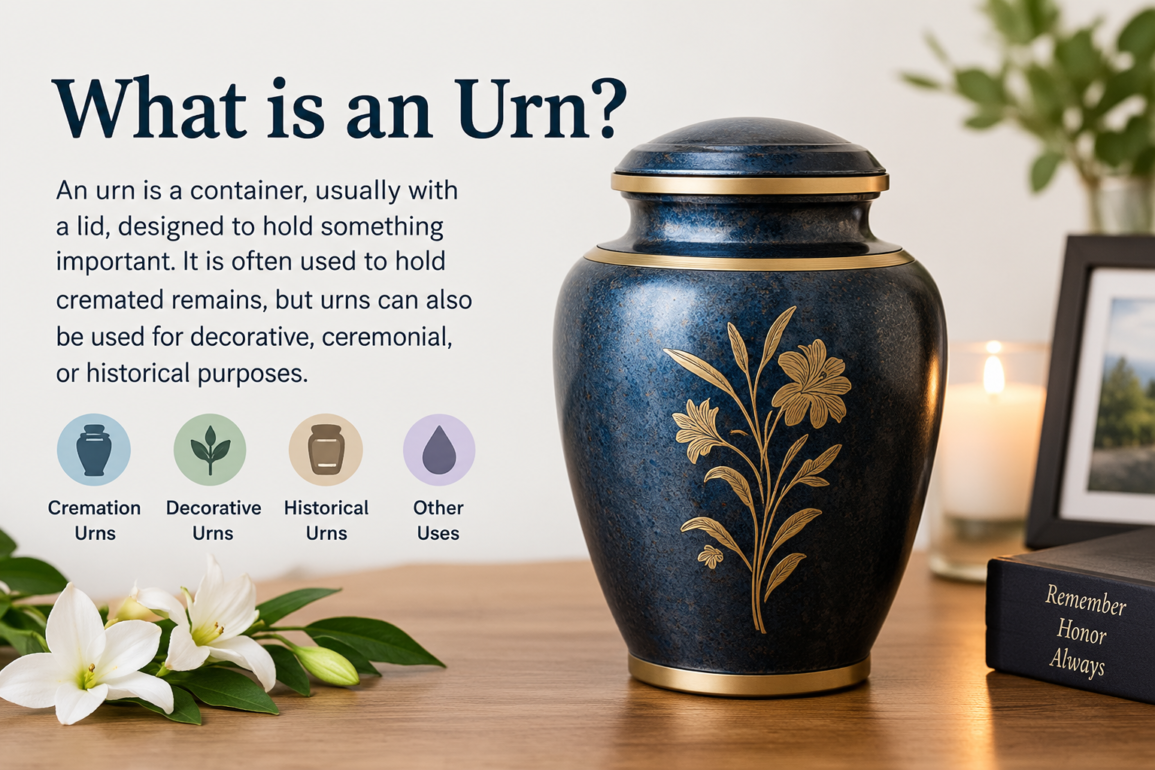
So, what is an urn in the simplest sense? An urn is a vessel, generally wider than a bottle and often equipped with a lid, that is designed to contain materials. Modern usage commonly associates the word with cremation, but an urn can also be used for decorative, ceremonial, historical, or practical purposes.
A cremation urn is specifically made to hold cremated remains. These remains are sometimes called ashes, although they actually consist primarily of processed bone fragments. After cremation, the remains may be placed into a temporary container or transferred to a permanent urn selected by the family.
The answer to what is an urn therefore depends partly on context. In a funeral setting, it usually means a memorial container. In an archaeological context, it may refer to an ancient vessel associated with burial practices. In decorative design, it can describe a vase-like container used to enhance an interior or outdoor space.
What Is a Cremation Urn?
When discussing what is an urn, cremation urns are among the most common examples today. A cremation urn provides a secure and respectful container for cremated remains after a cremation service.
These urns come in many designs. Some have a traditional vase-like appearance, while others are shaped like boxes, cylinders, sculptures, or personalized memorial objects. Families may select an urn based on its material, appearance, size, cultural traditions, or intended final location.
A cremation urn may remain in a home, be placed in a cemetery niche, or be used during a memorial ceremony. In some circumstances, families may choose an urn designed for burial or another appropriate memorial arrangement.
Different Types of Urns
Learning what is an urn also involves understanding the different categories available. Not every urn serves the same purpose, and the best design depends on how the container will be used.
Traditional Cremation Urns
Traditional cremation urns often have a rounded body, a narrow neck, and a removable lid. They may be made from materials such as ceramic, metal, wood, or stone. Their classic appearance makes them suitable for display in a home or memorial setting.
Biodegradable Urns
Biodegradable urns are designed to break down naturally over time. Some are intended for water placement, while others are suitable for burial. These products are often selected by people who want a memorial arrangement connected with natural surroundings.
Keepsake Urns
A keepsake urn is smaller than a standard cremation urn. It can hold a small portion of cremated remains, allowing several family members to keep a memorial portion separately. Keepsake designs may also be used alongside another primary memorial arrangement.
Companion Urns
Companion urns are designed to hold the cremated remains of two people. They are sometimes chosen by couples or family members who want their remains to be memorialized together.
Decorative Urns
Decorative urns may not be intended for cremated remains at all. They can function as ornamental vessels in homes, gardens, public spaces, or historical settings. Their design may resemble classical pottery or architectural decoration.
What Materials Are Used to Make an Urn?
Another useful part of understanding what is an urn is knowing what these vessels are made from. Manufacturers use many materials depending on the intended purpose.
Metal urns are commonly made from materials such as brass, bronze, stainless steel, or aluminum. They can provide durability and are available in many finishes and designs.
Wooden urns offer a natural appearance and can be made from different types of timber. Some feature engraved names, dates, symbols, or other personalized details.
Ceramic and porcelain urns can have highly detailed finishes. Artists may paint, glaze, or sculpt them to create distinctive memorial pieces.
Stone urns can provide a substantial and long-lasting option. Marble, granite, and other stone materials are sometimes used for memorial containers and outdoor installations.
Biodegradable materials may include paper-based products, natural fibers, sand, or other materials designed to decompose under suitable environmental conditions.
The History of Urns
The history of what is an urn reaches far beyond modern funeral practices. Ancient civilizations used urn-like vessels for many purposes, including storing food, liquids, valuables, and cremated remains.
Archaeologists have discovered burial urns in different parts of the world. Some cultures practiced cremation and placed remains inside specially prepared vessels. These objects can help researchers understand the beliefs and traditions of earlier communities.
Ancient Greek and Roman societies also produced vessels with elaborate shapes and decorative features. In later European art, urn forms became popular in gardens, architecture, and interior decoration.
This long history demonstrates that the concept behind what is an urn is not limited to one religion, culture, or period. The vessel has changed over time while maintaining its basic role as a container with symbolic or practical significance.
Why Are Urns Important?
The importance of an urn often comes from what it represents rather than simply what it contains. For families, a memorial urn can provide a physical place connected with someone they have lost.
An urn may become part of a remembrance ceremony or remain in a meaningful location. Personalization can make it especially significant. Names, photographs, dates, artwork, quotations, symbols, or other details may be incorporated into its design.
This is one reason why asking what is an urn involves more than giving a dictionary definition. An urn can have emotional, cultural, historical, and personal meaning.
How Do People Choose an Urn?
After learning what is an urn, people may wonder how to select one. The answer depends on the intended use and personal preferences.
First, consider the size. A standard urn is generally designed to accommodate the cremated remains of one adult, but requirements can vary. Funeral providers can help confirm the appropriate capacity.
Next, consider the final destination. An urn intended for display may have different requirements from one intended for burial or water placement. Local cemetery or memorial-site rules may also affect the choice.
Material is another consideration. Metal, wood, ceramic, stone, and biodegradable options each offer different appearances and characteristics.
Finally, consider personalization. A simple design may be preferred by one family, while another may want a highly customized memorial.
What Is an Urn Used for Besides Cremated Remains?
The question what is an urn has a broader answer because urns are not exclusively associated with funerals. Decorative urns have been used for centuries in gardens, buildings, museums, and homes.
Large ornamental urns can serve as focal points in landscaping. Smaller versions can function as decorative containers or architectural accents.
Historical urns can also be displayed in museums and archaeological collections. Their patterns, materials, and construction methods can provide evidence about the people who created and used them.
In this broader sense, an urn is simply a distinctive type of vessel whose purpose depends on its design and context.
Urns in Different Cultures and Traditions
Different cultures have developed their own approaches to death, remembrance, burial, and cremation. Consequently, what is an urn can carry different meanings from one community to another.
Some traditions emphasize keeping remains with family members, while others favor burial, scattering, or placement in a memorial location. Cultural and religious practices can influence whether cremation is accepted and how remains should be handled.
Families should therefore consider their own traditions and any applicable religious or cultural guidance when choosing a memorial arrangement.
Common Misunderstandings About Urns
One common misunderstanding is that every urn contains cremated remains. In reality, many urn-shaped vessels are purely decorative or historical objects.
Another misconception is that all urns have the same size. Cremation urns are available in different capacities, including smaller keepsake designs and larger companion options.
Some people also assume that urns must have a traditional appearance. Modern urns can have minimalist, artistic, personalized, or nature-inspired designs.
Understanding these differences makes the answer to what is an urn much clearer. The word describes a type of vessel, while its specific function depends on its design and context.
How Should an Urn Be Maintained?
The appropriate care depends on the material. Metal urns may require gentle cleaning to preserve their finish, while wooden urns should generally be protected from excessive moisture.
Ceramic and porcelain pieces should be handled carefully because they can break if dropped. Outdoor urns may require additional protection from weather and temperature changes.
If an urn contains cremated remains, families should follow the manufacturer’s care instructions and avoid opening or moving it unnecessarily unless there is a specific reason to do so.
Final Thoughts
So, what is an urn? It is a vessel traditionally associated with storing or preserving something meaningful, with cremation urns being one of the most familiar modern examples. Urns can be made from metal, wood, ceramic, stone, or biodegradable materials, and they can range from simple containers to highly personalized memorial pieces.
The history of what is an urn shows how this vessel has served practical, decorative, cultural, and ceremonial purposes across generations. Whether used to preserve cremated remains, decorate a garden, or represent an ancient burial tradition, an urn can carry significance far beyond its physical form. Understanding its different types and purposes allows people to appreciate why urns continue to have an important place in both modern life and human history.