



Introduction
The phrase troop cynicism can raise questions about how soldiers, military units, and other organized groups respond when trust, morale, or confidence begins to weaken. Cynicism generally develops when people feel that official promises do not match their experiences. In a military setting, that gap can become especially important because personnel often depend on leadership, shared values, clear communication, and confidence in their mission.
Understanding troop cynicism requires looking beyond simple dissatisfaction. Soldiers may question decisions, doubt leadership intentions, or become skeptical about institutional messages for many different reasons. Operational pressure, repeated disappointments, unclear communication, perceived unfairness, and difficult working conditions can all influence attitudes within a unit.
This article explains troop cynicism, its possible causes, common signs, effects on organizations, and practical ways leaders can understand and address it. The subject is useful for anyone studying military culture, organizational behavior, leadership, or group psychology.
What Does Troop Cynicism Mean?
Troop cynicism refers broadly to a skeptical or distrustful attitude among military personnel toward leadership, institutions, policies, missions, or organizational promises. It does not necessarily mean that soldiers reject their duties or lack commitment to their colleagues. A person can remain dedicated to teammates while becoming doubtful about decisions made by senior authorities.
Cynicism often develops gradually. A soldier may initially accept an explanation from leadership, but repeated experiences that appear inconsistent with those explanations can change that perception. Over time, the individual may expect future statements to be unreliable or may assume that institutional decisions are motivated by interests different from those publicly stated.
The meaning of troop cynicism therefore depends heavily on context. A temporary complaint after a difficult assignment is not automatically evidence of deep organizational cynicism. Persistent distrust across a group is more significant because it can influence communication, morale, cooperation, and perceptions of leadership.
How Troop Cynicism Develops
Loss of Trust in Leadership
One major contributor to troop cynicism is declining confidence in leadership. Military organizations depend on hierarchical structures, so personnel frequently receive instructions from people who occupy positions of greater authority. When soldiers believe leaders communicate honestly and consistently, difficult decisions may be easier to accept.
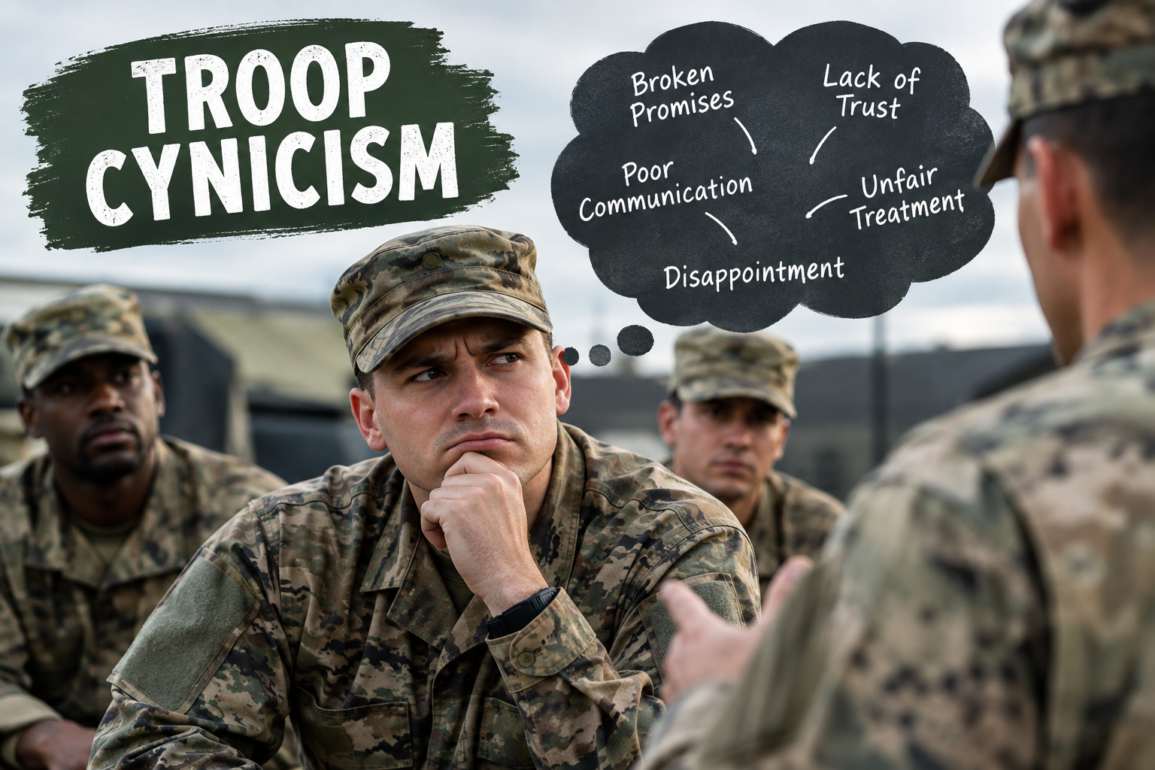
However, repeated contradictions between leadership statements and actual experiences can create skepticism. If personnel repeatedly hear that conditions will improve but see little change, they may become less willing to trust similar promises in the future.
Communication Problems
Communication also plays an important role in troop cynicism. Personnel need understandable explanations about changes, expectations, responsibilities, and organizational priorities. When information appears incomplete or confusing, people may fill the gaps with their own assumptions.
Transparent communication cannot eliminate every disagreement, but it can reduce unnecessary uncertainty. Leaders who explain what they know, what they do not know, and why a decision was made may help personnel understand difficult circumstances more clearly.
Perceived Unfairness
Perceived unfair treatment can strengthen troop cynicism. Personnel may become skeptical when they believe assignments, recognition, promotions, disciplinary actions, or opportunities are handled inconsistently.
Importantly, perception matters even when leaders believe a decision was objectively justified. If the reasoning behind a decision is unclear, personnel may interpret the situation differently. Consistent standards and understandable procedures can help reduce this problem.
Common Signs of Troop Cynicism
Recognizing troop cynicism can be difficult because skepticism does not always appear as open confrontation. Some personnel may continue completing their responsibilities while privately losing confidence in the organization.
Common signs can include repeated skepticism toward official announcements, reluctance to accept new initiatives, sarcastic comments about institutional promises, declining enthusiasm for organizational programs, and reduced confidence in leadership communication.
Another possible sign of troop cynicism is a growing separation between formal compliance and genuine engagement. Personnel may perform required tasks but stop contributing ideas or showing initiative because they believe their efforts will not influence outcomes.
Leaders should avoid interpreting every complaint as cynicism. Constructive criticism can actually indicate engagement. The important distinction is whether personnel are raising specific concerns with the expectation that problems can be improved, or whether they have become convinced that meaningful improvement is impossible.
Effects on Military Organizations
The consequences of troop cynicism can extend beyond individual attitudes. Military units depend on cooperation and communication, so widespread distrust may influence organizational performance.
One potential effect is reduced morale. When personnel believe that organizational messages lack credibility, they may become emotionally detached from institutional goals. This can make new initiatives harder to implement.
Another consequence involves communication. Personnel experiencing troop cynicism may hesitate to share concerns with leaders because they believe speaking openly will not produce meaningful change. When that happens, leaders may receive less accurate information about problems within the organization.
Cynicism can also affect teamwork. Soldiers may maintain strong bonds with close colleagues while becoming increasingly detached from broader institutional objectives. This distinction is important because peer loyalty and institutional trust are not always identical.
Troop Cynicism and Morale
Troop cynicism and morale are closely related but should not be treated as exactly the same concept. Morale generally concerns confidence, enthusiasm, and willingness to continue functioning effectively within a group. Cynicism focuses more specifically on skepticism and distrust.
A unit can therefore experience frustration without becoming deeply cynical. Likewise, personnel can have strong morale among their immediate teammates while expressing serious doubts about higher-level decisions.
Understanding this distinction helps leaders avoid simplistic interpretations. Addressing morale may require improving working conditions, recognition, support, or cohesion, while addressing troop cynicism may require rebuilding credibility and demonstrating consistency between words and actions.
The Role of Military Culture
Military culture can shape how troop cynicism develops and how it is expressed. Shared traditions, professional expectations, discipline, and group identity influence the way personnel interpret organizational problems.
In some environments, humor and sarcasm may become common ways of expressing dissatisfaction. Such behavior does not automatically indicate severe organizational problems. However, if cynical attitudes become the dominant way personnel discuss leadership or institutional goals, they may deserve closer attention.
Strong unit culture can sometimes provide protection against broader organizational distrust. Personnel who trust their immediate teammates may continue supporting one another even when they question decisions made elsewhere in the organization.
How Leaders Can Respond
Reducing troop cynicism does not simply involve telling personnel to become more positive. Attempts to suppress criticism may actually deepen distrust if people believe legitimate concerns are being dismissed.
A more constructive approach begins with listening. Leaders can encourage personnel to identify specific concerns and explain what experiences created their perceptions. This allows leadership to distinguish between isolated dissatisfaction and recurring organizational problems.
Consistency is also important. If leaders make commitments, they should follow through whenever circumstances allow. When circumstances change, explaining the reasons for that change can preserve credibility even when the original promise cannot be fulfilled.
Leaders should also recognize the value of honest feedback. Troop cynicism may sometimes highlight genuine organizational weaknesses. A skeptical employee who points out repeated problems can provide information that leadership needs to improve systems.
Can Troop Cynicism Ever Be Useful?
Although excessive troop cynicism can create organizational challenges, skepticism itself is not necessarily harmful. Questioning assumptions can prevent organizations from accepting flawed ideas without examination.
Professional military organizations need personnel who can identify risks, recognize inconsistencies, and raise legitimate concerns through appropriate channels. The challenge is maintaining constructive skepticism without allowing distrust to become so widespread that personnel disengage from organizational goals.
In this sense, troop cynicism can sometimes serve as a signal. It may indicate that personnel perceive a gap between official expectations and their daily experiences. Leaders who examine that gap carefully may discover opportunities for organizational improvement.
Building Trust and Confidence
Addressing troop cynicism requires more than motivational speeches. Trust develops through repeated experiences. Leaders can support that process by communicating clearly, applying standards consistently, acknowledging mistakes, and demonstrating respect for personnel.
Recognition also matters. When people believe their work is noticed and valued, they may feel more connected to the organization. Opportunities to provide feedback can further strengthen the relationship between personnel and leadership.
Most importantly, leaders should treat trust as something earned over time. A single successful communication campaign cannot immediately reverse years of disappointment. Repeated evidence of reliable leadership is more likely to influence long-term perceptions.
Conclusion
Troop cynicism describes a form of skepticism that can emerge when military personnel lose confidence in leadership, communication, policies, or institutional promises. Its development can involve repeated disappointments, perceived unfairness, unclear communication, organizational inconsistencies, and difficult working conditions.
Recognizing troop cynicism requires careful judgment because criticism and skepticism are not automatically signs of organizational failure. Constructive feedback can strengthen an organization when leaders listen to it and respond appropriately. Problems become more serious when distrust turns into widespread disengagement or when personnel no longer believe that communication and improvement are possible.
Ultimately, understanding troop cynicism provides valuable insight into military leadership and organizational culture. Trust grows when words and actions remain consistent, concerns receive serious attention, and personnel can see that leadership decisions are communicated honestly. These principles can help organizations maintain stronger relationships with the people who serve within them.
Frequently Asked Questions
What is troop cynicism?
Troop cynicism refers to skepticism or distrust among military personnel toward leadership, institutions, policies, missions, or organizational promises. It can develop gradually through repeated negative experiences or perceived inconsistencies.
What causes troop cynicism?
Troop cynicism may develop because of poor communication, perceived unfairness, broken expectations, inconsistent leadership, difficult working conditions, or repeated experiences that reduce confidence in institutional promises.
Is troop cynicism the same as low morale?
No. Troop cynicism specifically involves skepticism or distrust, while morale concerns broader feelings of confidence, enthusiasm, and commitment. The two can influence one another but are not identical.
Can troop cynicism affect teamwork?
Yes. Persistent troop cynicism can influence communication, engagement, and confidence in organizational goals. However, personnel may still maintain strong relationships and loyalty with their immediate teammates.
How can leaders address troop cynicism?
Leaders can address troop cynicism by listening to concerns, communicating honestly, applying standards consistently, acknowledging mistakes, following through on commitments, and demonstrating that legitimate feedback can lead to meaningful improvement.