




The shape of the foot plays an important role in balance, movement, posture, and everyday comfort. Although feet may look simple at first glance, they contain a complex arrangement of bones, joints, muscles, tendons, ligaments, nerves, and soft tissues. Their structure allows the body to support its weight while walking, running, standing, jumping, and changing direction. Understanding the shape of the foot can also help explain why people have different walking patterns, shoe requirements, and pressure points.
Every person has a slightly different foot structure. Genetics, age, activity level, body weight, footwear, and previous injuries can influence its appearance and function. Some feet have a prominent arch, while others appear flatter. The toes can also differ in length and alignment. These natural variations do not automatically indicate a problem. Instead, they are part of the wide range of normal human anatomy.
What Determines the Shape of the Foot?
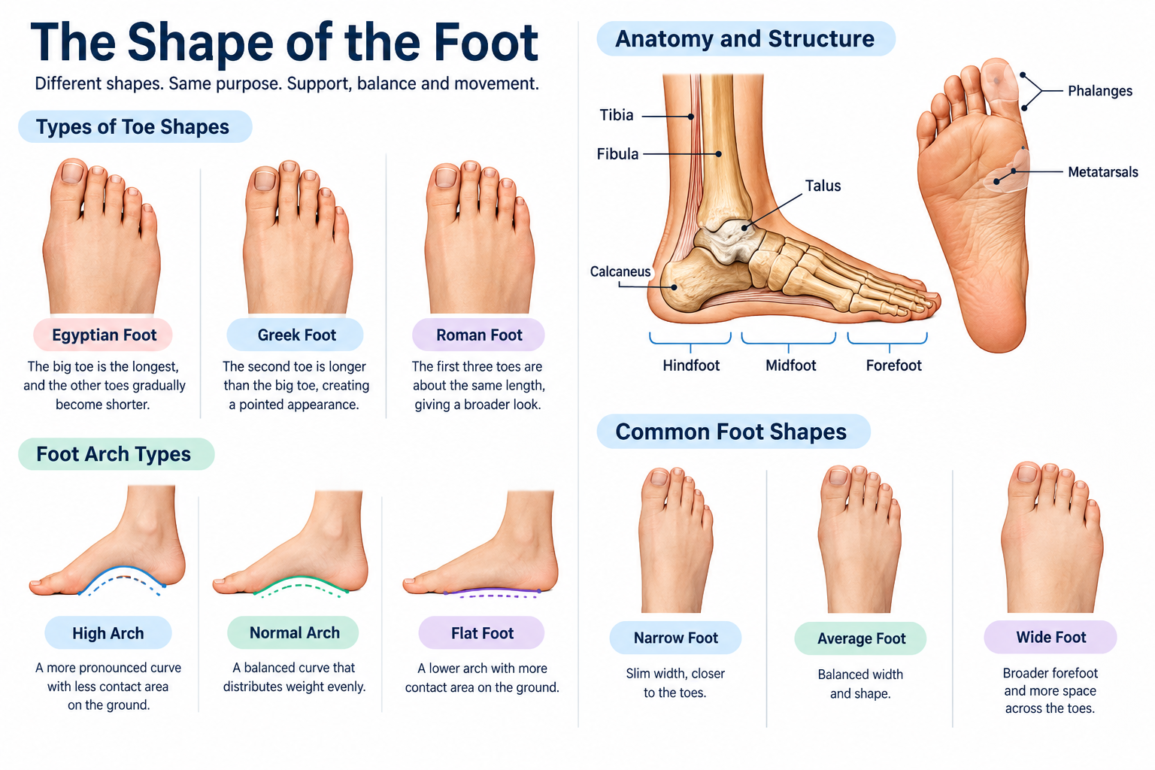
The shape of the foot develops through the interaction of bones, connective tissues, muscles, and body mechanics. The foot contains 26 bones arranged into three major regions: the hindfoot, midfoot, and forefoot. Together, these structures create a flexible yet strong foundation for the body.
The hindfoot includes the talus and calcaneus, which connect the foot with the lower leg and help manage movement. The midfoot contains several smaller bones that contribute to the arch. The forefoot includes the metatarsals and phalanges, which help distribute weight and provide push-off during walking.
The shape of the foot is also influenced by the arches. These arches act like natural springs. They help absorb forces when the foot contacts the ground and assist with returning energy during movement.
Major Types of Foot Shape
People commonly describe foot shape by looking at toe length, arch height, and overall width. These descriptions can be useful when discussing footwear, although they do not represent strict medical classifications.
Egyptian Foot Shape
An Egyptian-style foot usually has a big toe that appears longer than the other toes. The remaining toes gradually decrease in length. This creates a sloping appearance from the big toe toward the little toe.
The shape of the foot in this pattern may affect how the front of a shoe feels. A shoe with enough room around the big toe can provide greater comfort and reduce unnecessary pressure.
Greek Foot Shape
A Greek-style foot commonly has a second toe that is longer than the big toe. This arrangement creates a noticeable point near the second toe. Many people naturally have this structure, and it is not necessarily associated with a foot disorder.
Understanding this shape of the foot can be useful when choosing footwear. Shoes with a spacious toe box may reduce pressure on the longer second toe.
Roman Foot Shape
A Roman-style foot generally has the first three toes that appear relatively similar in length. The front of the foot can therefore look broader and more rounded.
People with this shape of the foot may prefer footwear that provides adequate width across the forefoot. Tight shoes can place unnecessary pressure on the toes and may become uncomfortable during extended walking.
Understanding the Foot Arch
The arch is one of the most important features affecting the shape of the foot. It runs along the inner side of the foot and helps distribute body weight across the lower limb.
Most people have a natural medial longitudinal arch. Some individuals have a higher arch, while others have a lower arch. A lower arch is often called a flat foot, although the degree of arch height varies considerably between individuals.
A high arch can place more pressure on certain parts of the heel and forefoot. A low arch may allow the foot to roll inward more during movement. Neither pattern automatically means that a person has a medical problem.
High Arches
A high arch creates a more pronounced curve along the inside of the foot. This shape of the foot can reduce the amount of surface area contacting the ground.
Some people with high arches experience increased pressure beneath the heel or ball of the foot. Properly fitted shoes can help distribute pressure more evenly.
Low Arches
A low arch produces a flatter appearance when the person stands. In some cases, the arch becomes more visible when the foot is not bearing weight.
This shape of the foot is common and can occur naturally. Children often have flatter-looking feet because their arches develop gradually as they grow.
Why Foot Shape Matters for Walking
The shape of the foot contributes to how forces move through the body during walking. When the heel touches the ground, the foot needs to absorb impact. It then becomes more stable as the body moves forward.
During the final part of a step, the toes and forefoot help push the body ahead. The arches, joints, tendons, and muscles work together to make this process efficient.
A change in foot structure can sometimes influence movement at the ankle, knee, hip, or lower back. However, foot shape alone does not determine a person’s entire walking pattern. Strength, flexibility, footwear, activity, and individual biomechanics also matter.
Foot Shape and Shoe Selection
Choosing shoes based on the shape of the foot can improve comfort. A shoe should provide enough length and width without squeezing the toes.
The toe box is particularly important. Your toes should have enough space to spread naturally. The heel should remain secure without excessive pressure or slipping.
People with wider feet may benefit from wider shoe designs. Those with longer second toes should check that the shoe does not press against the front of the toe. Similarly, people with high arches may appreciate shoes with appropriate support and cushioning.
It is also useful to measure both feet because they are rarely identical. One foot may be slightly longer or wider than the other.
Changes in Foot Shape Over Time
The shape of the foot can change throughout life. Children experience major structural changes as bones, muscles, and connective tissues mature. Adults may notice gradual changes associated with aging.
Pregnancy, changes in body weight, prolonged standing, certain activities, and repeated stress can also affect foot structure. Some people notice that shoes feel tighter or that their usual size no longer provides the same comfort.
Age-related changes may include reduced soft-tissue cushioning and changes in joint flexibility. These developments do not necessarily indicate disease, but persistent pain or significant structural changes deserve professional attention.
Common Conditions That Change Foot Appearance
Certain conditions can alter the visible shape of the foot. One example is a bunion, which involves a change in alignment around the big toe joint. Another is a hammertoe, where a toe develops an abnormal bend.
Flat feet, high arches, and changes caused by injury can also affect appearance. In some cases, these conditions cause no symptoms. In others, they may contribute to pain, difficulty walking, or problems finding comfortable footwear.
It is important not to diagnose a condition simply by looking at the shape of the foot. A healthcare professional can evaluate symptoms, movement, alignment, and medical history when necessary.
How to Care for Different Foot Shapes
Good foot care begins with comfortable, properly fitted footwear. Avoid shoes that squeeze the toes or create repeated pressure on a particular area.
Keeping the feet clean and dry can also support skin health. Regularly checking the feet may help you notice blisters, redness, swelling, cuts, or areas of irritation early.
Strength and flexibility exercises can support healthy foot function. Simple movements such as toe exercises, controlled calf raises, and gentle stretches may help maintain mobility. However, exercises should be appropriate for your individual condition.
If a particular shape of the foot causes persistent discomfort, a qualified healthcare professional can provide an assessment and recommend suitable treatment or footwear options.
When Should You Seek Professional Advice?
Most natural differences in the shape of the foot do not require medical treatment. However, professional evaluation may be appropriate when you experience ongoing pain, swelling, numbness, weakness, or difficulty walking.
Sudden changes should receive particular attention, especially when they follow an injury. A healthcare professional can determine whether the change results from normal variation, mechanical stress, injury, or another condition.
You should also consider professional advice if footwear consistently causes pain despite choosing an appropriate size and width.
Conclusion
The shape of the foot is a unique combination of bones, arches, joints, muscles, tendons, and soft tissues that supports movement and balance. Differences in toe length, arch height, and overall width are common and often completely normal. Understanding your shape of the foot can help you select comfortable footwear and recognize changes that may deserve attention. Good footwear, regular foot care, and awareness of persistent symptoms can all contribute to healthier and more comfortable movement. Ultimately, there is no single ideal foot shape because healthy feet can naturally look very different from one person to another.
Frequently Asked Questions
What is the normal shape of the foot?
There is no single normal shape of the foot. Healthy feet can differ in arch height, width, toe length, and overall appearance.
Does foot shape affect shoe size?
Yes. The shape of the foot can influence how a particular shoe fits. Length, width, toe arrangement, and arch structure can all affect comfort.
What are the main types of toe shapes?
Common descriptions include Egyptian, Greek, and Roman patterns. These terms generally describe differences in relative toe length.
Can foot shape change with age?
Yes. The shape of the foot can gradually change because of aging, changes in tissues, activity, weight, injuries, and other factors.
When is unusual foot shape a concern?
A different shape of the foot is not necessarily a problem. Pain, swelling, weakness, numbness, or difficulty walking are stronger reasons to seek professional evaluation.