




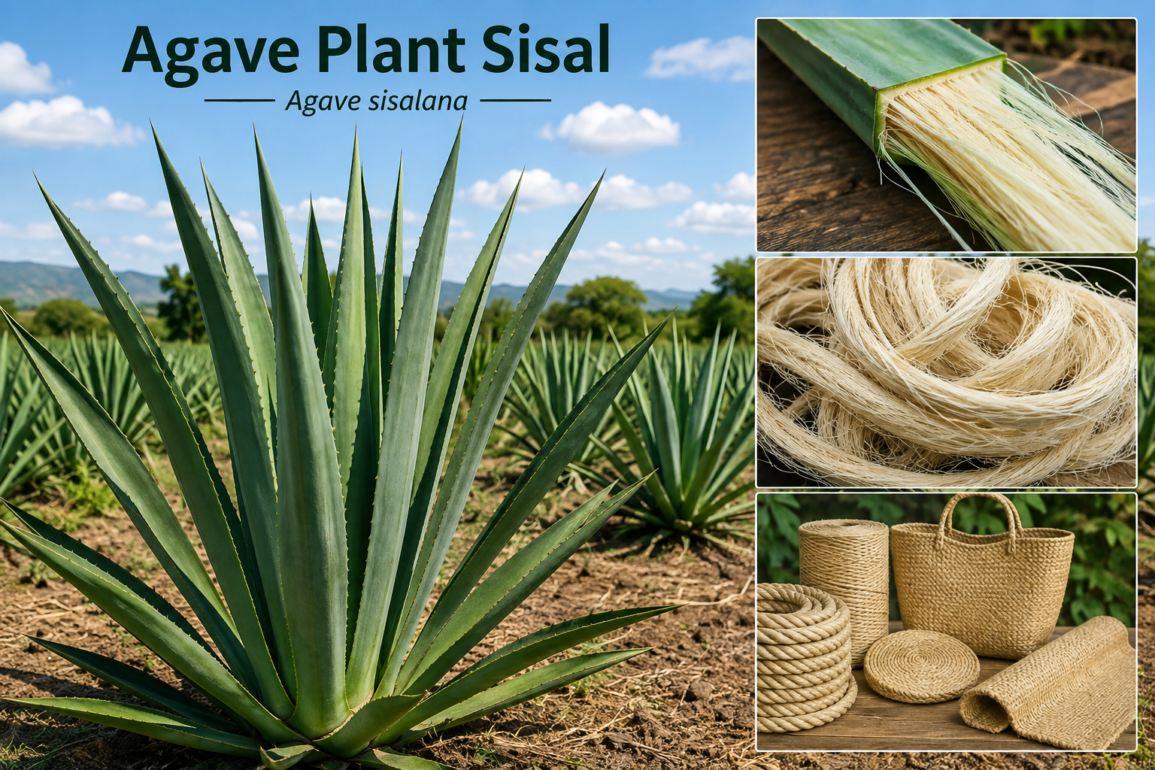
The agave plant sisal has played an important role in agriculture, industry, and traditional craftsmanship for centuries. Known for its strong natural fibers and impressive ability to grow in challenging climates, this plant remains valuable in many parts of the world. Its long, sword-shaped leaves contain fibers that can be processed into ropes, mats, brushes, and other useful products.
Although many people associate agave plants with decorative gardens or beverages, sisal comes from a specific species commonly grown for fiber production. The plant has become an important renewable resource because its fibers are durable, biodegradable, and suitable for many commercial applications. As industries continue searching for sustainable materials, interest in the agave plant sisal continues to grow.
This article explains what sisal is, how it is produced, where it grows, and why its natural fibers remain useful in the modern world.
What Is an Agave Plant Sisal?
The agave plant sisal is scientifically known as Agave sisalana. It belongs to the Asparagaceae family and is cultivated primarily for the strong fibers found inside its leaves. Despite its common association with cactus-like plants, sisal is not technically a cactus.
The plant develops a compact central structure surrounded by long, thick leaves. These leaves can grow several feet in length and contain tough fibers that are separated through mechanical processing. Once extracted, the fibers can be cleaned, dried, and transformed into different products.
Sisal is especially valued because it combines strength with flexibility. Unlike synthetic materials, it comes from a renewable plant source and can naturally break down after disposal.
The Origin and History of Sisal
The history of the agave plant sisal can be traced to Mexico and Central America. The plant was later introduced to other tropical and subtropical regions because of its commercial potential.
The name “sisal” became connected with the Mexican port of Sisal in Yucatán, where fiber products were historically shipped to international markets. Over time, sisal cultivation expanded to Africa, South America, and Asia.
Countries with warm climates found that the plant could grow successfully in areas where other crops struggled. This made sisal an important agricultural resource for rural communities and export industries.
Expansion of Sisal Farming
Commercial farming increased significantly during the nineteenth and twentieth centuries. Farmers recognized that the leaves could produce strong fibers suitable for ropes and agricultural equipment.
The agave plant sisal became particularly important before synthetic fibers became widely available. Although artificial materials later reduced demand in some markets, natural fiber products have experienced renewed interest due to environmental concerns.
Physical Characteristics of the Plant
The agave plant sisal has a distinctive appearance. Its leaves grow in a rosette pattern from the center of the plant. Mature leaves are thick, rigid, and usually green or grayish-green.
Each leaf contains bundles of long fibers. These fibers provide structural support to the plant and become the raw material used in manufacturing.
Important characteristics include:
- Long, narrow, sword-shaped leaves
- Thick and fibrous internal structure
- Strong tolerance for dry conditions
- Low water requirements after establishment
- Ability to grow in relatively poor soils
- Long productive life under suitable conditions
The plant does not require constant irrigation, making it useful in regions with limited rainfall.
How Is Sisal Fiber Produced?
Producing fiber from the agave plant sisal involves several stages. The process begins with harvesting mature leaves. Farmers generally remove leaves carefully to allow the plant to continue growing.
The harvested leaves then go through a process called decortication. During this stage, machines separate the useful fibers from the fleshy plant material.
After extraction, the fibers are washed to remove remaining plant matter. They are then dried, often using sunlight or controlled drying methods. Once dry, workers sort the fibers according to length, color, and quality.
Main Steps in Sisal Processing
The production process generally follows these stages:
- Growing and maintaining the sisal plants
- Harvesting mature leaves
- Extracting fibers through decortication
- Washing the fibers
- Drying them thoroughly
- Sorting and grading the material
- Processing fibers into finished products
Proper processing is important because clean and evenly dried fibers have better commercial value.
Major Uses of Sisal Fiber
One reason the agave plant sisal remains commercially important is its versatility. The fibers can be used in traditional products as well as modern industrial materials.
Ropes and Twine
Sisal has long been used for making ropes, twine, and cordage. Its strength allows it to handle heavy loads, while its rough texture provides a good grip.
Agricultural operations often use sisal twine for tying crops and securing materials. Natural ropes also remain popular for decorative and outdoor purposes.
Carpets and Rugs
Sisal fibers are commonly used to produce natural floor coverings. Sisal rugs have a textured appearance and can add a simple, earthy style to homes and offices.
The natural durability of the fibers makes them suitable for areas with regular foot traffic. However, sisal rugs usually require protection from excessive moisture.
Brushes and Cleaning Products
The stiff fibers of the agave plant sisal work well in brushes. Manufacturers use them for household cleaning brushes, shoe brushes, and industrial products.
Natural fiber brushes are increasingly popular among consumers who prefer alternatives to plastic-based products.
Paper and Composite Materials
Sisal fibers can also be used in paper production and composite manufacturing. Researchers have explored ways to combine natural fibers with other materials to create lightweight and strong products.
These applications demonstrate how traditional agricultural materials can support modern engineering and sustainable manufacturing.
Environmental Benefits of Sisal
Environmental concerns have increased interest in renewable materials. The agave plant sisal offers several advantages compared with some synthetic alternatives.
First, the plant is renewable. Farmers can harvest leaves while allowing the plant to continue producing new growth. Second, sisal fibers are biodegradable under appropriate conditions.
The crop can also grow in dry areas where water-intensive crops may be difficult to maintain. This makes it potentially useful for agricultural regions facing changing climate conditions.
A Natural Alternative to Plastic-Based Materials
Many industries are exploring plant-based alternatives to petroleum-derived materials. Sisal fibers can support this transition in selected products.
For example, natural fibers may be used in packaging, household goods, composites, and decorative products. While sisal cannot replace every synthetic material, it offers an environmentally friendly option for many applications.
The growing interest in sustainable production could create new opportunities for the agave plant sisal industry.
Growing Conditions for Sisal
Sisal grows best in warm climates with plenty of sunlight. It is highly tolerant of dry conditions once established, although young plants need suitable moisture during early development.
Well-drained soil is important because excessive standing water can damage the roots. The plant can survive in relatively poor soil conditions, which gives it an advantage in certain agricultural regions.
Climate Requirements
Warm tropical and subtropical climates are generally suitable for sisal cultivation. The plant performs best where severe frost is uncommon.
Long periods of intense cold can damage the leaves and reduce growth. Farmers therefore usually cultivate sisal in regions with consistently warm temperatures.
Soil Conditions
The agave plant sisal prefers soil that drains effectively. Sandy or moderately rocky soils can support healthy growth when other conditions are favorable.
Extremely wet ground is less suitable because prolonged moisture around the roots may create disease problems.
Economic Importance of Sisal Farming
Sisal farming provides employment opportunities in many agricultural communities. The industry involves cultivation, harvesting, fiber extraction, processing, transportation, and manufacturing.
In some regions, small farmers depend on natural fiber crops as an additional source of income. Larger commercial operations may supply international markets with processed fibers and finished products.
The agave plant sisal also supports related industries that manufacture carpets, ropes, handicrafts, brushes, and composite materials.
As consumer interest in environmentally responsible products increases, demand for natural fibers may continue developing.
Sisal in Modern Interior Design
Natural materials have become increasingly popular in modern home design. Sisal is frequently used in rugs, wall coverings, baskets, and decorative accessories.
Its neutral color and natural texture complement many interior styles. Homes with minimalist, rustic, coastal, or organic designs often use sisal products to create warmth and visual texture.
A sisal rug can provide a durable foundation for a living room or hallway. However, buyers should understand that natural fibers can be sensitive to moisture and may require special cleaning methods.
Challenges Facing the Sisal Industry
Despite its advantages, the agave plant sisal industry faces several challenges. Competition from synthetic fibers remains significant because artificial materials can sometimes be produced more cheaply.
Labor requirements may also affect production costs. Harvesting and processing natural fibers require equipment, workers, and careful quality control.
Climate changes can create additional challenges for farmers. Although sisal tolerates drought better than many crops, extreme weather conditions may still affect agricultural productivity.
Market prices can also fluctuate based on international demand. For this reason, producers increasingly look for innovative applications that can increase the value of sisal fibers.
Future Potential of Sisal Products
The future of the agave plant sisal appears promising as industries explore sustainable alternatives. Scientists and manufacturers continue researching natural fiber composites and biodegradable materials.
Automotive manufacturers, construction companies, and packaging industries have shown interest in plant-based fibers for selected applications. Sisal may provide reinforcement while reducing dependence on fully synthetic materials.
Innovation could also improve processing methods. Better machinery may reduce waste and increase the efficiency of fiber extraction.
In addition, consumers increasingly value products with natural origins. Handmade baskets, rugs, and eco-friendly household products may continue supporting demand for sisal.
Conclusion
The agave plant sisal remains one of the world’s most useful natural fiber crops. From ropes and rugs to brushes and modern composite materials, its applications demonstrate remarkable versatility. The plant’s ability to grow in dry conditions and produce renewable, biodegradable fibers makes it increasingly relevant in a sustainability-focused world. As industries search for practical alternatives to synthetic materials, sisal may continue gaining importance. Understanding this remarkable plant helps us appreciate how traditional agricultural resources can support modern innovation, environmental responsibility, and economic development.
Frequently Asked Questions
What is the scientific name of the agave plant sisal?
The scientific name of the agave plant sisal is Agave sisalana. It is cultivated mainly for the strong natural fibers found inside its leaves.
Is sisal the same as a cactus?
No, sisal is not a cactus. Although its appearance may seem similar to some desert plants, it belongs to the agave group.
What products are made from sisal?
Sisal is used to make ropes, twine, carpets, rugs, brushes, baskets, paper products, and natural fiber composites.
Is sisal environmentally friendly?
Yes, sisal is generally considered an environmentally friendly material because it comes from a renewable plant source and the fibers are biodegradable.
Where does sisal grow best?
The agave plant sisal grows best in warm tropical and subtropical climates with good sunlight and well-drained soil.