


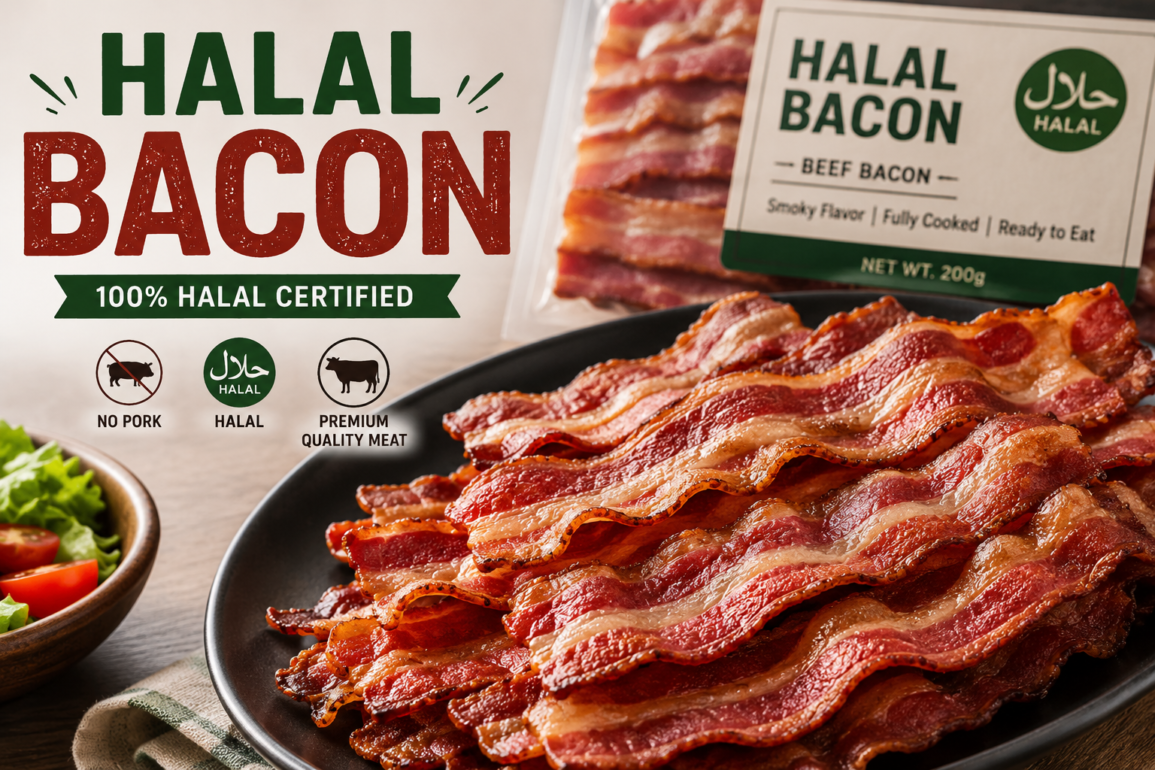
Bacon is a popular breakfast food known for its smoky aroma, crispy texture, and rich flavor. However, traditional bacon usually comes from pork, which Muslims do not consume under Islamic dietary rules. This difference has created growing interest in halal bacon, a meat alternative prepared according to halal requirements. It allows people to enjoy bacon-style foods while following their dietary principles.
Today, manufacturers make bacon alternatives from beef, turkey, chicken, and other permissible ingredients. These products can look and cook similarly to conventional bacon, although their flavor and texture may vary. Understanding how these alternatives are produced can help shoppers choose suitable products with greater confidence.
What Is Halal Bacon?
Halal bacon refers to a bacon-style product made from ingredients that comply with Islamic dietary requirements. Unlike conventional pork bacon, it does not contain pork or pork-derived ingredients. Depending on the product, manufacturers may use beef, turkey, chicken, or plant-based ingredients.
For meat-based products, the animal must generally be a permissible species and processed according to halal standards. Ingredients, preparation methods, and manufacturing facilities may also matter. Cross-contact with non-halal substances can be an important consideration for consumers who follow strict halal practices.
The term halal bacon therefore describes more than simply a different type of meat. It reflects the ingredients and production process used to create a bacon-like food.
Why Do People Choose Halal Bacon?
There are several reasons consumers look for halal bacon. The most obvious reason is religious dietary practice. Muslims avoid pork and pork-derived products, making traditional bacon unsuitable for them.
Some consumers also prefer alternatives because of personal dietary choices. Turkey and chicken versions can provide a different nutritional profile from pork products, although nutrition varies significantly by brand and recipe.
Another reason is convenience. Many people enjoy bacon with eggs, sandwiches, burgers, salads, and breakfast wraps. A suitable alternative makes it easier to prepare familiar meals without using pork.
The growing availability of halal bacon also reflects increased demand for halal-certified foods in supermarkets, restaurants, and online stores.
What Is Halal Bacon Made From?
The ingredients depend on the type of product. Beef is one of the most common choices because its texture can work well when sliced thinly and cooked until crisp.
Turkey is another popular option. Turkey bacon can have a lighter texture and flavor while still providing the salty and smoky qualities associated with breakfast bacon.
Chicken can also serve as the primary ingredient. Manufacturers may season chicken slices with salt, spices, smoke flavor, or other ingredients to create a bacon-style product.
Plant-based versions use ingredients such as soy, wheat, coconut, peas, or other plant proteins. These products attempt to reproduce the texture and savory taste of bacon without using meat.
When buying halal bacon, always check the ingredient list and certification information rather than relying only on the product name.
Types of Halal Bacon
Halal Beef Bacon
Beef bacon is one of the closest meat-based alternatives to traditional bacon. It typically comes from selected beef cuts that are sliced, seasoned, cured, and sometimes smoked.
Halal bacon made from beef can develop a rich, savory flavor when cooked properly. The final texture depends on the cut, curing method, thickness, and cooking temperature.
Halal Turkey Bacon
Turkey bacon provides another popular alternative. It usually contains ground or sliced turkey combined with seasonings and other ingredients.
Because turkey contains less fat than many traditional bacon products, it may cook differently. Consumers should follow the manufacturer’s instructions to achieve the desired texture.
Halal Chicken Bacon
Chicken bacon is produced using chicken meat and flavoring ingredients. It can work particularly well in sandwiches, wraps, breakfast dishes, and salads.
The flavor is usually milder than beef-based alternatives, so manufacturers often use spices and smoke flavor to create a stronger bacon-like taste.
Plant-Based Bacon
Plant-based bacon contains no animal meat. Instead, manufacturers use plant proteins, vegetables, grains, or other ingredients to produce a bacon-inspired product.
For people seeking vegetarian or vegan options, plant-based halal bacon can provide an alternative. However, halal status still depends on the ingredients and manufacturing process.
How Is Halal Bacon Prepared?
The production process varies between manufacturers. Meat may first be cut into suitable portions before being seasoned or cured. Salt and spices can help develop the characteristic savory flavor.
Some products receive smoke treatment to create a traditional smoky profile. Others use natural or artificial smoke flavoring.
After processing, the meat may be sliced and packaged for retail sale. During manufacturing, companies that target halal consumers should control ingredient sourcing and production practices carefully.
Certification can provide additional assurance because an independent halal organization may review ingredients and production procedures.
How to Check If Bacon Is Halal
Consumers should look for a recognized halal certification mark on the packaging. Certification can make it easier to identify products that have undergone a halal review.
The ingredient list is also important. Avoid products containing pork, pork fat, pork-derived gelatin, or other non-halal ingredients.
If certification is unclear, check the manufacturer’s website or contact the company directly. This is particularly useful when a product uses complex flavorings, enzymes, emulsifiers, or other processed ingredients.
When purchasing halal bacon, checking the complete label is more reliable than assuming a product is suitable because it uses beef or turkey.
Halal Bacon vs. Regular Bacon
The main difference is the source of the meat and the applicable production requirements. Traditional bacon generally comes from pork, while halal bacon uses permissible ingredients such as beef, turkey, or chicken.
Flavor can also differ. Pork bacon contains a distinctive combination of fat, salt, and cured-meat flavors. Beef bacon can offer a deeper, meatier taste, while turkey and chicken versions may be lighter.
Texture varies as well. Some alternatives become crisp when fried, while others remain softer. Cooking methods and product formulations make a significant difference.
Despite these differences, halal bacon can perform many of the same culinary functions as traditional bacon.
Is Halal Bacon Healthy?
Whether halal bacon is healthy depends on its ingredients, portion size, and preparation method. Halal status describes whether a product meets Islamic dietary requirements; it does not automatically mean that the product is nutritionally superior.
Processed meat alternatives can contain substantial amounts of sodium. Some may also contain saturated fat or added preservatives.
Consumers should compare nutrition labels and consider serving sizes. Products with simpler ingredients and reasonable sodium levels may fit more easily into a balanced diet.
It is also useful to remember that turkey or chicken bacon is not automatically healthier than every other option. The nutritional composition depends on the specific product.
How to Cook Halal Bacon
You can prepare halal bacon in several ways. Pan-frying is one of the simplest methods because it allows you to monitor browning and texture closely.
Place the slices in a suitable pan and cook them over moderate heat. Turn them periodically so both sides brown evenly. Cooking time varies according to thickness and product type.
An oven can also work well for larger quantities. Arrange slices on a baking tray and follow the package instructions for temperature and cooking time.
Air fryers provide another convenient method. They can produce crisp edges while reducing the need for additional cooking oil.
Always follow the manufacturer’s cooking instructions because different types of halal bacon respond differently to heat.
Popular Ways to Use Halal Bacon
Halal bacon works in many familiar meals. You can serve it with eggs, toast, pancakes, or potatoes for breakfast.
It can also add smoky flavor to sandwiches and burgers. Chopped pieces work well in salads, pasta dishes, baked potatoes, and wraps.
For a quick meal, combine cooked slices with eggs and vegetables inside a flatbread or tortilla. You can also crumble crispy pieces over soups or salads for extra texture.
These uses make halal bacon a flexible ingredient for households that avoid pork.
What Should You Look for When Buying It?
Start with the halal certification. A recognizable certification mark can provide greater confidence about the product’s compliance.
Next, examine the meat source. Beef, turkey, and chicken are common choices, but the ingredient list remains important.
Look at sodium, saturated fat, calories, and protein if nutrition is important to you. Compare several brands instead of assuming every product has the same nutritional profile.
You should also consider flavor and texture. Some products focus on crispness, while others aim for a softer, meatier texture.
Finally, consider storage instructions and expiration dates. Proper refrigeration and handling help maintain food quality and safety.
Can You Make Halal Bacon at Home?
Yes, you can make a bacon-style product at home using halal meat. Beef is a practical choice because thinly sliced beef can be seasoned and cooked to develop a savory, smoky character.
A simple homemade approach can include thin beef slices, salt, spices, and a suitable smoke flavor. However, homemade recipes require careful ingredient selection if you want to maintain halal standards.
For convenience, commercially produced halal bacon may be easier because the manufacturer has already handled processing and packaging.
Frequently Asked Questions
Is halal bacon made from pork?
No. Genuine halal bacon should not contain pork or prohibited pork-derived ingredients. It is commonly made from beef, turkey, chicken, or plant-based ingredients.
Does halal bacon taste like regular bacon?
It can provide a similar salty, smoky, savory experience, but the exact flavor depends on the meat and seasonings. Beef versions often have a stronger meat flavor.
Is turkey bacon always halal?
No. Turkey itself is permissible, but the complete product must meet halal requirements. Check certification and the ingredient list before purchasing.
Can Muslims eat halal bacon?
Yes, provided the product genuinely meets halal dietary requirements. Consumers who follow strict standards should look for reliable certification and examine the ingredients.
Can halal bacon be used in breakfast recipes?
Yes. You can use it with eggs, toast, potatoes, sandwiches, wraps, and many other breakfast foods. It can also work in salads and main dishes.
Conclusion
Halal bacon gives consumers a practical way to enjoy the familiar role of bacon without using pork. Beef, turkey, chicken, and plant-based options provide different flavors, textures, and nutritional profiles. However, shoppers should not judge a product only by its name or meat source. Checking halal certification, ingredients, nutrition information, and preparation instructions offers a more reliable approach. With the right product, halal bacon can become a versatile ingredient for breakfast, sandwiches, salads, and everyday meals while supporting halal dietary choices.