




Introduction
Natural stone has shaped architecture, construction, landscaping, and interior design for centuries. Among the many stones used for practical and decorative purposes, dolomite stone has gained attention because of its attractive appearance, durability, and geological characteristics. Its neutral colors and distinctive patterns make it useful in both traditional and modern design projects.
Dolomite is a carbonate rock primarily composed of the mineral dolomite, which contains calcium and magnesium. It forms through geological processes that can transform limestone over long periods. Depending on its mineral composition and formation environment, it may appear white, gray, cream, pink, green, or other subtle shades.
Understanding its properties helps homeowners, builders, designers, students, and geology enthusiasts make informed decisions. This guide explains how dolomite forms, where it is used, its physical properties, advantages, limitations, maintenance requirements, and differences from similar natural stones.
What Is Dolomite Stone?
Dolomite stone is a sedimentary carbonate rock mainly composed of the mineral dolomite. The mineral itself has the chemical formula CaMg(CO₃)₂, meaning it contains calcium, magnesium, carbon, and oxygen.
Dolomite can develop when magnesium-rich fluids alter limestone after deposition. This process is commonly called dolomitization. Over geological time, the original limestone structure may change as magnesium replaces some of the calcium within the carbonate minerals.
The resulting rock can have a crystalline appearance and varying levels of hardness. Its exact characteristics depend on geological conditions, mineral impurities, and the degree of alteration.
How Does Dolomite Form?
The formation of dolomite stone involves complex geological processes that can occur over millions of years. A common explanation involves magnesium-rich groundwater or marine fluids interacting with limestone.
Limestone primarily contains calcium carbonate. When magnesium-rich fluids move through porous limestone, chemical reactions can modify the mineral structure. Some calcium ions are replaced by magnesium, eventually creating dolomite minerals.
The process does not always occur in exactly the same way. Scientists continue to study natural dolomite formation because reproducing some geological conditions in laboratories can be challenging.
Geological Composition
The primary mineral is dolomite, but natural deposits can contain other minerals. Quartz, calcite, clay minerals, iron compounds, and organic material may influence the final color and texture.
These variations explain why samples from different regions can look and perform differently. Testing is therefore important when a particular stone is intended for demanding construction applications.
Main Physical Properties
One reason dolomite stone attracts attention is its combination of appearance and physical performance. It is generally harder than ordinary limestone, although its exact hardness varies depending on composition and geological history.
It can also display a crystalline texture that gives polished surfaces an attractive depth. Natural patterns may range from subtle veining to stronger mineral contrasts.
Important properties include density, porosity, hardness, water absorption, chemical resistance, and surface finish. These factors should be evaluated before selecting the material for a specific project.
Common Colors and Appearance
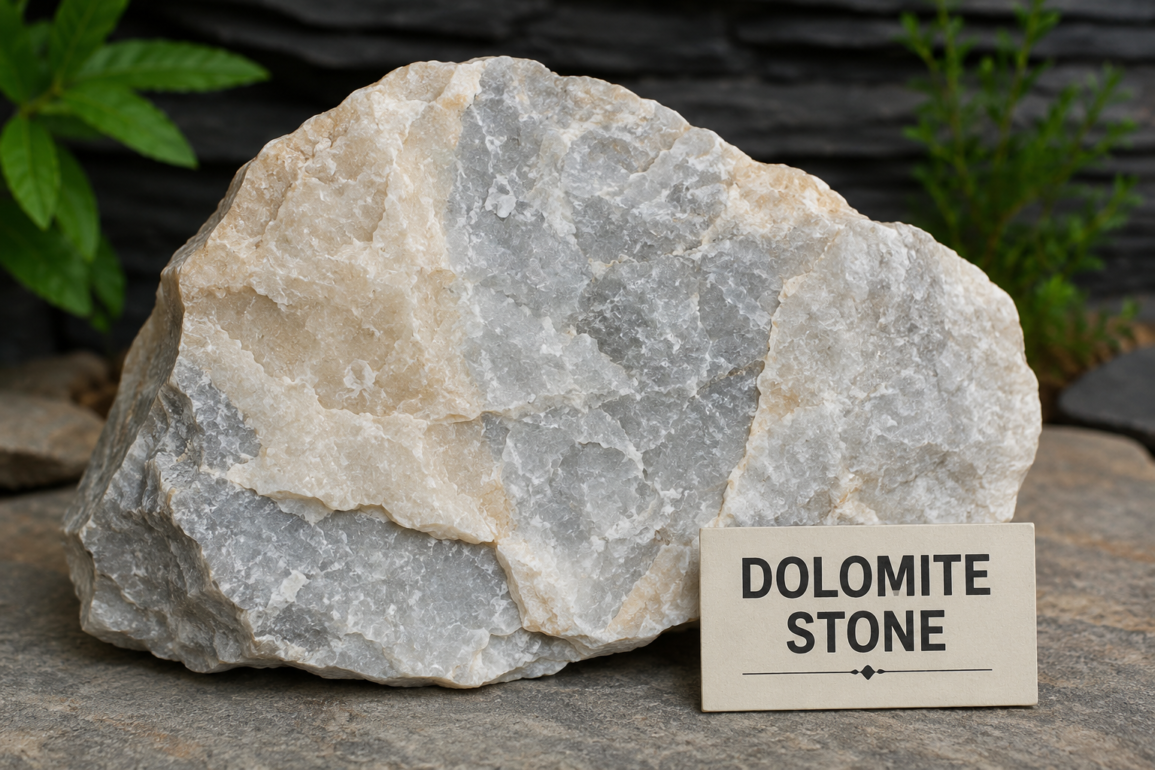
The appearance of dolomite stone can vary significantly. White and light-gray varieties are especially common, while cream, beige, pink, and greenish examples can also occur.
Iron-bearing minerals may create warmer tones, while other impurities can produce darker patterns. Some varieties feature dramatic veins that make them suitable for decorative interiors.
Polishing can bring out the natural crystal structure and improve visual depth. Honed or textured finishes create a softer appearance and may provide a more understated design.
Uses in Construction and Design
The versatility of dolomite stone allows it to serve several purposes in construction and interior design. Its appearance makes it particularly appealing for decorative applications where natural patterns are desirable.
It may be used for countertops, wall cladding, flooring, bathroom surfaces, fireplace surrounds, architectural features, and selected exterior applications. Crushed dolomite can also serve practical purposes in construction and industrial settings.
However, suitability depends on the specific variety and intended environment. A stone that works well as an interior decorative surface may not be ideal for every outdoor application.
Countertops and Work Surfaces
Some varieties are selected for countertops because they combine natural beauty with reasonable durability. Their patterns can resemble other luxury stones while offering a distinct geological character.
Even so, users should consider staining, scratching, etching, and sealing requirements before installation. Professional fabrication and proper maintenance can help preserve the surface.
Flooring and Wall Applications
The material can create an elegant appearance when used for floors and walls. Light-colored varieties can make rooms feel brighter and more spacious.
For flooring, the finish and slip resistance matter as much as appearance. Textured surfaces may be preferable in areas exposed to water, while polished surfaces often suit decorative walls.
Dolomite Stone vs. Marble
People sometimes compare dolomite stone with marble because both can feature attractive veining and polished surfaces. However, they are different geological materials.
Marble forms when limestone or related carbonate rocks undergo metamorphism. Dolomite is primarily a carbonate sedimentary rock formed through dolomitization and related geological processes.
Their appearance can overlap, but their mineral compositions and performance characteristics differ. Buyers should rely on professional identification rather than appearance alone when choosing between them.
Dolomite Stone vs. Quartzite
Another common comparison involves quartzite. Quartzite is a metamorphic rock formed mainly from quartz-rich sandstone. It generally has very different mineral composition and characteristics.
Dolomite can sometimes be selected as an alternative to quartzite because of its visual appeal, but the materials should not be treated as identical. Performance varies considerably among individual slabs and deposits.
A fabricator or stone professional can assess a sample before installation, particularly when the material will experience heavy use.
Advantages of Dolomite
Several characteristics make dolomite stone appealing for residential, commercial, and decorative projects. Its natural appearance is one of its strongest advantages because every slab or piece can have unique mineral patterns.
Its moderate durability can also make it useful for many interior applications. In addition, its range of colors allows designers to incorporate it into contemporary, classic, rustic, and minimalist spaces.
Natural stone can also add visual character that manufactured materials may not completely reproduce. With appropriate selection and maintenance, dolomite surfaces can remain attractive for many years.
Potential Limitations
Despite its benefits, dolomite stone is not suitable for every situation. Carbonate minerals can react with acidic substances, which means acidic cleaners, citrus products, vinegar, and certain chemicals may affect some surfaces.
Porosity can also vary. More porous material may require sealing to reduce staining and moisture absorption.
Another limitation is that natural stone performance depends heavily on the individual deposit. A general description cannot replace testing of the actual slab or product being purchased.
Maintenance and Cleaning Tips
Proper maintenance can significantly extend the appearance and performance of dolomite stone. Routine cleaning should generally use a soft cloth or sponge with a cleaner appropriate for natural stone.
Harsh acidic cleaners should be avoided unless a qualified stone-care professional confirms that they are safe for the specific surface. Spills should also be cleaned promptly, especially when the material is light-colored or porous.
Sealing may be recommended for certain applications. The appropriate sealing schedule depends on porosity, usage, finish, and manufacturer recommendations.
Is Dolomite Environmentally Friendly?
The environmental impact of dolomite stone depends on how it is extracted, processed, transported, installed, and eventually disposed of. Natural stone can have a long service life, which may reduce the need for frequent replacement.
However, quarrying consumes energy and can disturb land. Processing and transportation also contribute to environmental impacts.
Responsible sourcing is therefore important. Buyers can ask suppliers about quarry practices, transportation distances, certifications, waste management, and the origin of the material.
How to Choose the Right Stone
Before purchasing dolomite stone, consider the intended application rather than choosing solely by color. Ask whether the material will face moisture, heavy traffic, food preparation, chemicals, outdoor weather, or frequent cleaning.
Request technical information about water absorption, hardness, chemical resistance, and recommended applications. A physical sample can also help you evaluate the actual color and pattern under your project’s lighting.
For expensive installations, professional inspection is worthwhile. A qualified fabricator can identify potential weaknesses, surface characteristics, and fabrication requirements before cutting begins.
Frequently Asked Questions
Is dolomite suitable for kitchen countertops?
Some varieties can work well for countertops, but performance depends on the specific material. Proper sealing, careful cleaning, and reasonable use can help maintain the surface.
Is dolomite harder than limestone?
Generally, dolomite is harder than typical limestone because of its mineral composition. However, hardness can vary among natural deposits, so testing remains important for demanding applications.
Can dolomite be used outdoors?
Certain varieties can be used outdoors, but climate, freeze-thaw conditions, moisture, surface finish, and porosity must be considered. Professional advice is recommended for exterior installations.
Does dolomite need sealing?
Some applications benefit from sealing, particularly when the material is porous or exposed to staining. The correct product and maintenance schedule depend on the stone’s characteristics.
How should dolomite be cleaned?
Use a soft cloth or sponge and a cleaner designed for natural stone. Avoid unapproved acidic products and abrasive materials that could damage the surface.
Conclusion
Dolomite stone offers an appealing combination of natural beauty, geological uniqueness, and practical versatility. Its colors, crystalline structure, and distinctive veining make it attractive for interior and selected exterior applications. However, choosing the right variety is essential because properties such as hardness, porosity, and chemical resistance can differ between deposits.
Whether you are considering a countertop, flooring, wall feature, or construction material, evaluate technical performance alongside appearance. Proper installation, suitable sealing, and regular maintenance can protect the surface and extend its useful life. With informed selection and responsible sourcing, dolomite can provide a durable and visually distinctive addition to many architectural and design projects.