




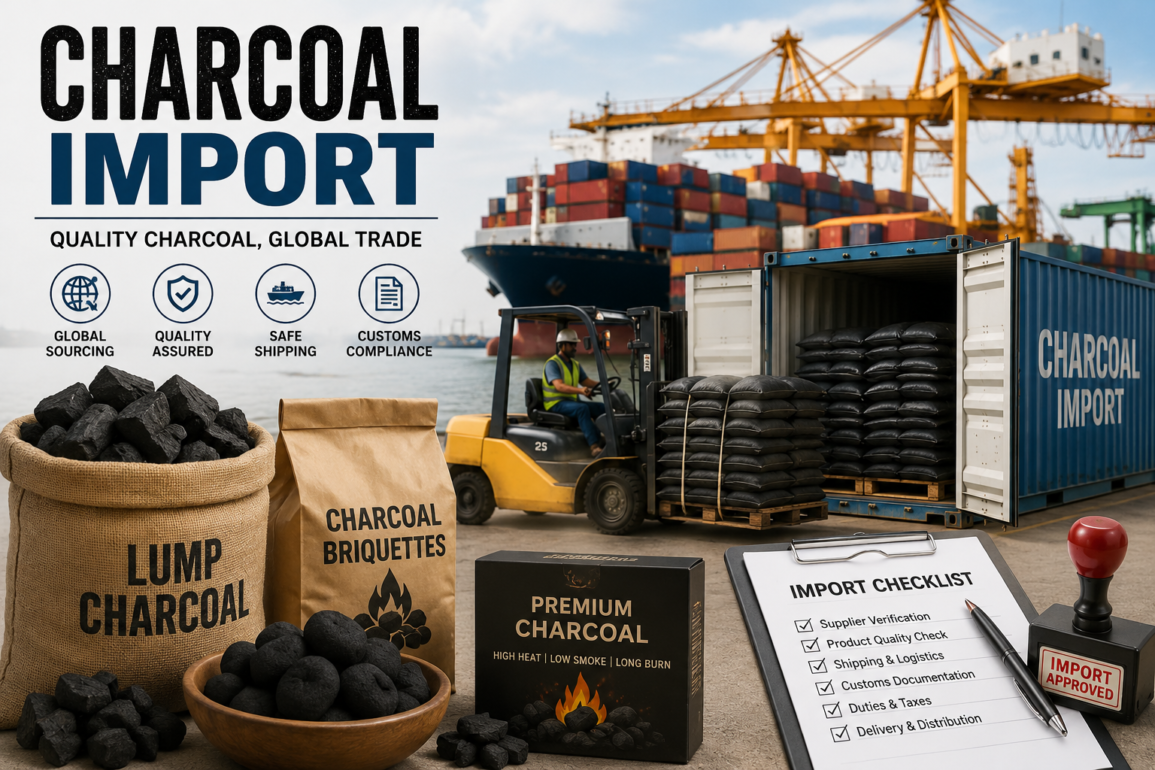
Charcoal has remained an important commodity across many industries and markets. People use it for cooking, heating, industrial processes, water filtration, and specialized applications. As demand continues to grow in different regions, international trade in charcoal has also become an important business opportunity. However, successful charcoal import requires more than simply purchasing products from another country. Importers must understand product quality, packaging, transportation, customs procedures, environmental rules, and market demand.
Whether you operate a small trading business or manage a larger supply chain, careful planning can reduce costs and prevent unnecessary delays. This guide explains the essential aspects of importing charcoal and highlights practical considerations for businesses entering this market.
What Is Charcoal Import?
Charcoal import refers to the process of purchasing charcoal from a foreign supplier and bringing it into another country for commercial or personal use. The product can come in several forms, including lump charcoal, briquettes, activated charcoal, and industrial charcoal.
Each type serves a different purpose. Lump charcoal is commonly used for grilling, while briquettes offer consistent burning characteristics. Activated charcoal has specialized applications in filtration, purification, and manufacturing.
An importer usually works with suppliers, freight companies, customs authorities, inspection agencies, and local distributors. Every stage needs proper documentation and planning.
Why Is Charcoal Imported?
Countries import charcoal for several reasons. Local production may not meet domestic demand, or imported products may offer better quality, pricing, or availability. Some markets also prefer specific varieties that are difficult to produce locally.
Restaurants and food businesses may require large quantities of cooking charcoal. Retailers can purchase packaged products for household consumers. Industrial companies may need specialized charcoal for manufacturing and processing.
Growing Demand From Food Businesses
Restaurants, barbecue businesses, catering companies, and food producers can create consistent demand. In markets where outdoor cooking is popular, consumers may purchase charcoal regularly.
Quality plays an important role in this segment. Buyers often look for charcoal that produces strong heat, burns efficiently, creates limited smoke, and leaves manageable ash.
Industrial Applications
Industrial users can require charcoal for metallurgical processes, chemical production, filtration, and other manufacturing activities. These charcoal import customers usually have more specific technical requirements than household buyers.
Importers serving industrial clients should therefore understand product specifications before placing large orders.
Major Types of Charcoal for Import
Choosing the right product is one of the most important decisions for an importer. Different charcoal products have different characteristics and markets.
Lump Charcoal
Lump charcoal is produced by heating wood under controlled conditions with limited oxygen. It usually contains irregular pieces and can provide high heat. Restaurants and consumers often use it for grilling and cooking.
Buyers may evaluate lump charcoal based on piece size, moisture level, ash content, burning time, and raw material.
Charcoal Briquettes
Briquettes are manufactured by compressing charcoal particles with suitable binding materials. Their charcoal import uniform shape makes them easier to package, transport, and store.
Many commercial users prefer briquettes because they can provide predictable performance. However, the exact formulation and quality can vary between suppliers.
Activated Charcoal
Activated charcoal undergoes additional processing to create a highly porous structure. It is used for adsorption in applications such as water treatment, air purification, and industrial processing.
Because it has specialized uses, importers should verify technical specifications and regulatory requirements before purchasing it.
How to Choose a Reliable Supplier
Supplier selection can strongly influence the success of an importing business. A low purchase price does not necessarily mean a profitable deal. Poor-quality products can create customer complaints, rejected shipments, and financial losses.
Start by researching suppliers with experience in international trade. Review their charcoal import production capacity, product specifications, certifications, packaging options, and export history.
Request samples before committing to a large shipment. Testing samples allows you to compare burning performance, moisture, ash content, density, and other relevant characteristics.
You should also discuss payment terms, minimum order quantities, production schedules, and shipping responsibilities in advance.
Verify Product Quality
Quality verification should happen before the shipment leaves the supplier’s country. Depending on the product and destination market, independent inspection can provide additional confidence.
Ask the supplier for technical documents and laboratory reports where appropriate. Do not rely only on photographs or verbal claims.
Understanding Charcoal Import Regulations
Import regulations differ between countries and can change over time. Businesses should check the current requirements of both the exporting and importing countries before placing an order.
Authorities may require commercial invoices, packing lists, certificates of origin, transport documents, customs declarations, and product-specific certificates.
Some countries also apply environmental or forestry requirements because charcoal can be associated with wood harvesting and land-use concerns.
Environmental Compliance
Responsible sourcing charcoal import is becoming increasingly important in international charcoal trade. Buyers should understand where the raw material comes from and whether the supplier follows applicable forestry and environmental requirements.
Sourcing from responsible producers can protect a company’s reputation while supporting more sustainable supply chains.
Importers should keep records showing the origin of products and any required compliance documentation. This charcoal import can become especially important when customs or regulatory authorities request additional information.
Packaging and Labeling Requirements
Proper packaging protects charcoal from moisture, contamination, and physical damage during transportation. Charcoal can absorb moisture, which may reduce its charcoal import performance and increase shipping weight.
Packaging should therefore be suitable for the product and transportation method. Retail products may use smaller branded bags, while commercial shipments can use larger industrial packaging.
Labels may need to show product information, weight, country of origin, manufacturer details, handling instructions, and other information required by the destination market.
Always confirm local labeling requirements before production begins.
Transportation and Shipping Considerations
Shipping charcoal internationally requires careful planning. Importers must select an appropriate transportation method based on order size, destination, delivery time, and budget.
Sea freight is commonly considered for larger commercial shipments because it can transport substantial quantities. Air freight is generally less practical for bulk charcoal because of cost and transportation restrictions.
Before booking transportation, confirm that the carrier accepts the specific charcoal product. Certain products may have transportation classifications or safety requirements that affect shipping arrangements.
Protecting Charcoal During Transit
Moisture is one of the major concerns during transportation and storage. Packaging should reduce exposure to humidity and water.
Containers should be inspected before loading. The importer should also maintain appropriate storage conditions after the shipment arrives.
Good storage practices help preserve product quality and reduce waste.
Calculating the Total Import Cost
The purchase price is only one part of the final cost. A profitable charcoal import business must calculate the complete landed cost.
Important expenses may include:
- Product purchase price
- Packaging costs
- Inland transportation
- Export handling charges
- Freight costs
- Insurance
- Customs duties
- Taxes and fees
- Port charges
- Customs brokerage
- Local delivery
- Warehousing
Calculating these expenses before ordering helps determine the realistic selling price and profit margin.
A shipment that appears inexpensive at the supplier’s warehouse may become significantly more expensive after transportation and customs costs are added.
Common Challenges in Charcoal Import
International charcoal trading can offer opportunities, but it also presents several challenges. Product quality may differ between suppliers, and unexpected shipping costs can affect profitability.
Customs delays are another potential problem. Missing or incorrect documents can prevent a shipment from clearing quickly.
Market prices can also change because of fuel costs, transportation rates, seasonal demand, and supply conditions.
Another challenge involves maintaining consistent quality. Customers usually expect every shipment to meet the same specifications. Importers should establish clear quality standards and communicate them to suppliers.
How to Reduce Importing Risks
A professional approach can reduce many common risks. First, research your target market before ordering inventory. Identify customer requirements, competing products, typical price ranges, and expected demand.
Second, avoid depending on a single supplier when possible. Maintaining relationships with multiple qualified suppliers can provide alternatives if production or transportation problems occur.
Third, use written contracts that clearly explain product specifications, quantities, packaging, delivery terms, and payment conditions.
Finally, keep accurate records for every transaction. Good documentation makes it easier to track costs, resolve disputes, and demonstrate compliance.
Building a Profitable Charcoal Import Business
Profitability depends on more than buying cheaply and selling at a higher price. Successful importers create value through reliable supply, consistent quality, competitive pricing, and efficient distribution.
You can target different customer groups based on your product type. Retail customers may prefer convenient packaging and recognizable branding. Restaurants may prioritize reliable burning performance and bulk pricing. Industrial customers may focus on technical specifications and consistent supply.
Developing strong relationships with buyers can encourage repeat orders. At the same time, monitoring market conditions helps you adjust purchasing decisions before demand or costs change significantly.
The Importance of Market Research
Market research should continue after the business begins importing. Track customer feedback, seasonal demand, competitor pricing, transportation costs, and product trends.
This charcoal import information can help you decide when to reorder and which products deserve greater investment.
Digital marketing can also help importers reach new customers. A professional website, useful product information, and clear communication can strengthen credibility in competitive markets.
Final Thoughts on Charcoal Import
A successful charcoal import business requires careful research, reliable suppliers, quality control, proper documentation, and efficient logistics. Importers should understand the exact product they are purchasing and confirm all applicable customs, environmental, packaging, and transportation requirements before placing an order.
The strongest businesses focus on long-term relationships rather than short-term savings. They test products, calculate complete landed costs, monitor market demand, and maintain accurate records. With responsible sourcing and effective planning, international charcoal trade can become a sustainable commercial opportunity.
Before starting a shipment, always confirm current regulations with the relevant customs and trade authorities in your destination country. Requirements can vary according to product type, origin, destination, and intended use. Careful preparation is the foundation of a smooth and profitable importing process.