




Introduction
Finding what rhymes with time is an enjoyable way to improve your English vocabulary, pronunciation, and creative writing skills. Rhyming words are commonly used in poems, songs, speeches, and classroom activities. Whether you are a student, teacher, or parent, learning rhymes can make language learning more engaging.
If you want to understand what rhymes with time, this guide explains the best rhyming words, their meanings, and how to use them in education.
What Rhymes With Time?
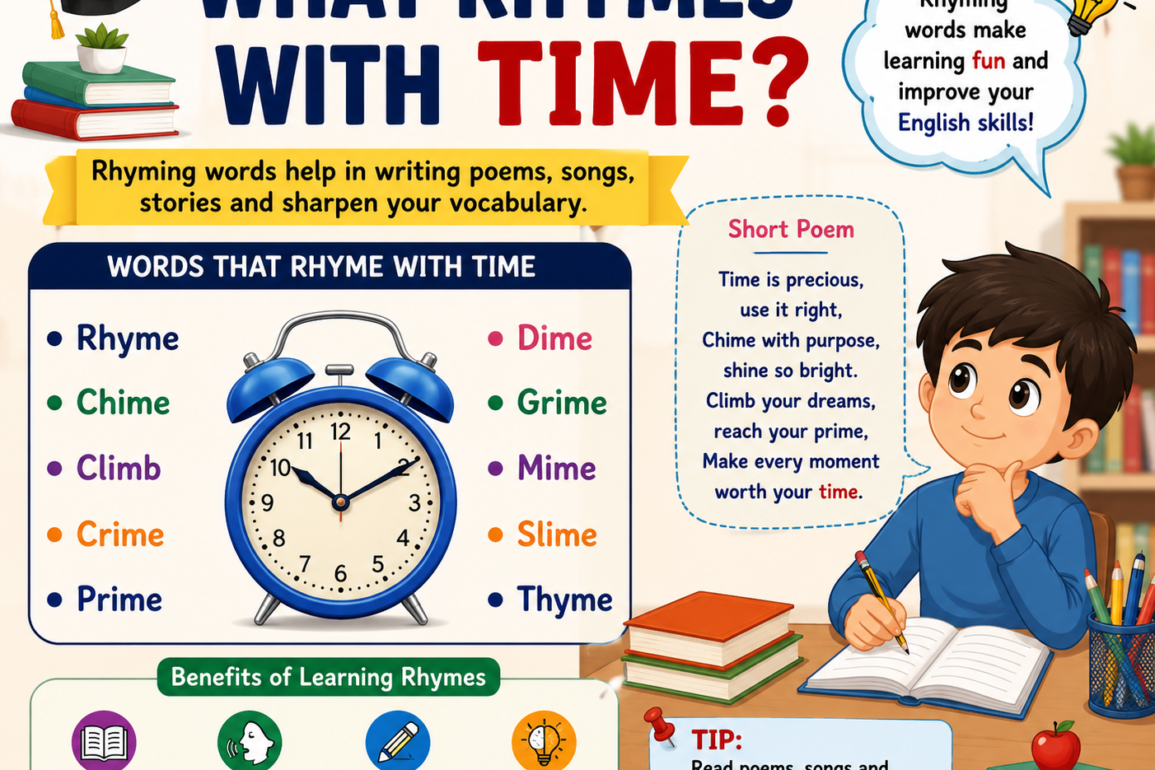
The word time has several perfect rhymes. Here are some of the most common examples:
| Rhyming Word | Meaning |
|---|---|
| Rhyme | Similar ending sound |
| Chime | A pleasant ringing sound |
| Climb | To move upward |
| Crime | An illegal act |
| Prime | Best quality or first |
| Dime | A small coin |
| Grime | Dirt or dust |
| Mime | A performer using actions |
| Slime | Sticky material |
| Thyme | A popular herb |
These examples help students quickly learn what rhymes with time while expanding their vocabulary.
Why Are Rhyming Words Important?
Learning what rhymes with time offers many educational benefits. Rhyming activities improve reading fluency, spelling, and pronunciation. They also help children recognize sound patterns, making it easier to learn new words.
Teachers often include rhyming games because they strengthen phonics skills and encourage creative thinking.
You can also explore more rhyming guides on Education Views by visiting Rhymes With Are.
Sentences Using Time Rhymes
Here are a few examples that show what rhymes with time in everyday English.
- The church bells chime every hour.
- We climb the hill during our school trip.
- Reading books is a better use of time.
- Fresh thyme adds flavor to many dishes.
- Good habits help students reach their prime.
Practicing these sentences improves vocabulary and pronunciation.
Classroom Activities

Teachers can make learning what rhymes with time more interesting with simple classroom exercises.
- Match rhyming words.
- Write a short poem using five rhyming words.
- Play a rhyming memory game.
- Create a list of new rhyming words.
- Practice reading rhyming sentences aloud.
These activities develop language confidence and creativity.
Tips to Learn Rhyming Words Faster
If you want to master what rhymes with time, follow these simple tips:
- Read children’s poems regularly.
- Listen to English songs.
- Practice speaking aloud every day.
- Keep a vocabulary notebook.
- Write short rhyming sentences.
Consistent practice helps students remember new words for a long time.
You can also improve your vocabulary with another helpful guide on Words That Rhyme With Air.
Common Mistakes
Many learners think every similar-looking word rhymes with time, but pronunciation matters more than spelling. For example, “team” does not rhyme with “time” even though both begin with the letter “T.”
Always focus on the ending sound when identifying rhymes.
Conclusion
Understanding what rhymes with time is an excellent way to improve vocabulary, pronunciation, and creative writing skills. Students who practice rhyming words regularly become more confident readers and writers. Whether you are preparing for school assignments, poetry competitions, or simply expanding your English knowledge, learning rhymes is a valuable skill. Keep practicing different rhyming words every day, and your language abilities will continue to grow.
FAQs
What rhymes with time?
Words like rhyme, chime, climb, crime, prime, dime, slime, mime, grime, and thyme rhyme with time.
Why do students learn rhyming words?
They improve pronunciation, reading fluency, spelling, and vocabulary.
Are rhyming words useful in poetry?
Yes. They make poems, songs, and stories more enjoyable and memorable.
Can rhyming improve English speaking?
Yes. Practicing rhymes helps learners recognize similar sounds and pronounce words correctly.
How can I practice what rhymes with time?
Read poems, play rhyming games, write sentences, and practice speaking the words aloud.